

10 Reasons Why Space Exploration Matters
Space exploration matters because it expands knowledge, improves life on Earth, and prepares humanity for future challenges.
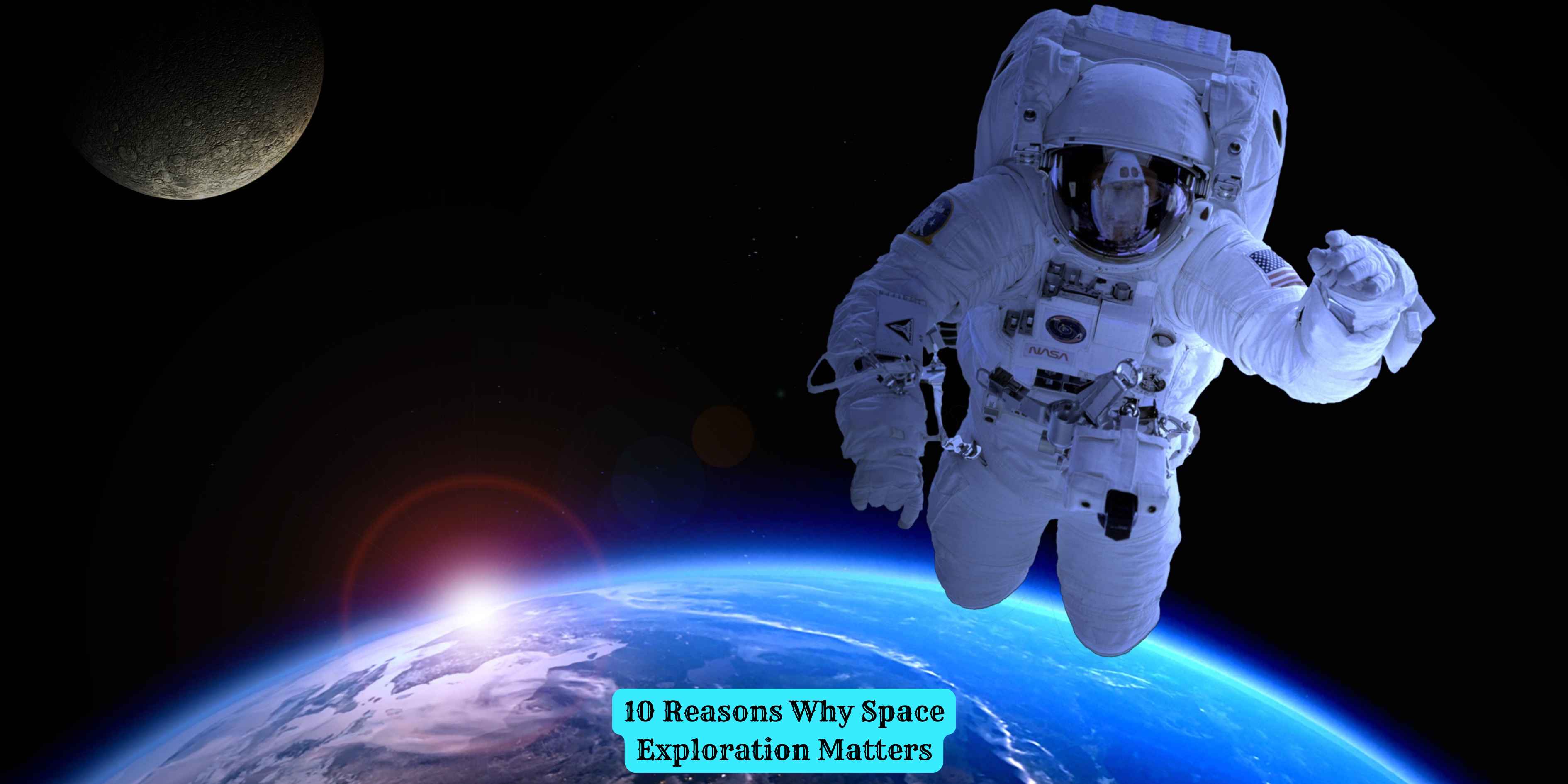
1. It Expands Human Knowledge
Space exploration matters because it helps people understand the universe, improve technology, monitor Earth, prepare for natural hazards, inspire students, and solve difficult engineering problems. It is not only about astronauts and rockets. Much of its value returns to everyday life through science, communication, weather tracking, navigation, medicine, and environmental monitoring.
NASA describes its mission as exploring air and space, innovating for humanity, and inspiring discovery. That simple idea explains why space programs often produce benefits far beyond the original mission.
Space exploration is one of the few human activities that combines curiosity, survival, innovation, and global cooperation.
Exploration begins with questions: Where did planets come from? How did life begin? Are we alone? What is the universe made of?
Space missions help scientists study planets, stars, galaxies, black holes, asteroids, solar storms, and the history of the universe. Even when the answers do not produce immediate commercial value, they expand what humanity knows about reality.
That knowledge shapes physics, chemistry, geology, biology, and astronomy.
2. It Improves Technology on Earth
Space missions require lightweight materials, better sensors, efficient power systems, robotics, water recycling, advanced computing, and precise communication. Technologies developed for space often influence tools used on Earth.
Examples include satellite communication, GPS-related systems, weather technology, medical imaging improvements, insulation materials, and remote sensing tools.
The challenge of surviving in space forces engineers to solve problems with accuracy and creativity.
3. It Helps Monitor Climate and Weather
Satellites are essential for studying Earth. They track storms, sea levels, ice sheets, wildfires, droughts, air pollution, ocean temperatures, and land-use changes.
Without space-based observation, governments and scientists would have a much weaker picture of climate patterns and natural disasters.
Space exploration therefore supports better weather forecasts, disaster planning, agriculture decisions, and climate research.
4. It Supports Planetary Defense
Asteroids and comets are natural objects, but some can pose risks if their paths cross Earth’s orbit. Space programs help identify, track, and study near-Earth objects.
Planetary defense is not science fiction. It depends on telescopes, spacecraft, orbital calculations, and international coordination.
The more scientists understand about asteroids, the better prepared humanity becomes for rare but serious impact threats.
5. It Strengthens Communication and Navigation
Modern communication depends heavily on satellites. Television, internet service, banking systems, shipping, aviation, emergency response, mapping, and navigation all rely on space-based infrastructure.
Even people who never think about space benefit from satellite timing and positioning systems.
Space exploration helped create the foundation for many tools that make modern life more connected and efficient.
6. It Inspires Students to Study STEM
Space missions capture imagination. A student who sees a rover on Mars, a telescope image of a galaxy, or a spacecraft launch may become interested in science, technology, engineering, or math.
That inspiration matters because societies need skilled scientists, engineers, technicians, healthcare workers, programmers, and educators.
Space exploration gives students a clear example of difficult learning leading to meaningful work.
7. It Encourages International Cooperation
Space projects often require cooperation among countries, universities, companies, and research organizations. The International Space Station is one well-known example of long-term scientific cooperation.
Collaboration in space can build trust, share costs, and combine expertise.
Even when countries compete, space exploration can encourage peaceful scientific achievement instead of conflict.
8. It Teaches Humans How to Live in Extreme Environments
Space is dangerous. Astronauts face radiation, isolation, limited resources, microgravity, equipment failure, and communication delays.
Studying how humans live and work in space helps scientists understand health, psychology, nutrition, exercise, emergency planning, and closed life-support systems.
Lessons from space can also apply to submarines, polar stations, disaster zones, and remote medical care.
9. It Protects Critical Infrastructure
Solar storms can affect power grids, satellites, aviation, radio communication, and navigation systems. Space science helps researchers monitor the Sun and forecast space weather.
This matters because modern economies depend on electricity and digital systems.
Understanding the space environment helps protect technology that people use every day.
10. It Prepares Humanity for the Future
Space exploration encourages long-term thinking. It asks what humanity should know, build, protect, and become over centuries, not only over the next few years.
Future missions may improve lunar science, Mars research, asteroid mining debates, deep-space communication, and understanding of life beyond Earth.
Space exploration matters because it pushes humanity to solve hard problems while remembering that Earth is still our shared home.
Space exploration is valuable because it teaches, protects, inspires, and improves life on Earth. Its benefits are scientific, practical, economic, educational, and cultural.
The strongest argument for space exploration is not that humans should escape Earth. It is that studying space helps us understand Earth, protect it, and imagine a smarter future.