

10 Reasons Why Screen Time Is Bad for You
The average American now spends more than 7 hours per day looking at screens. The research on what that does to the body and mind is not encouraging. Here are 10 reasons why excessive screen time is harmful.
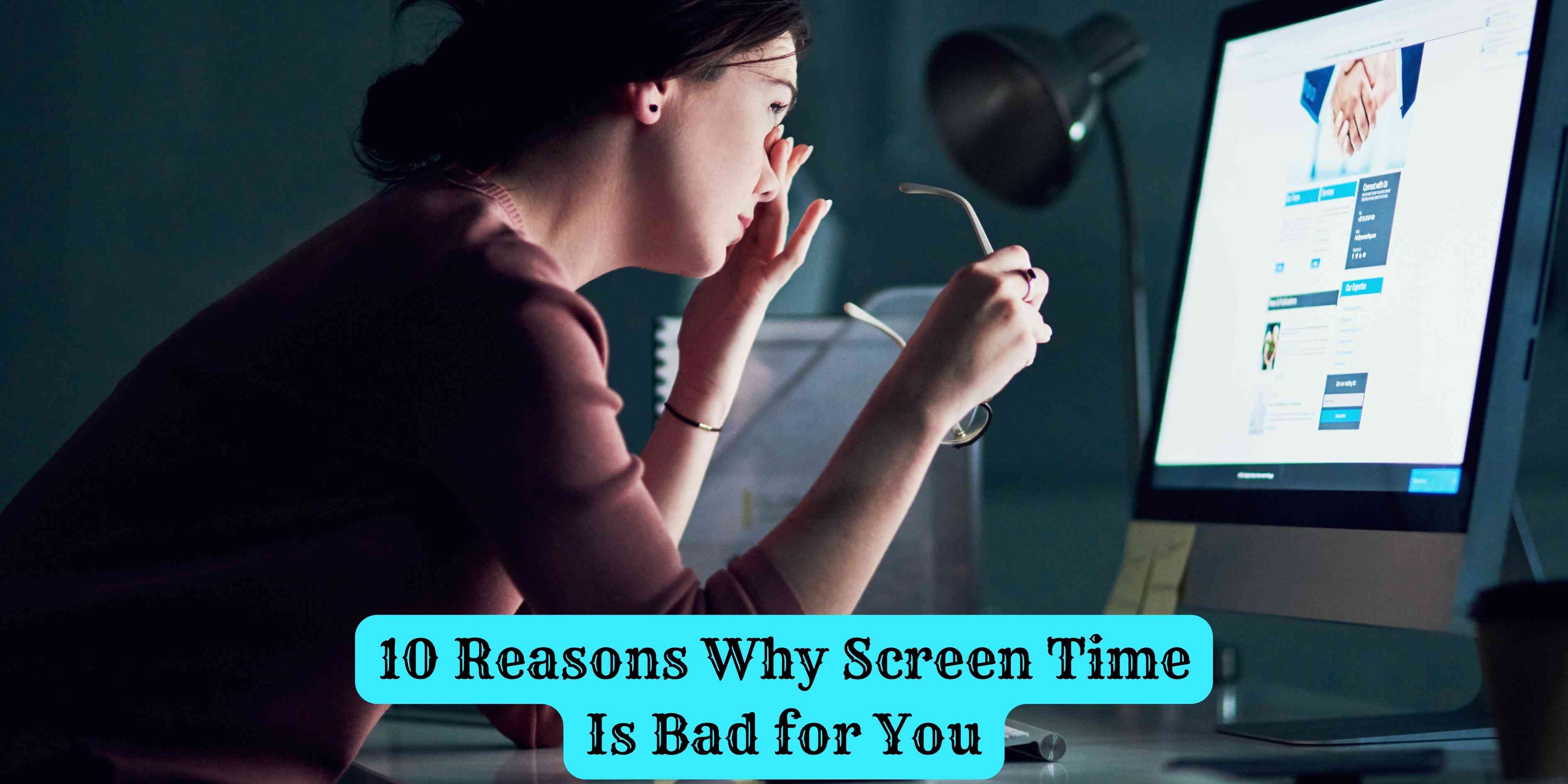
Screen time itself is not inherently harmful — it is the amount, the type, and the context that determines the effect. The research on excessive screen time, however, is increasingly clear and consistently points in one direction: sustained overuse of screens is associated with a range of physical, mental, and social harms. These 10 reasons represent the most well-documented negative effects of excessive screen use across age groups.
1. It Disrupts Sleep
The blue light emitted by screens suppresses melatonin production — the hormone that signals to the body that it is time to sleep. Using screens in the hour or two before bed delays the onset of sleep, reduces total sleep duration, and worsens sleep quality. Chronic sleep disruption affects concentration, mood, immune function, metabolism, and long-term health in cascading ways. The sleep effect alone is enough to make evening screen use a significant health concern.
2. It Contributes to Sedentary Behavior
Time spent on screens is, with rare exceptions, time spent not moving. In children and adolescents, high screen time is consistently associated with reduced physical activity, which is itself associated with obesity, cardiovascular risk, and reduced physical fitness. In adults, extended sedentary screen use — particularly at work followed by recreational screen use at home — compounds the metabolic and musculoskeletal risks of inactivity.
3. It Is Associated with Anxiety and Depression, Especially in Adolescents
Research on the association between social media and smartphone use and rates of anxiety, depression, and loneliness in adolescents has produced consistent findings, with notable effects concentrated in teenage girls. Comparison with curated social media content, cyberbullying, exposure to distressing content, and the displacement of in-person social interaction with screen-mediated interaction all contribute to the mental health effects documented in the research.
4. It Reduces Attention Span and Concentration
The rapid context-switching, notification interruptions, and algorithmically optimized content streams that characterize modern screen use train the attention to expect constant novelty and to resist sustained focus on single tasks. Students who spend significant time on high-stimulation screen content report greater difficulty concentrating on academic work, and the research on technology’s effect on attention is consistent with these self-reports.
5. It Displaces Reading and Deep Learning
Time spent on screens is, for most people, time not spent reading books, engaging in creative projects, or pursuing activities that build sustained cognitive engagement. The shift from deep reading to shallow, fragmented screen content has measurable effects on reading comprehension, vocabulary, and the capacity for sustained analytical thought.
6. It Can Lead to Physical Health Problems
Extended screen use is associated with “text neck” (cervical strain from looking down at phones), eye strain and headaches, carpal tunnel syndrome from repetitive touch and keyboard use, and in some populations, obesity linked to sedentary behavior. The physical postures required by prolonged screen use — head forward, shoulders rounded, minimal movement — create musculoskeletal problems that are increasingly common in screen-heavy populations.
7. It Impairs Social Skills and Real-World Connection
Particularly in children and adolescents, the developmental skills of face-to-face communication — reading facial expressions, managing emotional responses in real time, navigating social conflict directly — are built through practice in actual social situations. High screen use that replaces real-world social interaction reduces the practice time for these skills and may leave children less equipped for in-person relationships.
8. It Creates Addictive Behavioral Patterns
Social media platforms, video games, and streaming services are specifically designed to maximize engagement through variable reward schedules, social validation loops, and algorithmically personalized content streams. These design features produce behavioral patterns that share characteristics with other compulsive behaviors: loss of control over use, continued use despite negative consequences, and difficulty stopping even when the user wants to.
9. It Exposes Children and Adolescents to Harmful Content
Unfettered access to screens gives children access to content — violent material, pornography, extreme political content, content that glorifies eating disorders or self-harm — that is demonstrably harmful to developing minds. The challenge of parental oversight in an environment of ubiquitous connected devices makes content exposure a significant and ongoing concern.
10. It Displaces Activities That Build Lasting Wellbeing
Perhaps the most significant cost of excessive screen time is what it crowds out. The activities most consistently associated with long-term wellbeing — physical activity, face-to-face social interaction, time in nature, creative work, adequate sleep, deep reading — are all reduced when screens consume a disproportionate share of available time. The research on what actually makes people happy and healthy over time consistently points away from screen-mediated experiences and toward embodied, relational, and purposeful activities. Screen time is not inherently worthless, but its opportunity cost — what is not happening while the screen is on — is significant and systematically underestimated.