

What Are Three Ways People Use Microwaves?
Microwaves are not only used in kitchen ovens; they also help people communicate, navigate, measure weather, and study Earth.
The Short Answer
Three common ways people use microwaves are cooking food, sending communication signals, and operating radar or remote-sensing systems. Microwave ovens use microwave energy to heat food. Communication systems use microwaves to carry information. Radar systems use microwaves to detect objects, measure distance, and observe weather or land surfaces.
Microwaves are a form of electromagnetic radiation with wavelengths longer than infrared light and shorter than many radio waves. The same general type of wave can be used for very different purposes depending on frequency, power, design, and safety controls.
Microwaves Are Electromagnetic Waves
Microwaves are part of the electromagnetic spectrum. Like visible light, radio waves, ultraviolet rays, and infrared radiation, they carry energy through space. They are non-ionizing, meaning they do not have enough energy to make atoms radioactive or directly break chemical bonds the way ionizing radiation can.
That does not mean all microwave exposure is harmless at every level. Strong microwave energy can heat tissue, which is why microwave ovens are designed with shielding, door seals, and safety standards. In normal approved devices, microwave energy is controlled for its intended use.
Understanding microwaves begins with a simple idea: they are waves that can be absorbed, transmitted, reflected, or directed.
Way One: Heating and Cooking Food
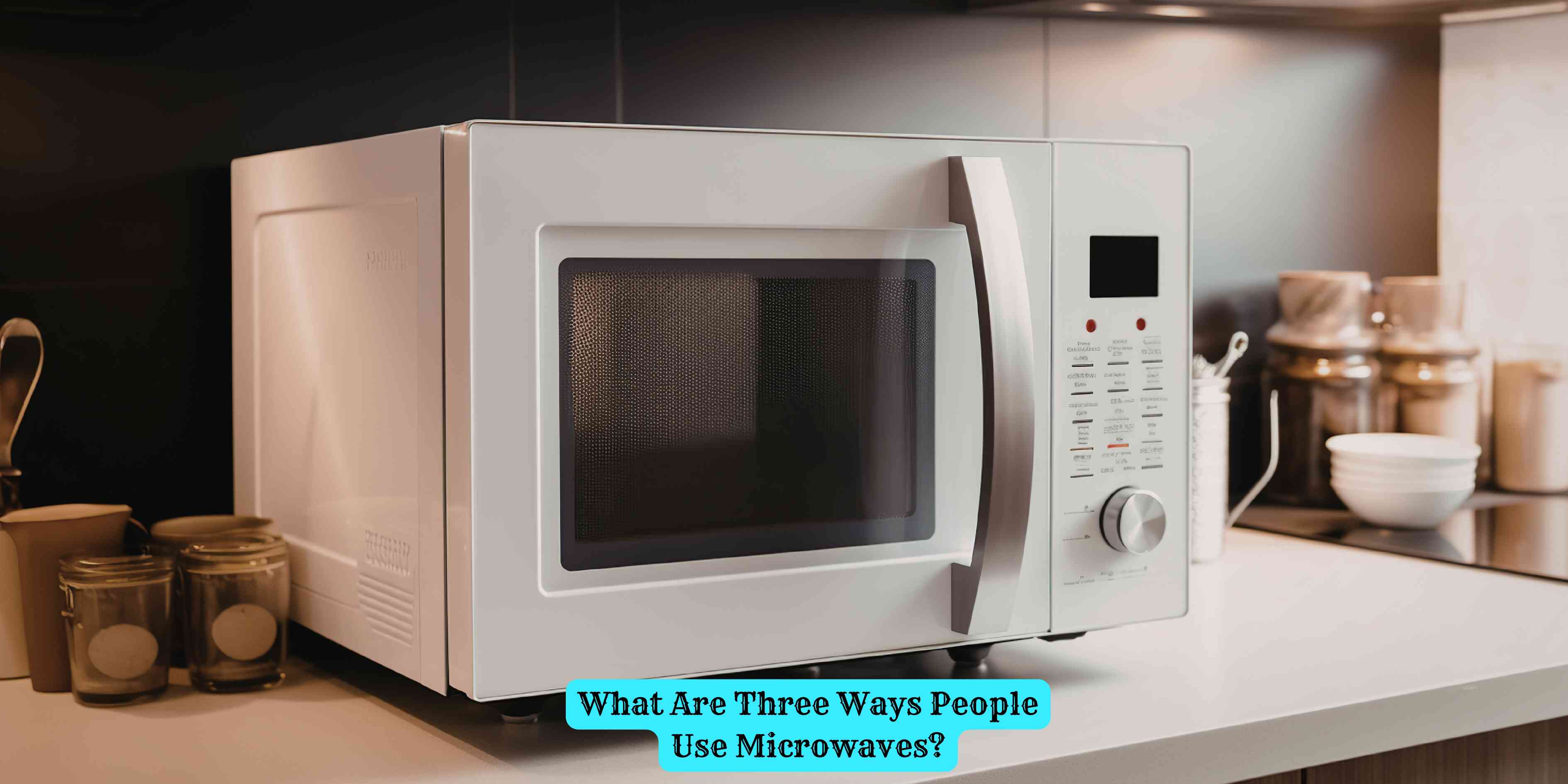
The most familiar use of microwaves is the microwave oven. A microwave oven produces microwave energy that interacts especially well with water molecules and some other molecules in food. The energy causes molecules to rotate and move, producing heat.
This is why foods with more water often heat quickly. Soup, vegetables, coffee, rice, and leftovers can warm faster than very dry foods. Microwave ovens are useful because they heat food quickly, reduce cooking time, and use less cookware.
Microwave cooking does not make food radioactive. The microwave energy exists while the oven is operating, and the food simply absorbs energy as heat.
Safe Microwave Oven Use Matters
Microwave ovens are designed to keep energy inside the cooking chamber. A microwave in good condition should not leak harmful amounts of energy. However, damaged doors, seals, hinges, or latches can create safety concerns.
Safe use includes:
- Using microwave-safe containers
- Avoiding metal unless the manual specifically allows it
- Not operating a damaged oven
- Stirring food to reduce hot spots
- Allowing standing time when directions require it
Food can heat unevenly in a microwave, so burns are often a bigger everyday risk than radiation exposure.
Way Two: Communication
Microwaves are also used in communication. Many wireless systems depend on microwave frequencies to carry information from one place to another. These signals can transmit voice, data, video, internet traffic, and broadcast information.
Microwave communication is useful because the waves can carry large amounts of information and can be directed between antennas. Satellite communication, cell networks, Wi-Fi, Bluetooth, and point-to-point communication links all use frequencies that are often described as microwave or closely related radio-frequency bands.
Because microwave signals can be focused, engineers can aim them across distances. This makes them valuable for towers, satellites, and networks.
Why Microwaves Work Well for Signals
Microwaves can pass through the atmosphere under many conditions, making them helpful for communication over land, through the air, and between Earth and satellites. Their shorter wavelengths compared with many radio waves also allow smaller antennas and more focused beams.
However, microwave signals can be affected by obstacles, weather, distance, and interference. Buildings, hills, trees, and heavy rain can reduce signal strength. That is why communication systems are carefully planned with antennas, towers, frequencies, and power levels.
Modern life depends heavily on this invisible movement of microwave signals.
Way Three: Radar and Remote Sensing
Radar systems use microwaves to detect objects. A radar device sends out microwave pulses and measures the signal that bounces back. By analyzing the return signal, the system can estimate distance, speed, direction, shape, or surface features.
Radar is used in aircraft navigation, weather forecasting, ship tracking, vehicle speed detection, military systems, and space science. Weather radar can detect precipitation and storm movement. Aircraft radar can help pilots identify hazards. Police radar can measure vehicle speed.
Remote sensing systems also use microwaves to observe Earth. Some satellites send microwave signals toward the planet and measure reflections from land, ice, water, vegetation, or ocean surfaces.
Scientific and Everyday Value
Microwave remote sensing can work in conditions where visible-light cameras struggle. Some microwave systems can collect information through clouds, smoke, or darkness. This makes them useful for studying storms, floods, sea ice, forests, soil moisture, and landforms.
In everyday life, people may not think about microwaves unless they are reheating food. But the technology also supports phones, internet access, aircraft safety, weather alerts, navigation, and scientific monitoring.
The three main uses show how one part of the electromagnetic spectrum can serve many human needs: heating, communication, and detection.