

7 Ways to Stop Anxiety Before It Starts
Anxiety is easier to prevent than to manage once it builds — these seven strategies help interrupt it before it gets started.
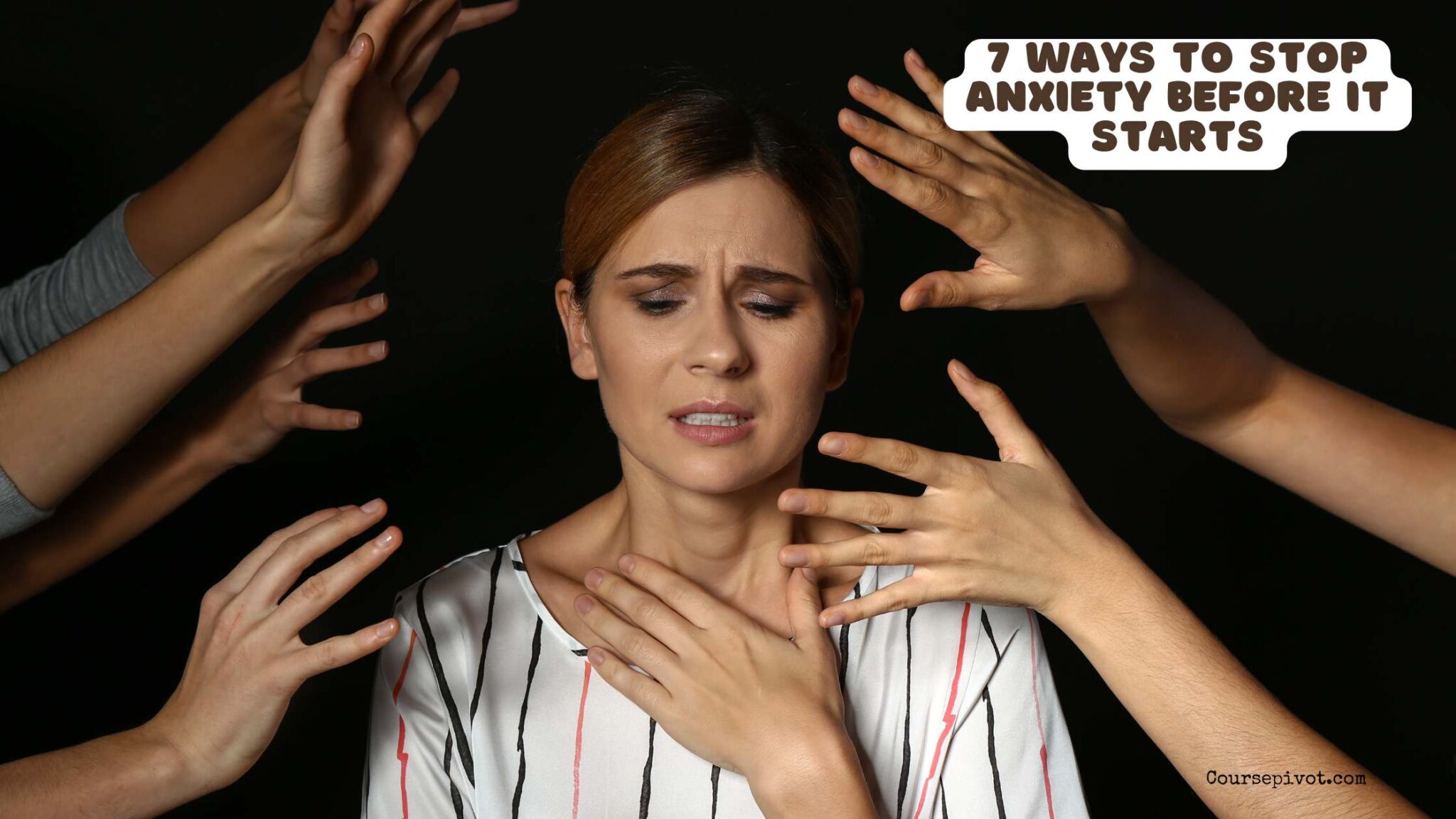
When people search for ways to stop anxiety before it starts, they are usually recognizing a pattern in themselves — specific situations, times of day, or conditions that reliably trigger anxious feelings — and looking for a way to interrupt the cycle earlier.
Anxiety is significantly easier to manage before it builds than after it has already taken hold. The physical and mental state that comes with full anxiety makes clear thinking, decision-making, and calm action much harder. Catching it earlier — or creating the conditions where it is less likely to start — is a more effective strategy than waiting to respond.
The goal is not to eliminate all stress or tension from life, but to reduce the conditions that allow anxiety to grow unchecked.
Here are seven practical ways to stop anxiety before it starts.
1. Learn to Recognize Your Personal Triggers
The most important first step in preventing anxiety is understanding what reliably sets it off for you. Anxiety triggers vary widely between people. Common ones include:
- Uncertainty about outcomes — exams, job interviews, waiting on important news
- Interpersonal conflict or unresolved tension with someone
- An unrealistic workload or an unmanageable to-do list
- Physical factors like poor sleep, too much caffeine, or skipped meals
- Passive consumption of negative news or social media
Keeping a simple journal for a week or two — noting when anxious feelings arise and what preceded them — often reveals patterns that are not obvious in the moment. Once you know your triggers, you can anticipate them and prepare rather than react.
2. Build a Consistent Daily Routine
Uncertainty is one of the main drivers of anxiety. A predictable daily structure removes a significant amount of that uncertainty by making decisions in advance — when to wake up, when to work, when to eat, and when to rest.
This does not mean every day needs to be identical. But having a reliable anchor routine — consistent wake and sleep times, regular meals, and a clear start and end to the working day — gives the nervous system a foundation of predictability to return to.
People with high-anxiety tendencies often find that disruptions to routine spike anxious feelings even when the disruption itself is minor. That is not a flaw — it is information. A reliable routine reduces the number of daily micro-decisions that can each become a small source of unease.
3. Use Controlled Breathing Before High-Stress Situations
Breathing is one of the few physiological processes the body regulates automatically that a person can also control deliberately — and that control gives direct access to the nervous system’s stress response.
Slow, deliberate breathing activates the parasympathetic nervous system, which works in opposition to the fight-or-flight response. A simple technique: inhale for four counts, hold for four counts, exhale for six to eight counts. The longer exhale is the key part — it signals safety to the nervous system.
Using this before a known high-stress event — a presentation, a difficult conversation, an exam — rather than after anxiety has already peaked makes a measurable difference in how the situation is entered.
Quick question: does controlled breathing only help in the moment?
No — regular practice outside of stressful situations also builds the habit, so the technique becomes easier to access when it is actually needed. The more familiar the pattern, the less mental effort it takes to use it under pressure. Two minutes of practice before bed each night is enough to make it automatic.
4. Limit News and Social Media Intake
Constant exposure to alarming, uncertain, or negative information keeps the nervous system in a low-level state of alert. Over time, that baseline activation makes it easier for anxiety to develop and harder to return to a calm state between triggers.
This does not mean avoiding news entirely — it means being intentional about when and how much you consume. Practical adjustments include:
- Checking news at set times rather than continuously throughout the day
- Removing news and social media apps from the home screen of your phone
- Treating social media as a scheduled activity rather than a default response to boredom or downtime
Even modest reductions in passive scrolling tend to have a noticeable effect on baseline anxiety levels over the course of a week or two.
5. Move Your Body Consistently
Physical movement is one of the most reliable non-clinical tools for reducing anxiety. Exercise lowers cortisol over time, improves sleep quality, and provides a regular outlet for physical tension that would otherwise accumulate without release.
The type of movement matters less than the consistency. Walking, running, swimming, yoga, weightlifting — what matters is that it happens regularly and involves sustained effort. Even 20 to 30 minutes of moderate movement several times per week is associated with reduced anxiety symptoms over time.
The benefits accumulate gradually rather than appearing after a single session. Building movement into a routine — rather than treating it as a response to an already-anxious day — is what makes it work as prevention.
6. Prioritize Sleep as a Non-Negotiable
The relationship between sleep and anxiety is direct and well established. Poor or insufficient sleep elevates anxiety. Elevated anxiety makes sleep harder. The cycle is easy to enter and genuinely difficult to exit once it is established.
Preventing anxiety before it starts often means treating sleep as an active priority rather than whatever is left at the end of the day:
- Keep wake and sleep times consistent, including on weekends
- Reduce screen exposure in the hour before bed
- Avoid caffeine in the afternoon and evening
- Treat the bedroom as a sleep environment rather than a workspace or study area
Recognizing signs of stress early — with disrupted sleep often being one of the first signals — makes it easier to intervene in the anxiety-sleep cycle before it becomes entrenched and harder to break.
7. Challenge Anxious Thoughts Before They Spiral
Anxiety often starts not with a situation but with a thought about a situation — specifically, one that overestimates the likelihood of a bad outcome or underestimates the ability to handle it. Catching those thoughts early and examining them briefly can interrupt the spiral before it gains momentum.
This does not require a formal framework. A few simple questions are usually enough:
- Is what I am imagining actually likely to happen?
- Have I handled something similar before?
- What would I tell a friend having this same thought?
- What is the most realistic outcome — not the worst-case one?
Anxiety thrives on unchallenged assumptions — a few honest questions asked early are often enough to deflate a thought that would otherwise build into something much harder to manage.
These seven strategies work best as habits built gradually over time rather than emergency responses. If anxiety is persistent, frequent, or significantly interfering with daily life, they are a useful starting point — but not a substitute for support from a therapist or counselor who can provide more targeted tools.