

Why Are Yeast Good Organisms for Studying Natural Selection?
Yeast are good organisms for studying natural selection because they reproduce quickly, are easy to grow, have well-known genetics, and evolve measurable traits in the lab.
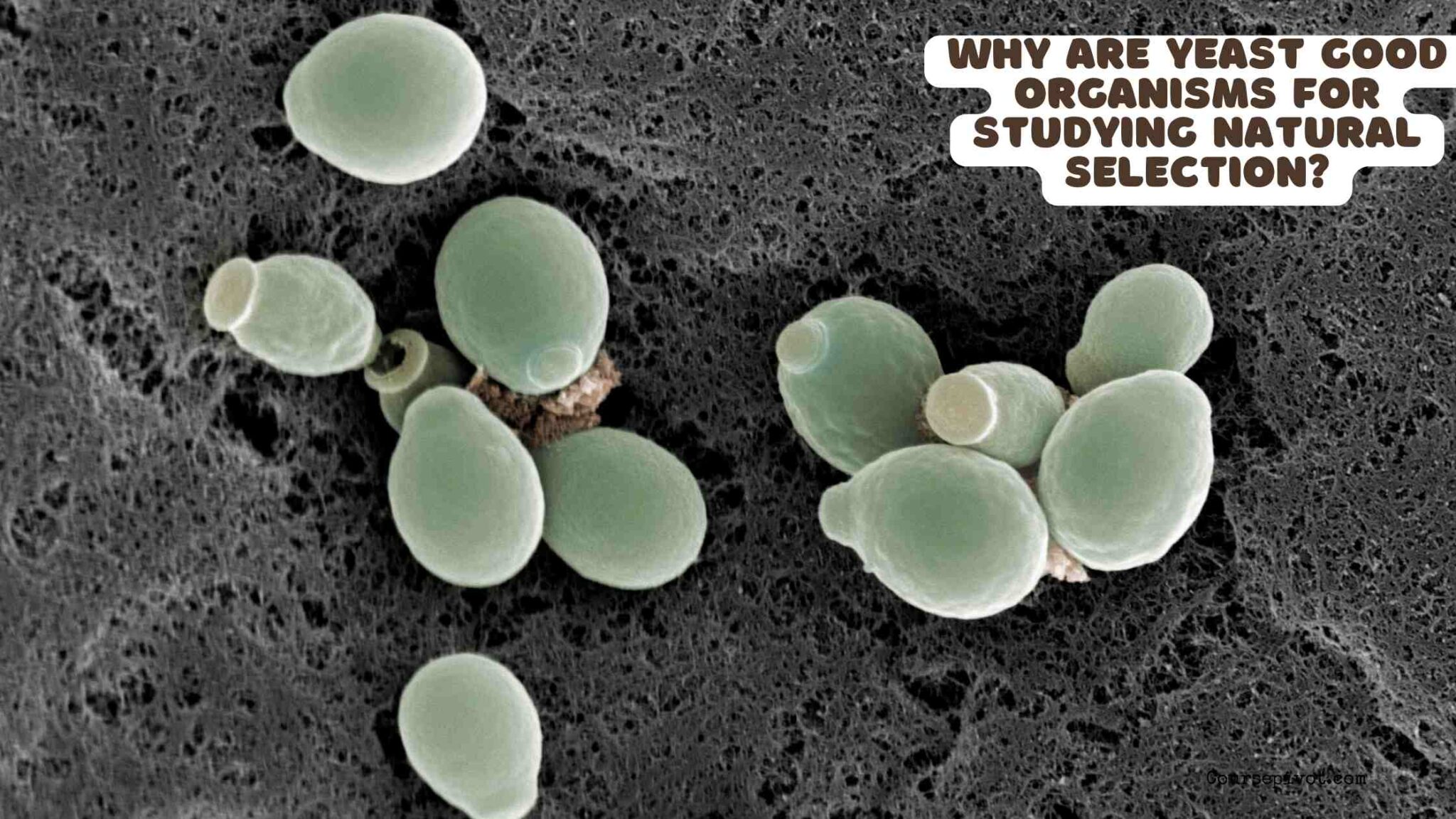
Yeast are small single-celled fungi, but they are powerful organisms for studying big biological ideas. In classrooms and research labs, yeast can help scientists observe growth, mutation, competition, adaptation, and natural selection in a practical way.
Natural selection is easier to study when organisms reproduce quickly, can be grown in large numbers, have genetic variation, and respond to controlled environmental pressures. Yeast fit those requirements unusually well.
Yeast are good organisms for studying natural selection because they reproduce rapidly, are easy to grow, can be tested in controlled environments, and show measurable changes in survival and reproduction.
The Short Answer
Yeast are useful for studying natural selection because researchers can grow many yeast cells in a small space and observe many generations in a short time.
That matters because natural selection works across generations. If an organism takes years to reproduce, experiments take a long time. Yeast reproduce quickly, so scientists can watch populations change under different conditions.
Yeast also have well-studied genetics. Researchers can track changes in traits, genes, growth rate, stress tolerance, and survival more easily than with many larger organisms.
Yeast Reproduce Quickly
One of the biggest advantages of yeast is their short generation time. Under good conditions, many yeast cells can divide in a matter of hours.
Fast reproduction means:
- Many generations can be studied quickly.
- Mutations and inherited variation can appear and spread.
- Selection can be observed over days or weeks instead of years.
- Students can see measurable changes during a lab activity.
Natural selection requires variation and reproduction. Yeast make both easy to observe because each new generation creates another opportunity for traits to become more or less common.
They Are Easy to Grow in the Lab
Yeast are inexpensive, safe to handle in basic educational settings when proper lab rules are followed, and easy to grow on simple nutrient media.
Researchers can grow yeast:
- In liquid culture
- On agar plates
- In flasks
- In test tubes
- Under different temperatures
- With different sugar sources
- With different stress conditions
This makes yeast practical. A classroom or lab can compare several conditions at once without needing large spaces, expensive equipment, or long animal-care timelines.
Scientists Can Control the Environment
Natural selection depends on the environment. A trait that helps in one environment may not help in another.
With yeast, scientists can change the environment carefully and ask specific questions. For example:
- Which yeast grow best with limited sugar?
- Which yeast survive higher salt levels?
- Which yeast tolerate heat better?
- Which yeast grow after exposure to a chemical stressor?
- Which yeast outcompete others in mixed cultures?
Because the environment can be controlled, scientists can connect cause and effect more clearly. If one yeast strain grows better under heat stress, researchers can investigate whether that trait gives it a selective advantage.
They Produce Large Populations
Yeast populations can become very large. Large populations are useful because natural selection is easier to detect when many individuals are competing and reproducing.
In a large population, some cells may carry differences that affect survival or reproduction. If those differences are inherited, selection can change the population over time.
Large population size also gives researchers more data. Instead of studying a few animals or plants, they can measure growth patterns across millions of cells.
This is especially helpful when differences are small. A tiny growth advantage may be hard to see in a few organisms but becomes visible in a large yeast population.
Yeast Have Well-Known Genetics
Yeast, especially Saccharomyces cerevisiae, are among the best-studied eukaryotic model organisms. A eukaryote is an organism whose cells have a nucleus and membrane-bound organelles.
This matters because yeast are simple enough to study easily but complex enough to share important cell features with plants, animals, and humans.
Scientists know a great deal about yeast genes, chromosomes, cell division, metabolism, and stress responses. That makes it easier to connect a visible trait, such as faster growth, to an underlying genetic cause.
If you are comparing cell types, the article on whether bacteria are prokaryotic or eukaryotic can help explain how yeast differ from bacteria.
Their Traits Are Easy to Measure
Natural selection is not only about whether an organism looks different. It is about survival and reproduction. Yeast make those outcomes measurable.
Researchers can measure:
- Growth rate
- Colony size
- Survival after stress
- Fermentation ability
- Competition between strains
- Resistance to chemicals
- Ability to use different nutrients
- Changes in gene frequency
These measurements let scientists ask whether a trait improves fitness. In evolution, fitness means reproductive success in a particular environment, not physical strength or health in a general sense.
Yeast Show Adaptation in Real Time
Because yeast reproduce quickly, they can adapt over short experimental periods. If a population is placed under a repeated stress, cells with helpful traits may leave more descendants.
For example, yeast exposed to a challenging environment may evolve improved tolerance over time if variation exists and the tolerant cells reproduce more successfully.
This makes yeast valuable for experimental evolution. Scientists can create a clear starting population, apply a selection pressure, and compare later generations with earlier ones.
That is natural selection made visible: inherited differences affecting survival and reproduction across generations.
Yeast Connect Classroom Biology to Real Research
Yeast are not only useful in school labs. They are important in professional research on genetics, cell biology, aging, metabolism, evolution, disease, and biotechnology.
They have helped scientists study basic processes such as:
- DNA replication
- Cell division
- Gene expression
- Protein function
- Stress responses
- Metabolism
- Evolutionary adaptation
This makes yeast a strong bridge between simple classroom experiments and advanced biology. A student growing yeast on a plate is working with the same general organism that researchers use to investigate major biological questions.
For background on natural selection itself, see Charles Darwin’s contribution to biology.
What Yeast Cannot Show Perfectly
Yeast are useful, but they are not perfect models for every evolutionary question.
Limits include:
- Yeast are single-celled, so they do not show all features of animals or plants.
- Lab environments are simpler than natural ecosystems.
- Short experiments may not capture long-term evolutionary patterns.
- A trait that helps yeast in a lab may not matter in nature.
- Some evolutionary processes involve behavior, development, or ecology that yeast cannot model fully.
Good science uses the right organism for the right question. Yeast are excellent for studying many parts of natural selection, but they are not a replacement for all other organisms.
Final Thoughts
Yeast are good organisms for studying natural selection because they reproduce quickly, grow easily, form large populations, have well-known genetics, and respond to controlled environmental pressures.
They let scientists observe evolution in a practical way. Researchers can apply a selection pressure, measure growth and survival, and see whether certain traits become more common over generations.
That makes yeast a small organism with a large teaching value: they turn natural selection from an abstract idea into a process that can be tested, measured, and understood.