

Why Echolocation Is a Superior Adaptation for Insectivorous Bats Rather Than Fruit Bats
Echolocation is especially valuable for insectivorous bats because they hunt tiny, fast-moving prey in darkness and cluttered environments.
The Short Answer
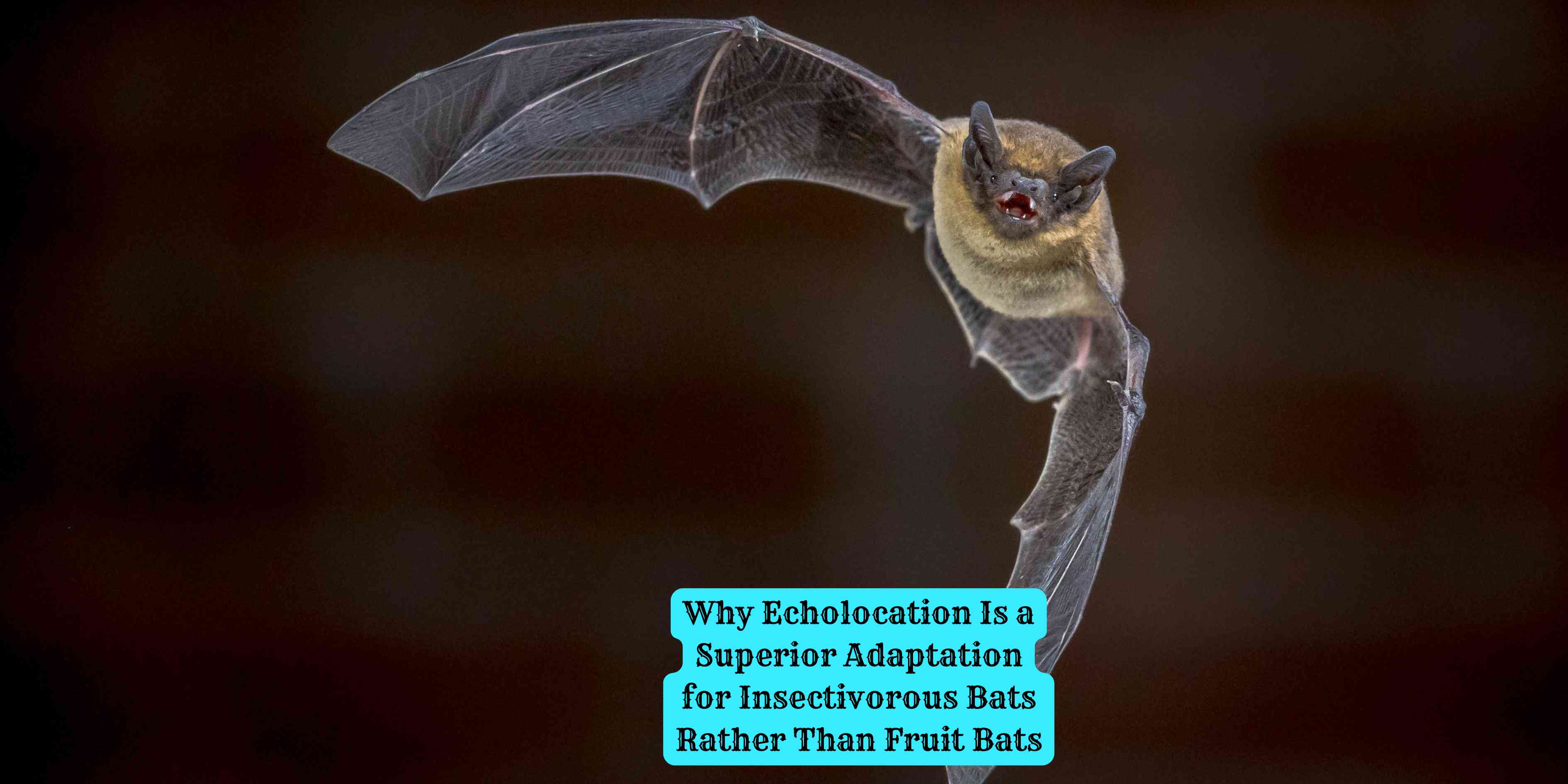
Echolocation is a superior adaptation for insectivorous bats rather than fruit bats because insect-eating bats must locate, track, and catch tiny moving insects in darkness. Fruit bats usually feed on larger, stationary, scented, or visually detectable foods such as fruit, nectar, and flowers, so they do not need the same level of high-speed acoustic hunting precision.
Both types of bats may use senses such as smell, sight, hearing, and memory. The difference is that insectivorous bats depend on echolocation as a hunting tool, while many fruit bats rely more heavily on smell and vision to find food.
Echolocation Helps Bats Hunt in Darkness
Echolocation works like biological sonar. A bat produces high-frequency sounds, those sounds bounce off objects, and the returning echoes give the bat information about distance, direction, size, shape, movement, and texture.
This is extremely useful at night. Many insectivorous bats feed after sunset, when flying insects are active and visual hunting is harder. A bat chasing a moth, mosquito, beetle, or fly cannot rely on daylight. It needs a sensory system that works in darkness and updates quickly.
Fruit bats also may feed at night, but their food is usually not darting through the air. A mango, fig, banana flower, or nectar source may be hidden among leaves, but it is not zigzagging away at high speed.
Insects Are Small and Fast
Insectivorous bats face a difficult hunting problem. Their prey is small, quick, and often unpredictable. A single flying insect can change direction suddenly, blend into a cluttered background, or move near leaves and branches.
Echolocation helps solve that problem by giving rapid feedback. As the bat approaches prey, it can adjust its flight path. Many insect-eating bats increase the rate of their calls during the final attack, creating a stream of information that helps them close in.
Fruit bats do not usually need that kind of split-second tracking. They may need to find a fruiting tree, identify ripe fruit, avoid obstacles, and land safely, but the food target itself is much larger and usually still.
Echolocation Helps with Navigation
Echolocation is not only for catching prey. It also helps bats avoid obstacles such as trees, cave walls, buildings, water surfaces, and other animals.
For insectivorous bats, navigation and hunting happen at the same time. A bat may chase insects near forest edges, over water, around streetlights, or through gaps in vegetation. It must avoid crashing while also tracking prey.
Fruit bats also navigate through complex environments, but many species have strong vision and smell. They can remember feeding sites, follow scent cues, and locate large food sources. Their sensory challenge is different from catching tiny insects in flight.
Fruit Is Easier to Detect with Smell and Sight
Fruit bats often feed on fruit, nectar, pollen, and flowers. These food sources can be large, colorful, fragrant, or located in predictable places. A fruiting tree may produce a strong smell and remain in the same spot for days or weeks.
That makes smell and vision especially useful. A fruit bat can use scent to detect ripeness and vision to move through the canopy. Memory also matters because fruit bats may return to productive trees or follow seasonal patterns.
Echolocation can help some fruit bats navigate, and a few fruit bats use simpler forms of sonar. However, the selective pressure is usually not as strong as it is for insect hunters. Fruit does not require the same rapid acoustic tracking as flying prey.
Hunting Insects Requires Precision
The superiority of echolocation for insectivorous bats comes down to precision. To catch an insect, a bat needs to know where the insect is now, where it is moving, how fast it is moving, and whether it is close enough to grab.
The bat may catch prey with its mouth, tail membrane, or wings depending on the species and hunting style. In each case, timing matters. A delay of even a fraction of a second can mean a missed meal.
Echolocation provides immediate feedback. It turns sound into a three-dimensional map that can update as the prey moves. That is why it is such a powerful adaptation for aerial insect hunting.
Fruit Bats Face Different Evolutionary Pressures
Adaptations evolve when they improve survival and reproduction in a specific environment. Insectivorous bats and fruit bats face different feeding challenges, so different senses become more important.
For insectivorous bats, natural selection favors hearing, call control, flight maneuverability, and acoustic processing. For fruit bats, natural selection may favor smell, vision, memory, strong flight for long-distance travel, and digestive traits for fruit or nectar diets.
This does not make fruit bats less adapted. It means they are adapted to a different lifestyle. Echolocation is superior for catching insects, but it is not automatically superior for every feeding strategy.
Key Takeaway
Echolocation is a superior adaptation for insectivorous bats because it helps them hunt small, fast, flying insects in darkness while avoiding obstacles. It gives them precise, real-time information about moving prey.
Fruit bats often rely more on smell, sight, and memory because fruit, nectar, and flowers are larger, more stationary, and easier to detect in other ways. The best adaptation depends on the problem the animal must solve, and insectivorous bats face a hunting problem that echolocation solves exceptionally well.