

What Is Most Likely to Result Immediately After a Rainforest in Brazil Is Clear-Cut?
Immediately after a rainforest is clear-cut, habitat is destroyed, soil is exposed, biodiversity drops, and erosion risk rises sharply.
The Short Answer
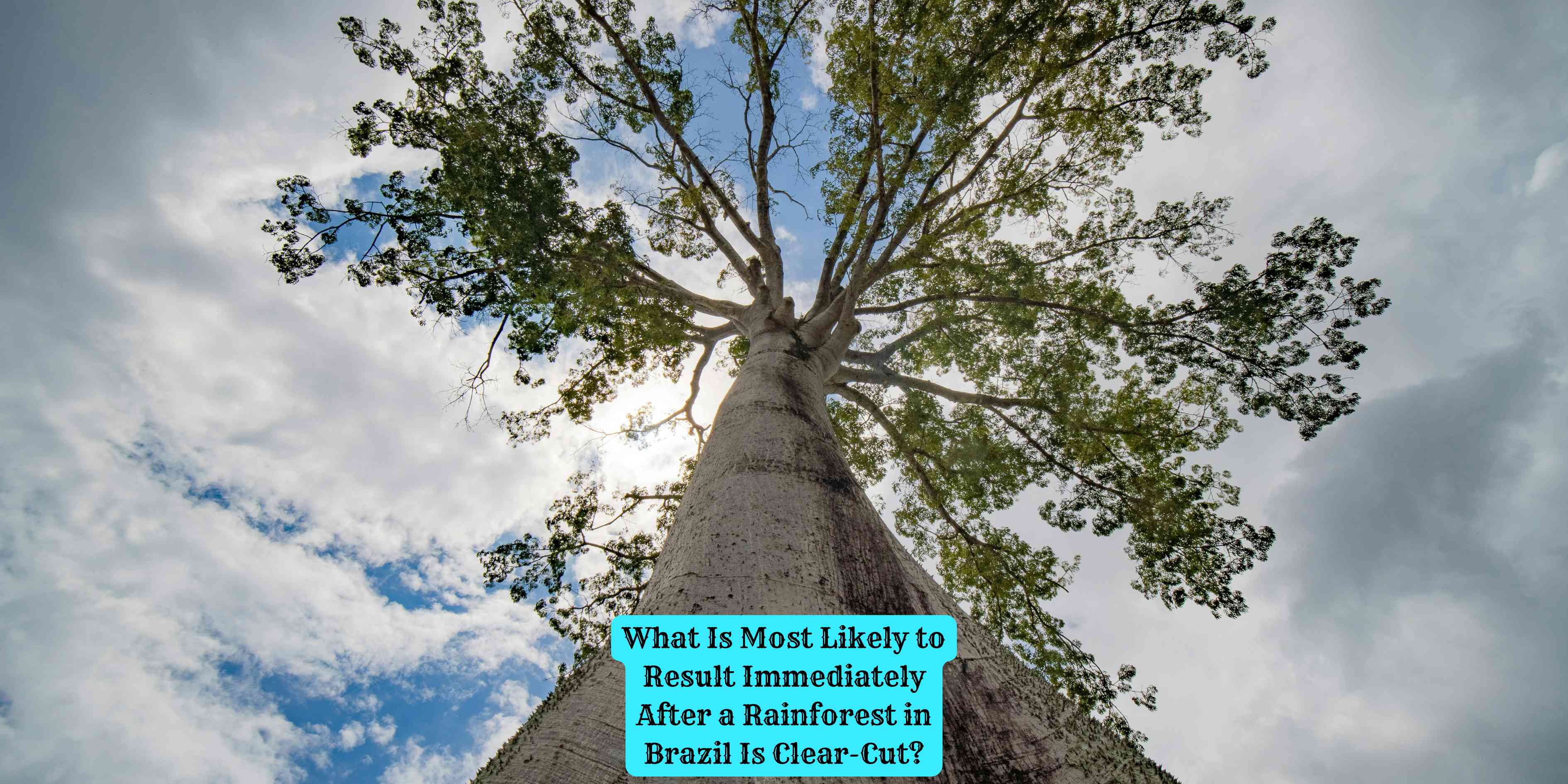
Immediately after a rainforest in Brazil is clear-cut, the most likely result is major habitat destruction and exposed soil. Many plants are removed at once, animals lose food and shelter, the forest canopy disappears, and the soil becomes more vulnerable to erosion, heat, and drying.
Long-term effects may include biodiversity loss, carbon emissions, disrupted rainfall patterns, and land degradation. But the immediate result is the sudden removal of the living forest structure.
Clear-cutting turns a layered, shaded rainforest ecosystem into an exposed landscape almost overnight.
Habitat Is Destroyed First
A tropical rainforest is not just a group of trees. It is a layered habitat with canopy trees, understory plants, vines, epiphytes, insects, birds, mammals, fungi, microbes, and soil organisms.
When the forest is clear-cut, those layers are removed or severely damaged. Animals that depend on certain trees, fruits, nesting sites, shade, or cover may flee, die, or become more vulnerable to predators.
Species that cannot move quickly are at the greatest immediate risk.
The Soil Becomes Exposed
Rainforest soil is often protected by canopy cover, roots, leaf litter, and constant biological recycling. Once trees are removed, sunlight hits the ground directly and rain strikes the soil with more force.
This can lead to:
- Faster drying
- Surface runoff
- Soil compaction
- Nutrient loss
- Erosion
- Increased stream sediment
The soil may look open and usable at first, but it has lost the living system that helped maintain it.
Erosion Risk Increases
Tree roots help hold soil in place. Leaves and branches reduce the impact of heavy rain. When those protections disappear, rain can wash away topsoil more easily.
Erosion can carry soil into streams and rivers, affecting water quality and aquatic habitats. Roads built for logging or land clearing can make the problem worse by fragmenting the landscape and creating runoff channels.
EPA materials on habitat review note that clear-cut logging combined with road building can increase forest fragmentation and soil erosion.
Biodiversity Drops
Brazil’s rainforests, including the Amazon, support extraordinary biodiversity. Clear-cutting reduces that biodiversity by removing food webs and microhabitats.
Some generalist species may survive or move into cleared land, but many forest-dependent organisms decline. This includes insects, birds, amphibians, mammals, plants, and fungi that rely on humid, shaded forest conditions.
For a wider explanation, this article on invasive species and the environment shows how ecosystem disruption can create wider ecological problems.
Carbon Is Released or No Longer Stored
Trees store carbon in trunks, branches, leaves, and roots. When a rainforest is cut and burned, left to decay, or converted to other land uses, stored carbon can be released into the atmosphere.
The land also loses part of its future ability to absorb carbon through forest growth. This is why deforestation is connected to climate change as well as local ecosystem damage.
The immediate result may be piles of cut vegetation, burning, or exposed biomass. The climate effect continues over time.
Local Temperature and Moisture Change
Forests create shade and release water vapor through transpiration. When trees are removed, the cleared area often becomes hotter, drier, and more exposed.
This affects seedlings, soil organisms, animals, and nearby forest edges. Edges can become hotter and windier than the interior forest, changing which species can survive there.
What Happens Next Depends on Land Use
After clear-cutting, the land may be used for cattle pasture, crops, roads, mining, settlement, or other development. It may also be abandoned or allowed to regrow.
Recovery depends on soil condition, nearby seed sources, rainfall, fire, invasive species, and whether the land is protected from repeated clearing.
Secondary forest can return in some cases, but it may not quickly regain the complexity of the original rainforest.
Practical Takeaway
The most likely immediate result after a rainforest in Brazil is clear-cut is habitat loss and exposed soil. Trees and canopy cover are removed, animals lose shelter, biodiversity drops, and erosion risk increases.
In the long run, clear-cutting can also affect carbon storage, water cycles, local climate, and the survival of species that depend on intact tropical forest.