

What Can a Police Officer Do If a Man Walking Down the Street Appears to Have an Illegal Weapon?
If an officer has reasonable suspicion of illegal weapon possession, they may be able to stop, question, and sometimes frisk the person.
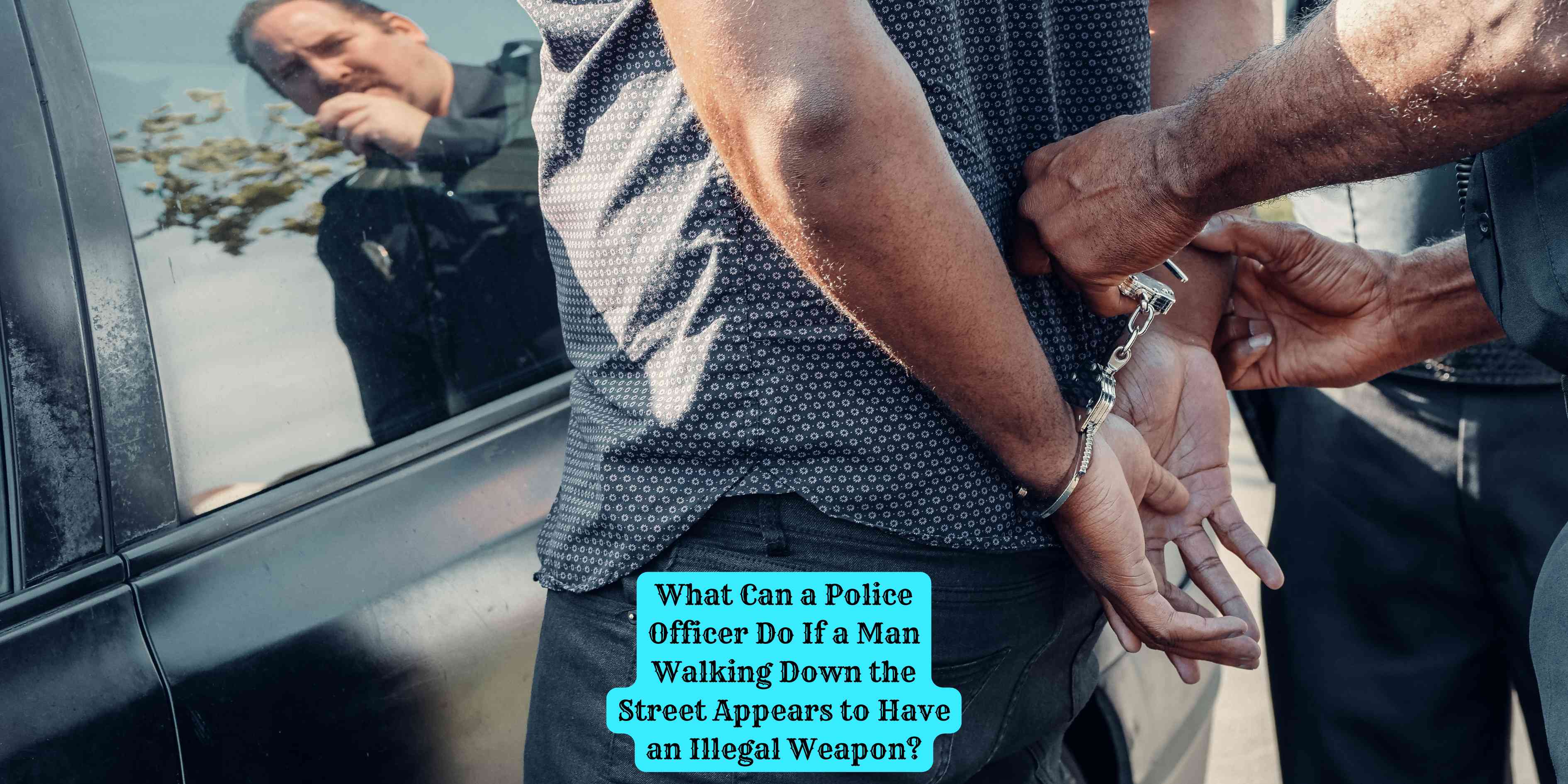
The Short Answer
If a man walking down the street appears to have an illegal weapon, a police officer may observe him, ask questions, conduct a temporary stop if there is reasonable suspicion, perform a limited frisk if the officer reasonably believes he is armed and dangerous, seize an illegal weapon if lawfully discovered, or make an arrest if probable cause develops.
The answer depends heavily on the facts, state weapon laws, local carry laws, and what the officer actually observes.
An officer generally needs specific facts, not just a vague feeling, to justify a forced stop.
The Fourth Amendment Background
The Fourth Amendment protects people from unreasonable searches and seizures. A police stop is a seizure, even if it is brief. A frisk is a search, even if it is limited.
The key Supreme Court case is Terry v. Ohio. Under Terry, police may briefly stop someone when they have reasonable suspicion that criminal activity is afoot. They may conduct a limited pat-down for weapons if they reasonably believe the person is armed and dangerous.
Congress’s Constitution Annotated explains that Terry approved an on-the-street investigation involving a pat-down for weapons, while probable cause remains required for arrest.
Reasonable Suspicion
Reasonable suspicion is more than a hunch but less than probable cause. It must be based on specific, articulable facts.
Possible facts might include:
- A visible weapon where weapons are illegal.
- A bulge shaped like a weapon plus suspicious conduct.
- Reports of a person matching the description with a weapon.
- Threatening behavior.
- Brandishing or concealing behavior.
- Location-specific facts tied to a recent crime.
The legality of carrying a weapon varies widely by state. In places where open or concealed carry is lawful, seeing a gun may not automatically prove illegal conduct.
What the Officer Can Ask
An officer may approach and ask voluntary questions without necessarily detaining the person. The person may be asked whether they have a weapon, whether they have a permit where required, or whether they are willing to identify themselves.
If the encounter becomes a detention, the officer needs legal justification. Whether a person must identify themselves depends on state law and the nature of the stop.
What a Terry Frisk Allows
A Terry frisk is not a full search for evidence. It is a limited pat-down of outer clothing for weapons when the officer reasonably believes the person is armed and dangerous.
If the officer feels an object that is clearly a weapon, the officer may remove it. If the officer goes beyond the weapon-safety purpose without legal justification, the search may be challenged later.
| Police action | Legal basis usually needed |
|---|---|
| Voluntary conversation | No detention |
| Temporary stop | Reasonable suspicion |
| Pat-down for weapons | Reasonable belief of armed danger |
| Arrest | Probable cause |
| Full search incident to arrest | Lawful arrest |
When Probable Cause May Develop
Probable cause may develop if the officer confirms the weapon is illegal, learns the person is prohibited from possessing it, sees the person commit a crime, discovers an outstanding warrant, or finds evidence during a lawful frisk.
Probable cause is a stronger standard than reasonable suspicion. It supports arrest or more intrusive police action.
Important Limits
Police cannot automatically search anyone just because they are in a high-crime area or because an officer feels uneasy. Courts look for specific facts.
Also, lawful gun possession complicates the analysis. In many states, carrying a firearm may be legal with or without a permit, depending on the circumstances. Officers still may investigate if facts suggest illegality or danger, but legal carry cannot always be treated as criminal by itself.
Quick question: can the officer take the weapon during the stop?
If the officer lawfully stops and frisks someone and reasonably believes the weapon creates a safety risk, temporary seizure may be allowed while the officer investigates.
A Practical Takeaway
If someone appears to have an illegal weapon, police may move from observation to questioning, stop, frisk, seizure, or arrest only as the legal justification increases. The most important dividing lines are voluntary encounter, reasonable suspicion, reasonable belief of danger, and probable cause.
This is general U.S. legal education, not legal advice. State weapon laws can change the answer significantly.