

How Flooding Rice Fields Reduces Herbicide and Pesticide Use
Flooding rice fields can reduce some chemical use because standing water suppresses many weeds and changes the field environment.
The Short Answer
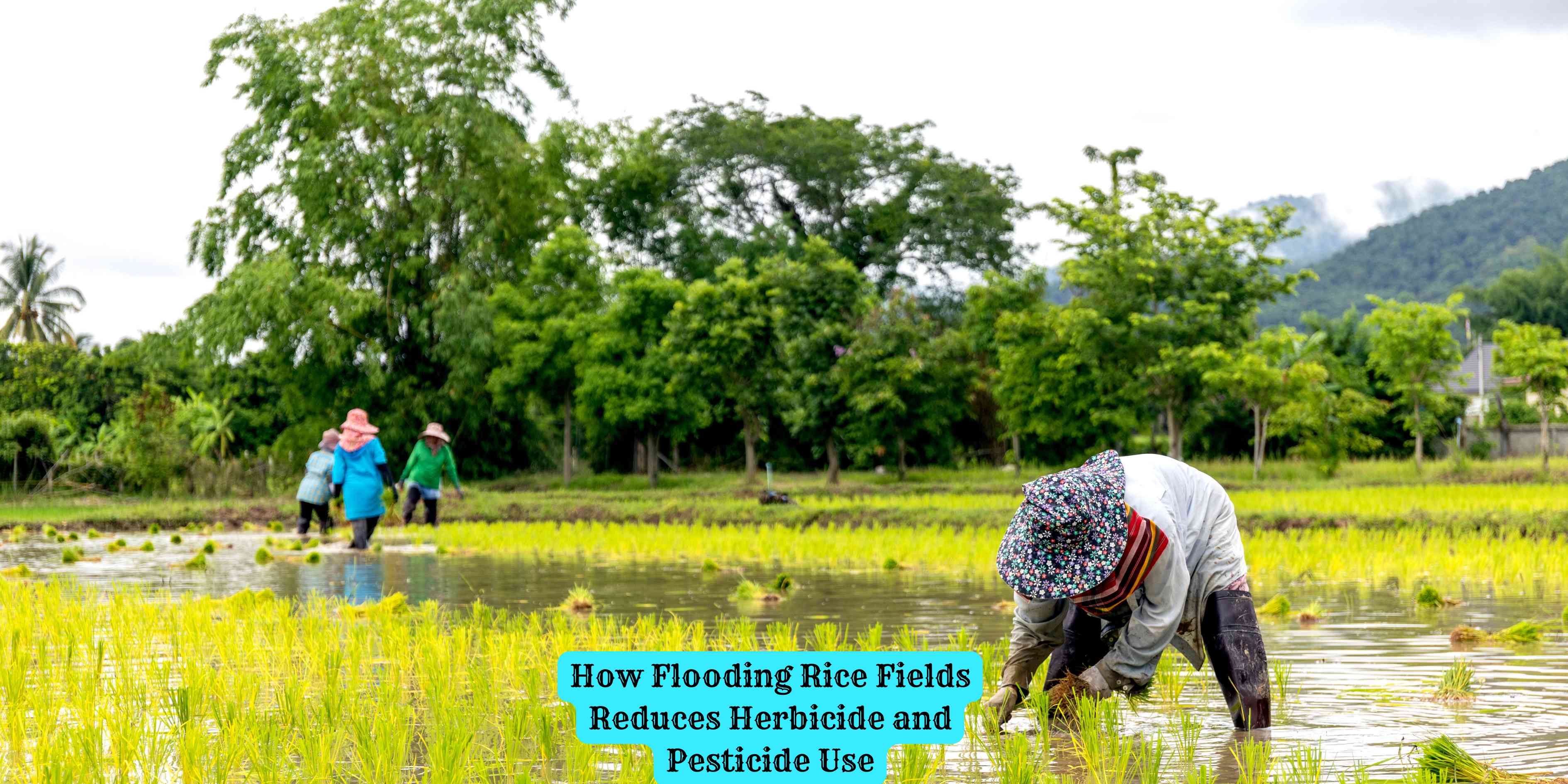
Flooding rice fields can reduce the need for herbicides and some pesticides because rice can tolerate standing water better than many competing weeds. Floodwater limits oxygen in the soil, blocks weed seedling growth, and creates conditions that favor rice over many unwanted plants.
This does not mean flooded rice fields need no pest management. Flooding is one tool that can suppress weeds naturally, reducing reliance on chemicals when it is managed well.
Why Rice Can Grow in Flooded Fields
Rice is well adapted to wet conditions. Many rice varieties can survive in standing water because they have structures that help move oxygen through the plant to the roots.
Many weeds are not as tolerant of prolonged flooding. When fields are flooded at the right time and depth, weed seedlings may fail to germinate, drown, or grow poorly.
This gives rice a competitive advantage.
Floodwater Suppresses Weeds
Weed control is one of the biggest reasons rice fields are flooded. Standing water can reduce light and oxygen available to weed seeds and seedlings.
Flooding is especially useful against weeds that need dry or oxygen-rich soil to germinate. If floodwater is maintained properly after rice is established, many weeds are suppressed before they become strong competitors.
Fewer weeds can mean less need for herbicide applications.
Timing Matters
Flooding works best when timed carefully. If fields are flooded too early, rice seedlings may struggle. If fields are flooded too late, weeds may already be established and harder to control.
Farmers often manage water depth based on rice growth stage, soil, weather, weed pressure, and local farming practices.
Water management is therefore not just irrigation. It is also part of weed management.
Flooding Can Interrupt Pest Habitats
Flooding may also affect some pests by changing habitat conditions. Certain soil insects, eggs, larvae, or disease cycles may be reduced when fields stay flooded. However, flooding can also favor some pests or diseases in certain regions.
That is why it is more accurate to say flooding can reduce the need for some pesticides, not all pesticides.
Rice farming still requires monitoring for insects, diseases, birds, rodents, and other threats.
Reduced Herbicide Use Can Benefit the Environment
When flooding reduces herbicide use, it may reduce chemical runoff risks, lower input costs, and limit exposure for workers and nearby ecosystems. Less herbicide can also reduce selection pressure for herbicide-resistant weeds.
However, flooding itself must be managed carefully. Rice paddies can produce methane, a greenhouse gas, under prolonged flooded conditions. Water use can also be a concern in dry regions.
Good rice farming balances weed control, water conservation, yield, and environmental impact.
Flooding Is Not a Perfect Solution
Flooding does not control every weed. Aquatic weeds or flood-tolerant weeds may still grow. Some weeds adapt to rice systems and require other methods.
Farmers may still use:
- Crop rotation
- Field leveling
- Clean seed
- Mechanical control
- Timely planting
- Targeted herbicides
- Alternate wetting and drying
- Integrated pest management
The best approach usually combines several tools instead of relying on only one.
How It Fits Integrated Pest Management
Integrated pest management, or IPM, uses multiple strategies to manage pests while reducing unnecessary chemical use. Flooding can be part of IPM because it uses environmental conditions to suppress weeds.
In a good IPM system, farmers monitor fields, identify pests correctly, use prevention first, and apply chemicals only when needed and in appropriate amounts.
Flooding helps by lowering weed pressure before herbicides become necessary.
A Simple Cause-and-Effect Chain
| Step | Effect |
|---|---|
| Field is flooded after rice establishment | Soil oxygen drops |
| Many weed seeds struggle | Weed competition decreases |
| Rice tolerates water better | Rice gains advantage |
| Fewer weeds survive | Herbicide need may decline |
| Field is monitored | Other pests are managed as needed |
This is the practical reason flooding can reduce chemical dependence in rice farming.
The Main Lesson
Flooding rice fields reduces the need for herbicides and some pesticides by creating conditions that favor rice and suppress many weeds or pests. The benefit depends on timing, water depth, weed species, rice variety, and local conditions.
Flooding is most effective when used as part of careful water management and integrated pest management, not as a substitute for all farm planning.