

How Human Impact on the Environment Can Be Positive or Negative
Human beings can damage ecosystems, but they can also protect, restore, and improve them.
The Short Answer
Human impact on the environment can be negative when people pollute, destroy habitats, overuse resources, or disrupt ecosystems. It can be positive when people conserve land, restore damaged areas, reduce waste, protect species, use cleaner energy, and make laws that support environmental health.
Human activity changes the environment either by increasing pressure on natural systems or by helping those systems recover.
Negative Impact: Pollution
Pollution is one of the clearest ways humans harm the environment. Air pollution from vehicles, factories, and power plants can damage lungs, contribute to climate change, and harm plants and animals.
Water pollution can come from sewage, industrial waste, oil spills, fertilizers, pesticides, and plastic. Polluted water can kill fish, spread disease, and make rivers, lakes, and oceans unsafe.
Soil pollution can reduce crop quality, harm organisms that live underground, and allow toxic substances to enter food chains.
Negative Impact: Habitat Destruction
When forests, wetlands, grasslands, and coral reefs are destroyed, many species lose the places they need to live, feed, breed, and hide from predators.
Human activities such as logging, mining, urban expansion, road building, and agriculture can break large habitats into smaller fragments. Fragmentation makes it harder for animals to migrate and find mates.
Habitat destruction is a major reason many species become threatened or endangered.
Negative Impact: Overuse of Resources
Humans depend on natural resources such as water, soil, fish, forests, minerals, and fossil fuels. Problems arise when these resources are used faster than they can be replaced.
Overfishing can reduce fish populations. Excessive groundwater pumping can dry wells and lower water tables. Overgrazing can damage grasslands and lead to erosion.
Resource overuse affects both ecosystems and people because human communities depend on healthy natural systems.
Negative Impact: Climate Change
Burning fossil fuels releases greenhouse gases that trap heat in the atmosphere. This contributes to rising temperatures, changing rainfall patterns, stronger heat waves, melting ice, sea level rise, and shifts in wildlife habitats.
Climate change can also worsen droughts, floods, wildfires, and food insecurity.
It is a global example of how many small and large human actions can combine to create a major environmental challenge.
Positive Impact: Conservation
Humans can also protect the environment through conservation. Conservation means using resources wisely so they remain available for the future.
Examples include protecting national parks, limiting hunting seasons, managing fisheries, reducing water waste, and preserving forests.
Conservation does not always mean stopping all human use. Often, it means using resources carefully enough that ecosystems can continue to function.
Positive Impact: Restoration
Environmental restoration means repairing damaged ecosystems. People can replant forests, restore wetlands, clean polluted rivers, rebuild oyster reefs, remove invasive species, and help native plants return.
Restoration can bring back wildlife, improve water quality, reduce flooding, and store carbon.
Although restoration cannot always return an ecosystem to its original condition, it can greatly improve environmental health.
Positive Impact: Cleaner Technology
Technology can reduce environmental harm when it is designed and used responsibly. Solar panels, wind turbines, electric vehicles, efficient appliances, improved batteries, water treatment systems, and recycling technology can reduce pollution and resource waste.
Cleaner technology is not automatically perfect. It still requires materials, energy, and careful disposal.
Still, it can reduce the damage caused by older, more polluting systems.
Positive Impact: Laws and Community Action
Governments, schools, businesses, and citizens can work together to protect the environment. Laws can limit pollution, protect endangered species, require environmental reviews, and regulate waste disposal.
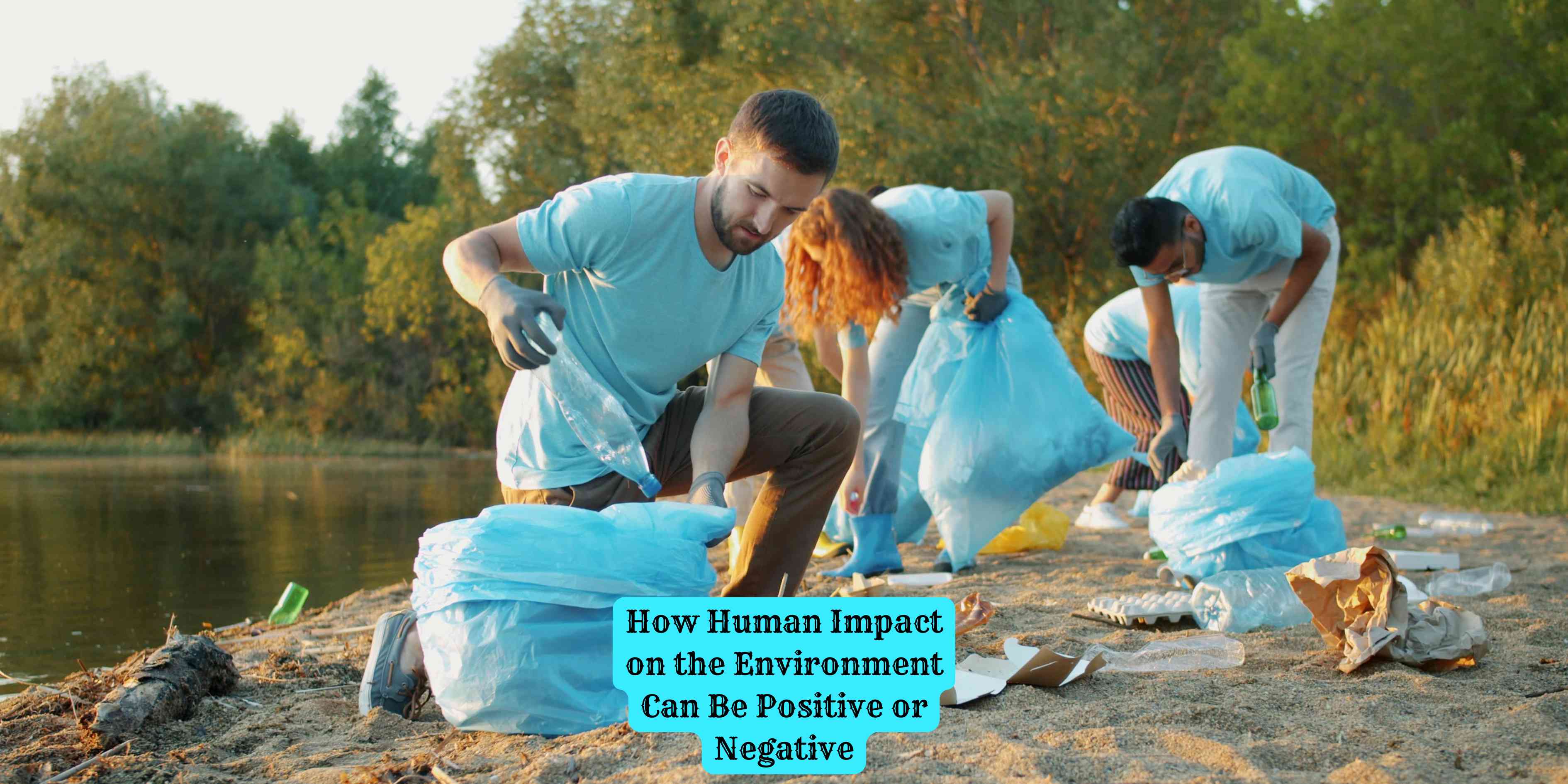
Communities can organize cleanups, plant trees, improve public transportation, support local food systems, and teach environmental responsibility.
Individual choices matter most when they are combined with larger community and policy changes.
Key Takeaway
Human impact on the environment is not automatically good or bad. It depends on what people do, how much they consume, what systems they build, and whether they take responsibility for the results.
Humans can harm ecosystems through pollution, habitat loss, resource overuse, and climate change. But they can also help through conservation, restoration, cleaner technology, better laws, and thoughtful daily choices.