

8 Signs You Were Raised by a Toxic Mother
Recognizing a toxic maternal relationship is not about blame — it is about understanding patterns that shaped you and that continue to affect your adult life. These eight signs are what that recognition looks like.
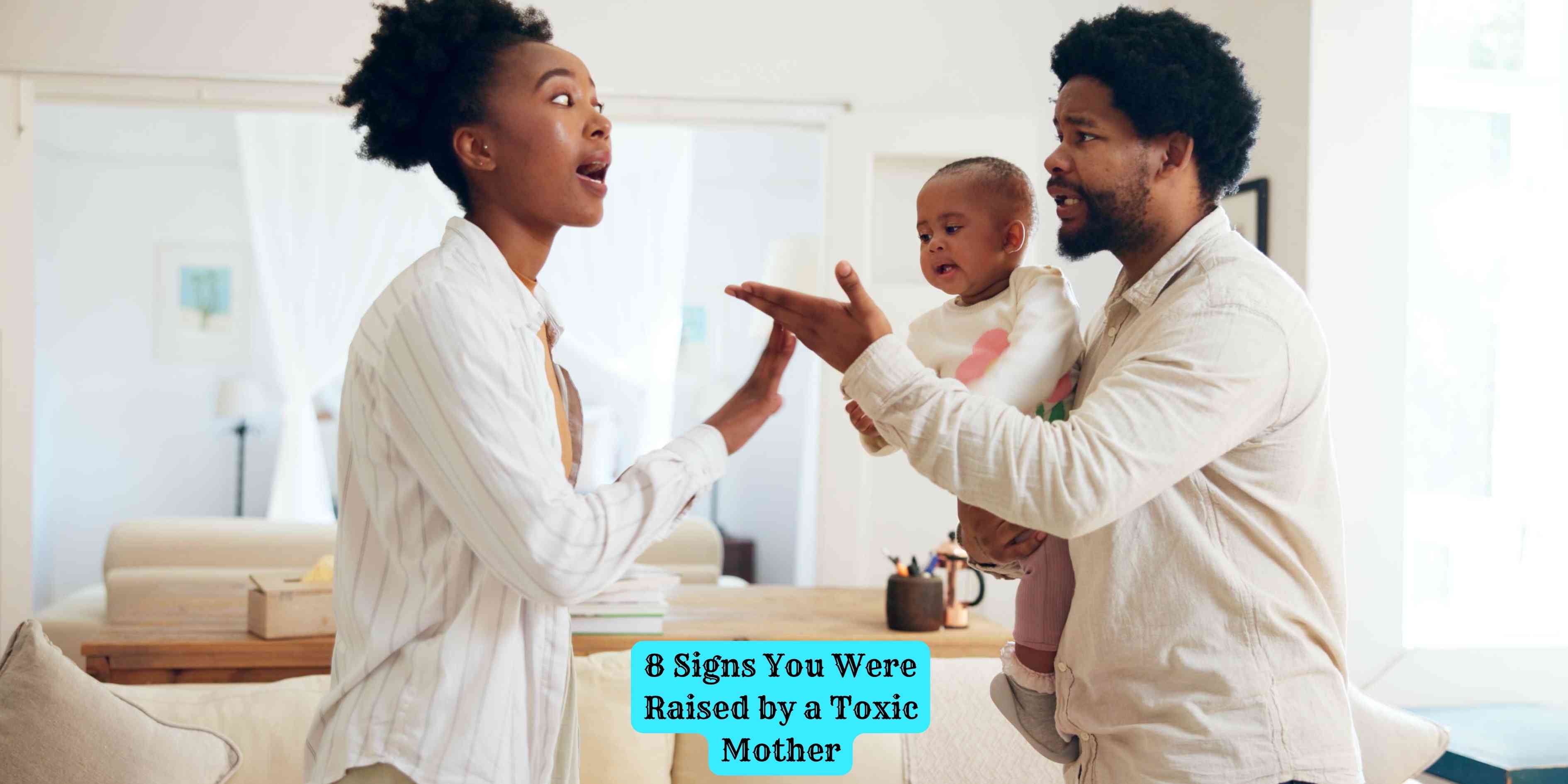
The term “toxic mother” describes a specific pattern of maternal behavior — not a bad day, not the imperfect parenting that every mother produces, but a sustained pattern that prioritizes the mother’s emotional needs over the child’s wellbeing, uses the child as a vehicle for the mother’s unresolved pain, and shapes the child’s internal experience in ways that persist into adulthood.
Recognizing these patterns is not about punishing or judging your mother — it is about understanding yourself and the origins of patterns that affect your adult relationships, self-perception, and emotional regulation.
Adult children of toxic parents almost universally describe the same revelation: the realization that what they experienced was not normal, not their fault, and not what all families look like. That realization is typically the beginning of genuine healing, rather than the end of the relationship with the parent.
1. You Were Made to Feel Responsible for Her Emotions
In a healthy parent-child relationship, the parent manages their own emotional experience without placing that burden on the child. A toxic mother reverses this: she makes her emotional states — her unhappiness, her anxiety, her anger — the child’s responsibility to manage and soothe. You grew up walking on eggshells, monitoring her moods before attending to your own needs, and feeling guilty when she was unhappy even when you had done nothing wrong.
The adult consequence is a heightened sensitivity to others’ emotional states, difficulty identifying your own needs in relationships, and a persistent sense of responsibility for how others feel — even when that responsibility is not yours to carry.
2. Love Was Conditional on Performance
Conditional love — affection, approval, and warmth that depended on meeting specific standards — teaches a child that they are valuable only when they are achieving or pleasing. The child of a toxic mother learns that love must be earned rather than given, and that withdrawal of warmth is a consequence of failing to perform to expectation.
Adults who experienced this often carry a relentless internal critic, struggle with perfectionism, and find it difficult to receive unconditional love from a partner without suspecting it will be withdrawn when they inevitably fall short. They may also find that they work exhaustingly hard for approval in relationships and professional contexts, not from ambition but from the anxiety that insufficient performance will cost them the connection they need.
3. She Used Guilt as a Primary Control Tool
Guilt is a standard tool in the toxic mother’s relational repertoire: “After everything I’ve done for you,” “I gave up so much for you,” “This is how you repay me.” Guilt works because it weaponizes the child’s genuine love for the mother — it leverages the relationship to produce compliance and to make normal, healthy boundary-setting feel like betrayal.
Adults raised with this pattern often experience guilt as a default response to boundary-setting in any relationship — not just with their mother. Saying no to anyone can feel like the same kind of betrayal the guilt implied during childhood, even when the situation is entirely different.
4. There Was No Room for Your Feelings
A toxic mother centers her own emotional experience to the extent that the child’s emotions are invisible, dismissed, or treated as inconvenient. When you were sad, she redirected to her own sadness. When you were scared, she dismissed or minimized the fear. When you expressed needs, they were experienced as demands that competed with her own.
The adult consequence is difficulty validating your own emotional experience, a tendency to minimize your own feelings in relationships, and the belief — often unconscious — that your internal experience is less important than other people’s. Many people raised this way become excellent at reading and managing others’ emotions and very poor at accessing or expressing their own.
5. She Enmeshed You with Her Identity
Enmeshment is the erasure of the boundary between the parent and child’s separate identities. An enmeshed mother experiences her child’s successes as her own, her child’s failures as personal failures, and her child’s independence as abandonment. She may have lived vicariously through you, had strong opinions about decisions that were yours to make, and responded to your developing autonomy with hurt or anger.
The adult signature of enmeshment is difficulty knowing where you end and others begin — difficulty distinguishing your own preferences, values, and desires from the preferences that were shaped by what the enmeshed parent wanted. Independence can feel dangerous or disloyal even decades after leaving home.
6. You Were Parentified
Parentification is when a child is placed in the role of emotional support or practical caregiver for the parent. If you were your mother’s confidant, therapist, or emotional support from a young age — if you listened to adult problems, soothed her in her distress, and felt responsible for her wellbeing — you experienced parentification. This is a form of emotional neglect disguised as closeness: the child’s developmental needs are subordinated to the parent’s needs, and the relationship serves the parent rather than the child.
7. She Never Apologized — or Her Apologies Made You Responsible
Accountability — the ability to acknowledge harm caused and apologize genuinely — is absent in the toxic maternal relationship. When conflict occurred, the toxic mother typically never apologized, or apologized in ways that made the situation worse: “I’m sorry you feel that way” (not an apology), “I’m sorry I’m such a terrible mother” (guilt transfer), or an apology followed immediately by a return to the behavior. The child learned that apologies either do not happen or are performances rather than genuine acknowledgments.
Adults with this background often find apologies in adult relationships either very difficult to give or very difficult to receive — either because they were never modeled, or because they were weaponized.
8. You Feel Anxious, Guilty, or Exhausted After Spending Time with Her
The most immediate and practical sign in adult life is how you feel after contact with your mother. Time spent with someone who loves and supports you generally produces warmth, energy, or at minimum, neutral feelings.
Time spent with a toxic parent typically produces a specific emotional signature: anxiety, guilt, depletion, a need to decompress, or a recurrence of the childhood emotional states (feeling small, feeling responsible, feeling unable to please). If contact with your mother consistently produces these feelings in you, that pattern is important information about the nature of the relationship.
Recognizing these patterns is not the same as severing the relationship — though for some people, distance or limited contact is appropriate. More often, recognition allows the adult child to understand the origins of patterns that have affected their life, pursue therapy or healing work that addresses those patterns, and engage with the parental relationship with clearer eyes and healthier boundaries than were possible before the recognition occurred.