

6 Reasons Why Sunday School Is Important
Sunday school is more than a weekly class — it is often where a person's understanding of faith, values, and community is first formed and given shape.
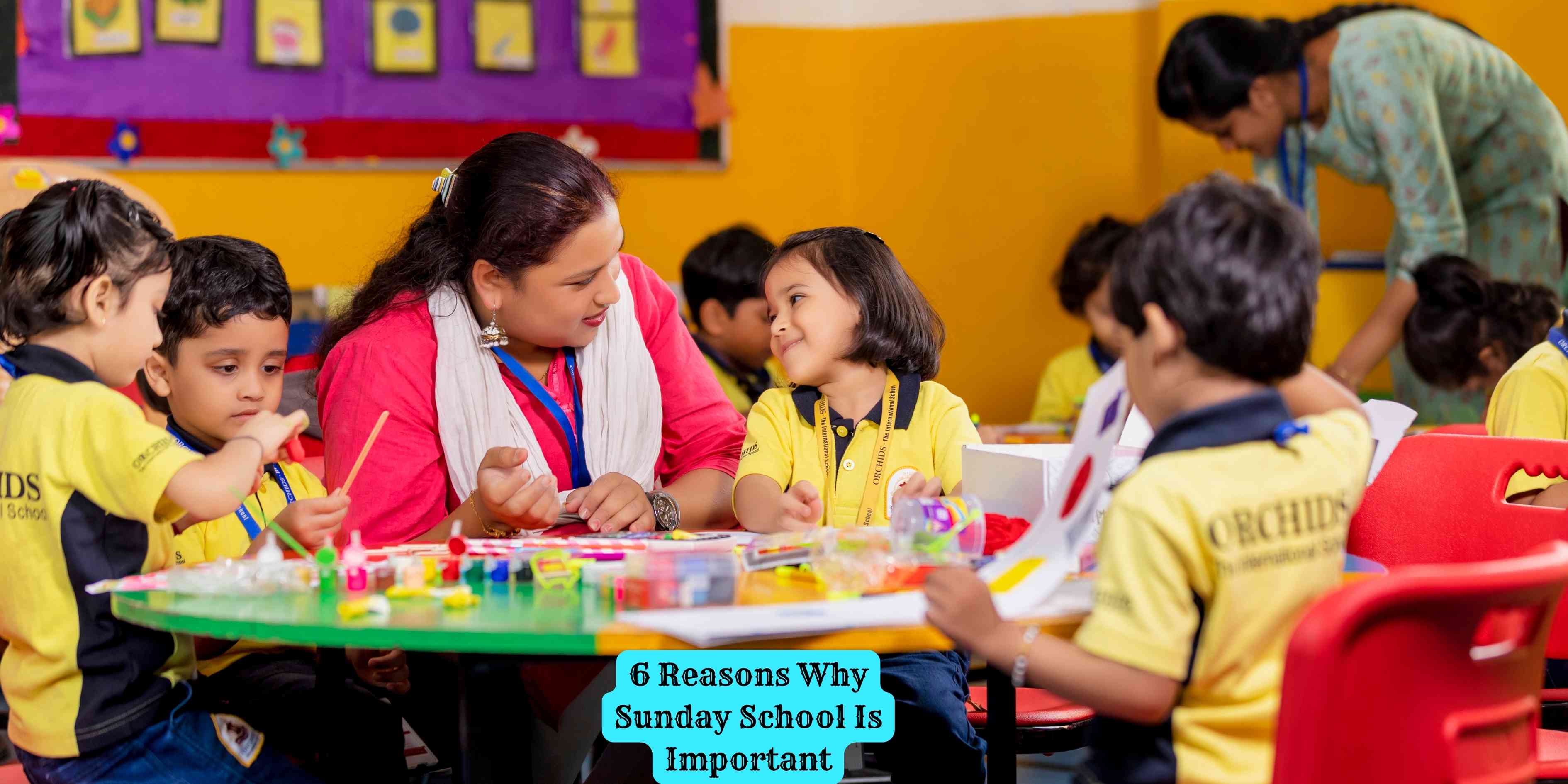
Sunday school is important because it provides structured, age-appropriate biblical instruction, builds a foundation for moral reasoning, connects children and adults to a faith community, and creates a space for spiritual questions to be asked and explored in a supported environment. For many people, the habits of faith built in Sunday school carry through an entire lifetime.
A child who learns what they believe and why they believe it is far better equipped to maintain and defend their faith in environments that will challenge it.
Here are six reasons Sunday school remains a meaningful investment for families and churches.
1. It Provides Structured Biblical Instruction
Many people grow up in Christian households without developing a systematic understanding of the Bible. Sunday school addresses this by offering organized, sequential instruction that helps students understand Scripture not just as a collection of stories but as a coherent narrative with theological meaning.
Children who attend Sunday school regularly develop familiarity with key biblical texts, major figures, and the overall arc of the biblical story — creation, fall, redemption, and restoration. This foundation gives them a frame of reference for understanding their own faith, reading the Bible independently as adults, and engaging thoughtfully with theological questions throughout their lives.
Structured instruction also helps children understand the relationship between the Old and New Testaments, the context of key passages, and the application of biblical principles to everyday life.
2. It Shapes Moral and Ethical Character
Sunday school consistently teaches virtues like honesty, kindness, forgiveness, service, and justice through the lens of scripture and the example of Jesus. These are not abstract concepts — they are illustrated through parables, biblical narratives, and direct teaching that makes moral formation understandable and memorable for young learners.
Children who receive consistent moral instruction grounded in faith tend to have a stronger framework for ethical decision-making. They have a vocabulary for right and wrong that extends beyond social norms or peer pressure — they understand why certain actions are right or wrong, not just that a rule says so.
This moral grounding is particularly important during adolescence, when peer influence increases and external social pressures become more complex.
3. It Builds a Sense of Christian Community
One of the most significant benefits of Sunday school is the community it creates. Regular attendance connects children with peers who share a similar faith background, and connects families with other families in the congregation. These relationships often become lifelong.
Community within a faith context also provides a support structure that extends beyond Sunday morning. Children who feel genuinely connected to a church community are more likely to remain engaged with their faith into adulthood. Belonging to a group of people who share your values and care about your spiritual wellbeing is a powerful anchor during difficult seasons of life.
For adults who participate in Sunday school as well, the small-group learning environment creates deeper connections than a large worship service alone can provide.
4. It Creates a Safe Space for Spiritual Questions
Children and teenagers have genuine questions about faith, God, suffering, doubt, and the meaning of life — and they deserve a place where those questions can be asked honestly and addressed thoughtfully. Sunday school provides that environment.
A skilled Sunday school teacher does not suppress difficult questions but welcomes them as an opportunity for genuine engagement. Students who learn that faith can withstand honest questioning tend to develop a more resilient, personally owned faith rather than one that was simply inherited without examination.
Giving young people permission to ask hard questions within a supportive community of faith is one of the most important things a church can do for their long-term spiritual health.
5. It Reinforces What Is Taught at Home
For parents who want to raise children in the Christian faith, Sunday school functions as a reinforcement of what is taught at home — or an introduction to biblical content that parents may not feel equipped to teach on their own. Either way, it creates a consistent message across home and church contexts.
When children hear the same values, stories, and principles taught both at home and in Sunday school, those messages carry more weight and are more deeply internalized. The combination of parental guidance and structured church instruction creates an environment where faith is not just a family tradition but a living reality across multiple contexts.
Sunday school also gives parents language and topics to continue discussing at home — what was taught that week becomes a natural entry point for family conversations about faith.
6. It Plants Seeds That Last a Lifetime
The research on faith formation consistently shows that the religious habits and beliefs formed in childhood have a disproportionate influence on adult spiritual life. People who attended Sunday school regularly as children are more likely to remain connected to a faith community as adults, more likely to read the Bible independently, and more likely to pass faith on to their own children.
This is not surprising — foundational experiences in any domain tend to shape lifetime patterns. The values, stories, and habits formed in Sunday school do not disappear when a child grows up. They form part of the internal landscape through which adulthood is navigated.
Even for people who drift from active church involvement during young adulthood, a strong Sunday school foundation often becomes the basis for a return to faith later in life.
Sunday school is one of the most consistent and accessible pathways to biblical literacy, character formation, and lifelong faith. The content taught each week — covering everything from Genesis to the letters of Paul — is what shapes how students understand God, themselves, and the world. For a structured look at what that content might include across an entire year, 52 Sunday school lessons for each week of the year offers practical ideas and themes. And for anyone exploring the foundations of joy in Christian faith, 10 reasons to rejoice in the Lord complements what Sunday school teaches about the goodness of God.