

5 Reasons Why the Eucharist Is Important
The Eucharist — the Lord's Supper, Communion, the Breaking of Bread — is the central act of Christian worship. These five reasons explain what it is and why it matters so deeply.
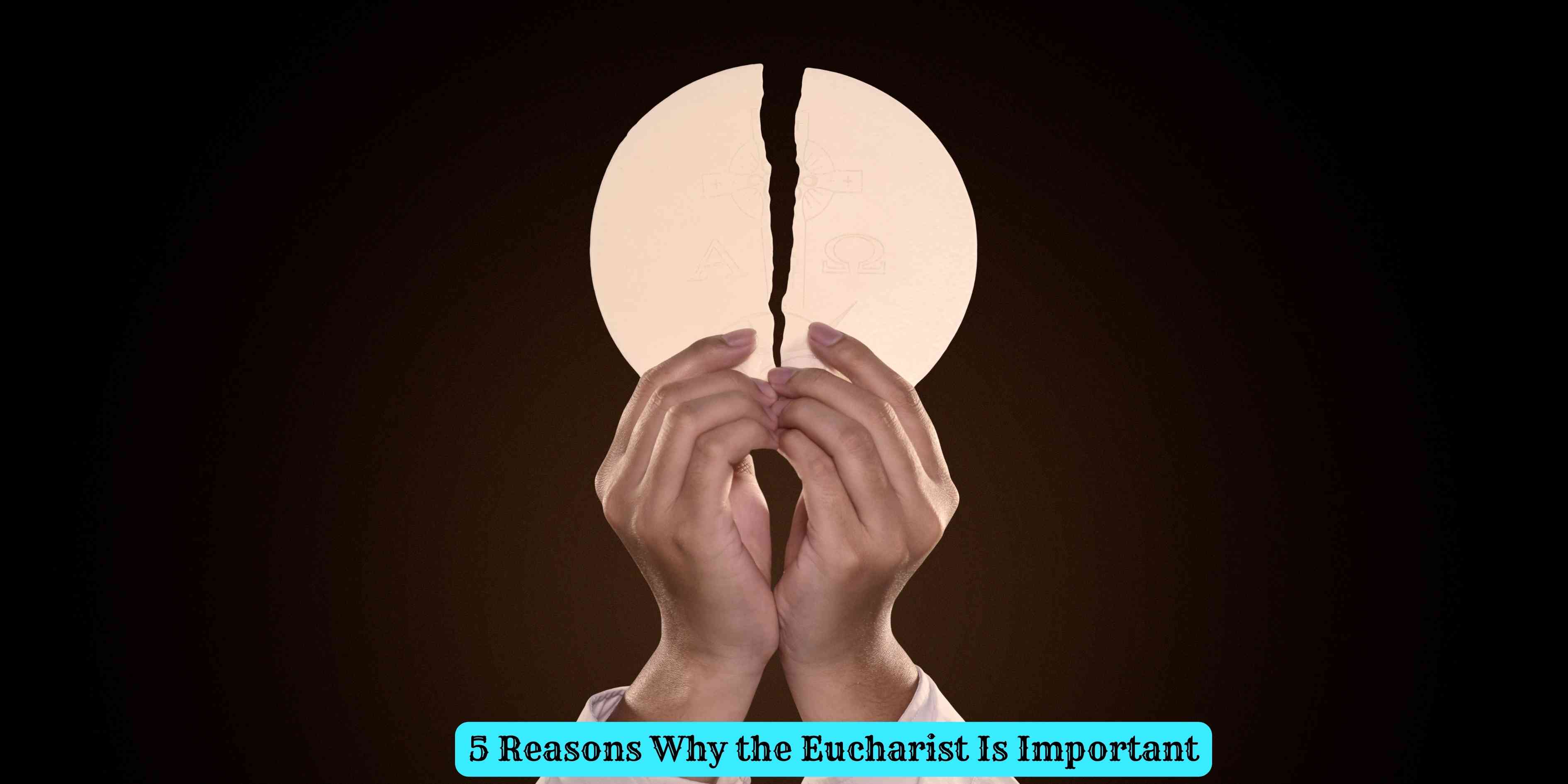
The Eucharist — known across Christian traditions as the Lord’s Supper, Holy Communion, the Mass, or the Breaking of Bread — is the central act of Christian worship. It was instituted by Jesus himself on the night before his crucifixion: “Do this in remembrance of me” (Luke 22:19). It has been practiced by Christians in every generation since. These five reasons explain why the Eucharist holds the significance it does — theologically, spiritually, scripturally, and in the lived experience of the Christian community.
1. It Is the Remembrance Jesus Commanded
The institution of the Eucharist is recorded in all three Synoptic Gospels and in Paul’s first letter to the Corinthians, where Paul writes: “For I received from the Lord what I also passed on to you: The Lord Jesus, on the night he was betrayed, took bread, and when he had given thanks, he broke it and said, ‘This is my body, which is for you; do this in remembrance of me.’ In the same way, after supper he took the cup, saying, ‘This cup is the new covenant in my blood; do this, whenever you drink it, in remembrance of me.’” (1 Corinthians 11:23-25)
The Eucharist is important first and most fundamentally because Jesus commanded it. The words “do this in remembrance of me” are not a suggestion or a tradition that developed later — they are a direct instruction from Christ to his disciples, intended to be passed to every generation of believers. The Church’s obedience to this command is an act of faithfulness to Christ’s own words.
The Greek word anamnesis, translated “remembrance,” carries deeper significance than simple cognitive recollection. In the Hebrew and Greek understanding of memory, anamnesis means making present — bringing the reality of a past event into the current moment. When the Church celebrates the Eucharist in remembrance of Christ, it does not merely think about what he did; it participates in the reality of his sacrifice and resurrection.
2. It Proclaims the Gospel
Paul continues in 1 Corinthians 11:26: “For whenever you eat this bread and drink this cup, you proclaim the Lord’s death until he comes.” The Eucharist is not only an internal spiritual practice but a proclamation — an announcement to the gathered community and, implicitly, to the watching world, of the central truth of the Christian faith: that Christ died, was raised, and will return.
Every celebration of the Eucharist is a reenactment of the gospel itself: death and resurrection, sacrifice and redemption, brokenness and restoration. The bread broken and the cup poured are visible signs of invisible realities — the body given and the blood shed for the forgiveness of sins. For believers and for observers, the Eucharist communicates what words alone may not fully convey.
The phrase “until he comes” also anchors the Eucharist in an eschatological — end-times — dimension. It is not only a memorial of the past but an anticipation of the future: the marriage supper of the Lamb that the book of Revelation describes as the culmination of redemption history. Every Eucharist is situated between the first coming and the second, between the cross and the completion of all things.
3. It Is a Means of Grace and Spiritual Nourishment
Across Christian traditions, the Eucharist is understood — in varying theological formulations — as a means of grace: a specific, instituted channel through which God communicates himself to the believer. Whether one holds a Roman Catholic understanding of transubstantiation (the actual transformation of bread and wine into the body and blood of Christ), a Lutheran understanding of the real presence of Christ in, with, and under the elements, a Reformed understanding of a spiritual real presence received by faith, or a Baptist memorial understanding of the ordinance as a spiritual symbol — across all of these, the Eucharist is understood to be a moment of genuine encounter between the believer and the risen Christ.
Jesus said in John 6:53-56: “Truly, truly, I say to you, unless you eat the flesh of the Son of Man and drink his blood, you have no life in you. Whoever feeds on my flesh and drinks my blood has eternal life, and I will raise him up on the last day. For my flesh is true food, and my blood is true drink. Whoever feeds on my flesh and drinks my blood abides in me, and I in him.”
Whatever the precise theological understanding of the mechanism, the spiritual reality communicated in scripture is that the Eucharist nourishes the believer’s union with Christ in a way that is genuine and transformative.
4. It Forms and Sustains Christian Community
The Eucharist is inherently communal. Paul writes in 1 Corinthians 10:16-17: “Is not the cup of thanksgiving for which we give thanks a participation in the blood of Christ? And is not the bread that we break a participation in the body of Christ? Because there is one loaf, we, who are many, are one body, for we all share the one loaf.”
The one loaf shared among many is an image of the unity of the Church — diverse individuals constituted as one body through shared participation in Christ. The Eucharist is not a private devotion but an act of the gathered community that expresses and forms that community as one body. Where division or inequality ruptures the community’s reception of the Eucharist — as Paul addresses sharply in 1 Corinthians 11:17-22, where wealthy members were eating without waiting for the poor — the sacrament itself is being violated.
Churches that celebrate Communion frequently report that the rhythm of returning together to the table is a significant source of community cohesion, mutual vulnerability, and shared identity. The act of coming to the same table, as equals before God, regardless of social differences, is itself a counter-cultural and deeply formative practice.
5. It Assures Believers of Christ’s Presence and Promise
The Eucharist provides a tangible, physical assurance of the gospel’s truth that intellectual assent alone cannot fully provide. Faith has moments of weakness, doubt, and spiritual dryness — times when the promises of scripture feel abstract or distant. The bread and the cup are concrete, sensory realities that carry the promise: Christ’s body was broken for you; his blood was shed for you.
John Calvin, in his theology of the Lord’s Supper, emphasized that Christ instituted the sacrament precisely because God knows the weakness of human faith — that we are embodied creatures who need not only words but signs and seals of the promises we believe. The Eucharist is the church’s regular return to the concrete, repeated assurance that what Christ accomplished on the cross was real, that it applies to the one receiving, and that his presence among his people is not a metaphor but a living reality that the community experiences together.
This assurance, renewed week by week or day by day at the table, is among the most sustaining gifts the Eucharist provides to the believer’s ongoing spiritual life.