

3 Reasons Why Baptism Is Important
Baptism has been a central practice of the Christian church since its earliest days. Understanding why it matters — theologically and practically — gives it meaning beyond ritual.
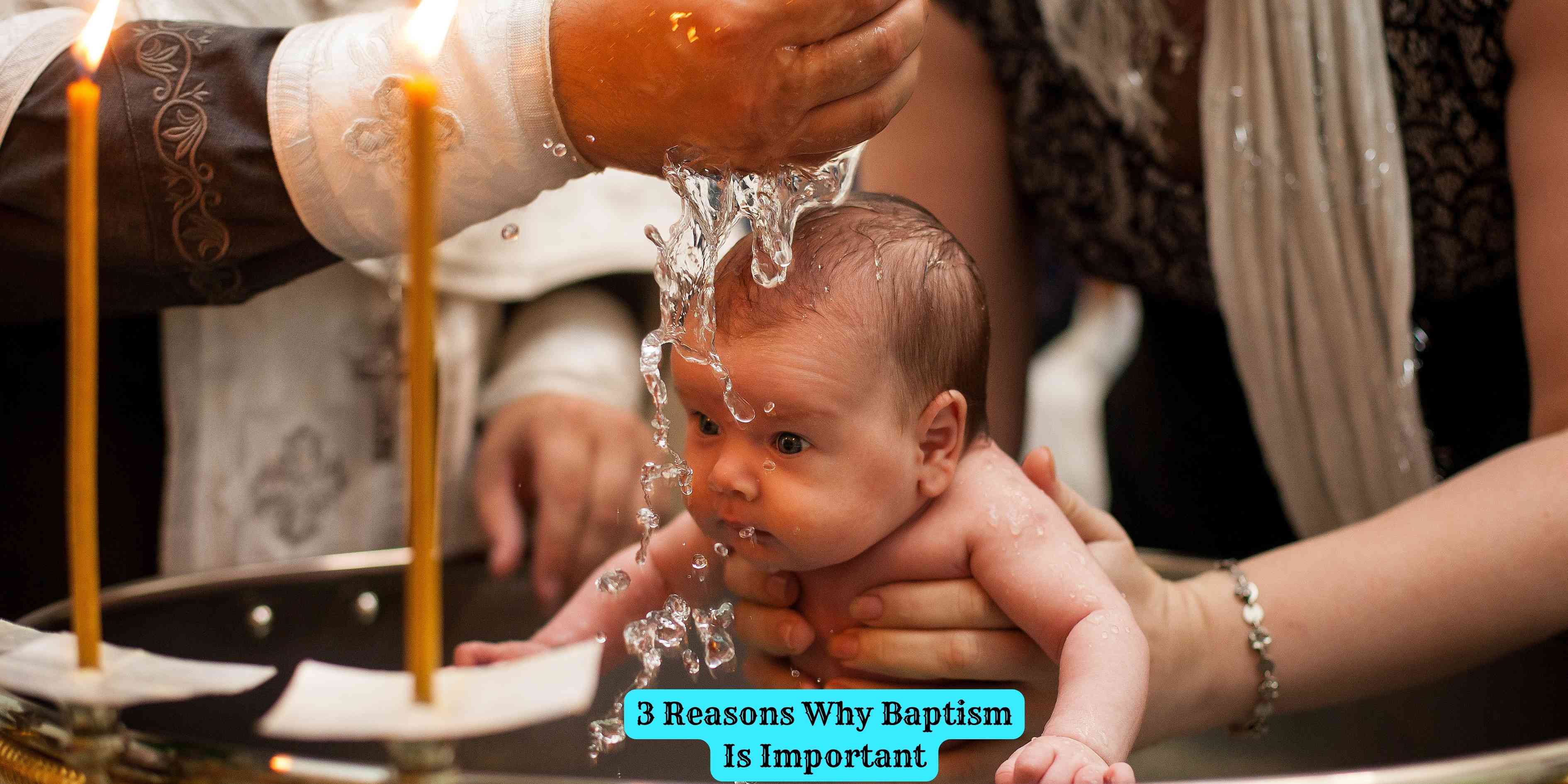
Baptism is practiced across virtually every branch of the Christian faith, though the specific theology of what it means and how it should be performed varies significantly across traditions. In spite of those differences, a core set of reasons for baptism’s importance emerges from Scripture and from the historic Christian tradition. The three reasons below represent what most traditions — whether they baptize infants or adults, by sprinkling or immersion — hold in common about why baptism matters.
Jesus was baptized himself before beginning his public ministry (Matthew 3:13-17), and his last recorded instruction to his disciples included baptism as part of the mission: “Go and make disciples of all nations, baptizing them in the name of the Father and of the Son and of the Holy Spirit” (Matthew 28:19). The importance of baptism begins with the fact that Jesus both submitted to it and commanded it.
1. Obedience to Christ’s Command
The first reason baptism is important is straightforward: Jesus commanded it. The Great Commission (Matthew 28:19-20) includes baptism as an explicit component of the disciple-making mission given to all believers. Peter’s sermon at Pentecost, where the Christian church began, included baptism as the expected response to the gospel: “Repent and be baptized, every one of you, in the name of Jesus Christ for the forgiveness of your sins” (Acts 2:38). The early church practiced baptism consistently — virtually every account of conversion in the book of Acts includes baptism as an immediate component.
For the Christian who takes Scripture as authoritative, this alone is sufficient reason for baptism’s importance. It is not a cultural tradition added by the church later. It is a practice commanded by Jesus, modeled in the New Testament from the church’s first day, and continued by every major Christian tradition across two thousand years.
Obedience matters as a reason because it frames baptism correctly: not as a spiritual transaction that earns salvation, but as a response of submission and trust to the one who has already accomplished salvation. The person being baptized is not performing a work — they are responding to a command as an act of faith and allegiance to Jesus.
The importance of this response extends beyond the individual: baptism is commanded in the context of discipleship. The command is to make disciples and baptize them — the baptism is part of the process of formation into the community that follows Jesus, not a separate, independent act. Christians who have delayed or avoided baptism because it does not seem necessary for salvation are technically correct within most Protestant theological frameworks — but they are also in tension with an explicit instruction from Jesus, and the reason that instruction exists is worth understanding.
2. Public Declaration and Community Identification
The second reason baptism is important is its public, communal character. Baptism is not a private spiritual experience performed in isolation. In the New Testament, it was performed in public settings — at the Jordan River before crowds, in city streets in the presence of witnesses, in homes in front of households. Its visibility was the point.
By being baptized, a person is declaring publicly — to their community, to the gathered church, and symbolically to the wider world — that they are identifying themselves as a follower of Jesus. This declaration is significant in ways that private belief alone is not. Jesus himself said, “Whoever acknowledges me before others, I will also acknowledge before my Father in heaven. But whoever disowns me before others, I will disown before my Father in heaven” (Matthew 10:32-33). Baptism is one of the primary vehicles for the public acknowledgment that Jesus calls his followers to.
The communal dimension of baptism connects it to the church as the body of Christ. Being baptized is not only about one’s relationship with God — it is about being formally incorporated into the community of believers. 1 Corinthians 12:13 describes baptism in terms of body membership: “For we were all baptized by one Spirit so as to form one body.” The rite of baptism marks entry into the community — it is, in most traditions, the initiation rite of the church in the same way circumcision was the initiation rite of ancient Israel.
This public, communal dimension makes baptism important in a way that is distinct from private prayer, confession, or faith. It is the moment of stepping into a community, standing in front of it, and saying: this is who I am and who I belong to. The gravity of that declaration — and the accountability it creates within the community — is part of its importance.
3. Identification with the Death and Resurrection of Jesus
The third and most theologically profound reason baptism is important is its symbolic meaning as participation in the death and resurrection of Christ. Romans 6:3-4 describes it with striking imagery: “Don’t you know that all of us who were baptized into Christ Jesus were baptized into his death? We were therefore buried with him through baptism into death in order that, just as Christ was raised from the dead through the glory of the Father, we too may live a new life.”
The physical act — going under the water and rising from it, or in traditions that use another mode, the application and removal of water — enacts the spiritual reality Paul describes: the old self dying, the new self being raised. Baptism is not merely commemorating something that happened to Jesus; it is, in Paul’s language, a participation in what happened to Jesus. The believer’s identification with Christ’s death and resurrection is made physically visible and enacted in the moment of baptism.
This gives baptism a specific and weighty meaning that no other Christian practice replicates. Communion/the Lord’s Supper memorializes the death of Christ and anticipates his return. Baptism enacts the believer’s union with that death — their dying to sin and their rising to new life in Christ. It is the ritual embodiment of conversion: not the moment at which conversion happens (salvation, in most Protestant theology, precedes baptism by a moment or more), but the moment at which the internal change of conversion takes external, physical form.
This meaning is why the early church took baptism so seriously that it was performed immediately upon conversion — sometimes in the middle of the night (Acts 16:33), sometimes with a whole household (Acts 16:15). The urgency was not superstition; it was the recognition that this act of identification with Christ was too important to delay.
Together, these three reasons — obedience to Christ’s command, public declaration and community identification, and participation in the death and resurrection of Jesus — explain why baptism occupies the place it does in the Christian tradition. It is not a secondary practice. It is one of the two sacraments Jesus explicitly instituted, and understanding it properly changes how it is experienced.