

Why Does the U.S. Flag Have 13 Stripes?
The U.S. flag has 13 stripes to honor the 13 original colonies that declared independence and became the first states of the United States.
Quick Answer
The U.S. flag has 13 stripes because they represent the 13 original colonies that declared independence from Great Britain and became the first states of the United States.
The flag also has 50 stars, which represent the 50 states today. The stars have changed as new states joined the Union, but the stripes returned to and stayed at 13 to honor the country’s founding colonies.
The stripes remember where the United States began, while the stars show how the country grew.
What the 13 Stripes Represent
The 13 stripes represent the original British colonies in North America that became independent during the American Revolution.
Those colonies were:
| Region | Original colonies |
|---|---|
| New England | New Hampshire, Massachusetts, Rhode Island, Connecticut |
| Middle Colonies | New York, New Jersey, Pennsylvania, Delaware |
| Southern Colonies | Maryland, Virginia, North Carolina, South Carolina, Georgia |
These colonies declared independence in 1776 and later became the first states. The stripes therefore connect the modern flag to the founding moment of the United States.
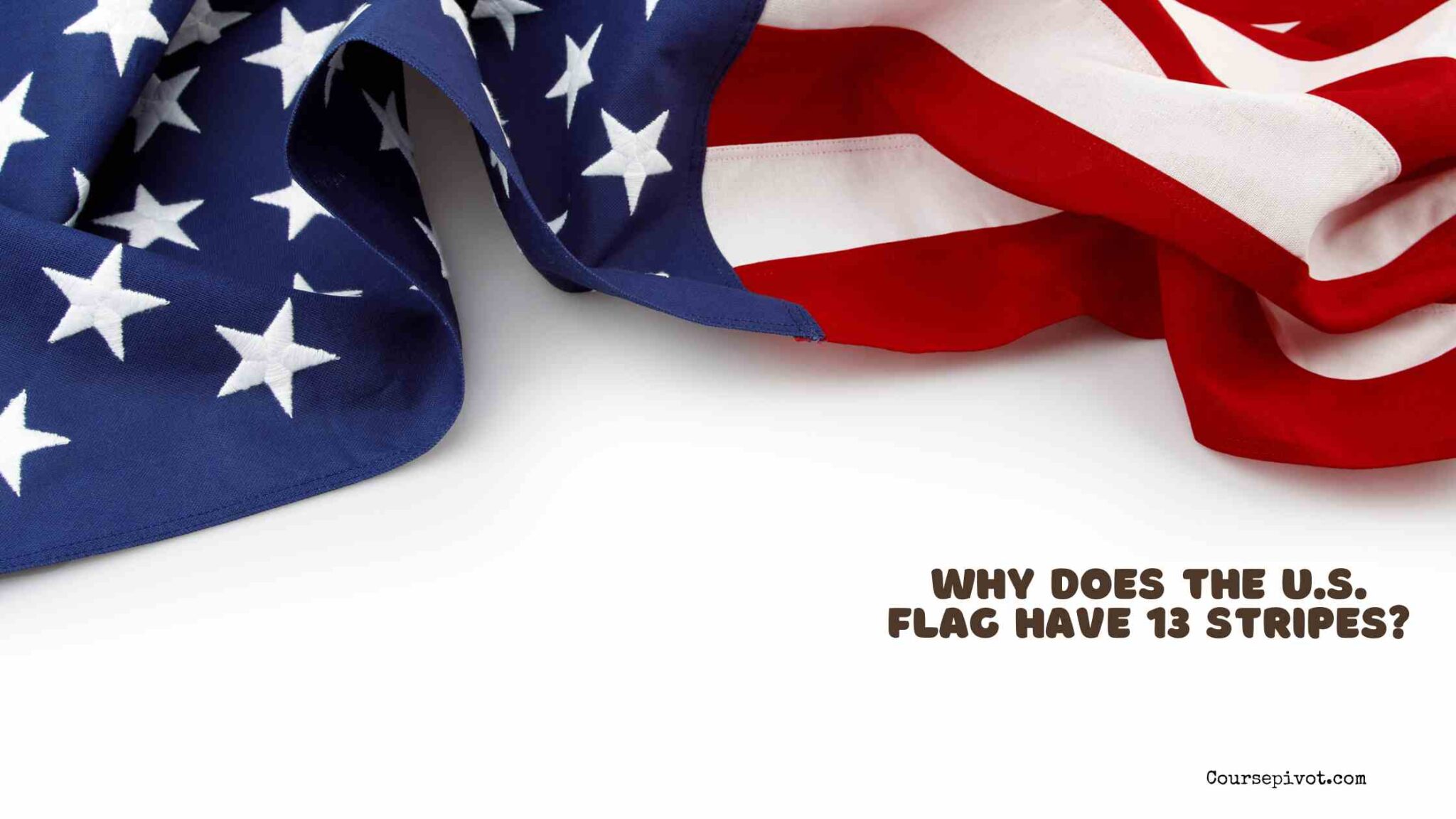
The flag has seven red stripes and six white stripes, for a total of 13. They run horizontally across the flag.
When the 13 Stripes Became Official
The first official U.S. flag design was adopted by the Continental Congress on June 14, 1777. That date is now observed in the United States as Flag Day.
The 1777 flag resolution called for 13 alternating red and white stripes and 13 white stars on a blue field. The stars represented the new union, and the stripes represented the 13 states that had come out of the colonies.
The exact arrangement of the first stars was not fixed in the same detailed way the modern flag is. That is why early American flags sometimes show the stars in different patterns, including circles, rows, or other arrangements.
What stayed central was the number 13. It symbolized the states that began the country.
Why the Flag Once Had 15 Stripes
The U.S. flag did not always have 13 stripes. After Vermont and Kentucky joined the Union, Congress approved a flag with 15 stars and 15 stripes in 1795.
That 15-stripe flag is historically important because it was the flag flying over Fort McHenry during the War of 1812. It inspired Francis Scott Key to write the poem that later became “The Star-Spangled Banner.”
But adding a stripe for every new state created a design problem. As the United States kept expanding, the flag would become crowded and harder to recognize.
Congress solved that problem with the Flag Act of 1818. It restored the stripes to 13 and kept them there permanently, while allowing a new star to be added for each new state.
Why the Stars Change but the Stripes Stay the Same
The stars and stripes do different symbolic jobs.
| Part of the flag | What it represents | Does it change? |
|---|---|---|
| 13 stripes | The 13 original colonies/states | No |
| 50 stars | The current states in the Union | Yes, when states are added |
This design lets the flag do two things at once. It remembers the country’s founding and also reflects the country’s growth.
If the stripes changed every time a new state joined, the flag would lose its clear connection to the original colonies. If the stars never changed, the flag would not show the current Union.
Keeping 13 stripes preserves the founding story, while changing the stars allows the flag to represent the present country.
Do the Colors Have Official Meanings?
Many people say red stands for valor, white for purity, and blue for justice or perseverance. Those meanings are often connected to the Great Seal of the United States rather than to the original 1777 flag resolution.
The important point is this: the number of stripes has a clear official historical meaning. They represent the 13 original colonies. The color symbolism is more interpretive and has developed through later tradition, civic teaching, and patriotic explanation.
So if a teacher asks why the U.S. flag has 13 stripes, the safest answer is not about the colors. It is about the original colonies.
The Bottom Line
The U.S. flag has 13 stripes because they honor the 13 original colonies that declared independence from Great Britain and became the first states of the United States.
The flag briefly had 15 stripes after Vermont and Kentucky joined the Union, but Congress later returned the stripe count to 13. Since 1818, the stripes have stayed fixed, while the stars have changed to represent the number of states.
That is why today’s American flag has 13 stripes and 50 stars: one part remembers the founding, and the other represents the Union as it exists today.