

20 Reasons I Wanted Marriage
Wanting to get married is easy to feel and surprisingly hard to articulate. These 20 reasons name what most people sense but rarely say clearly about why a lifelong commitment felt right.
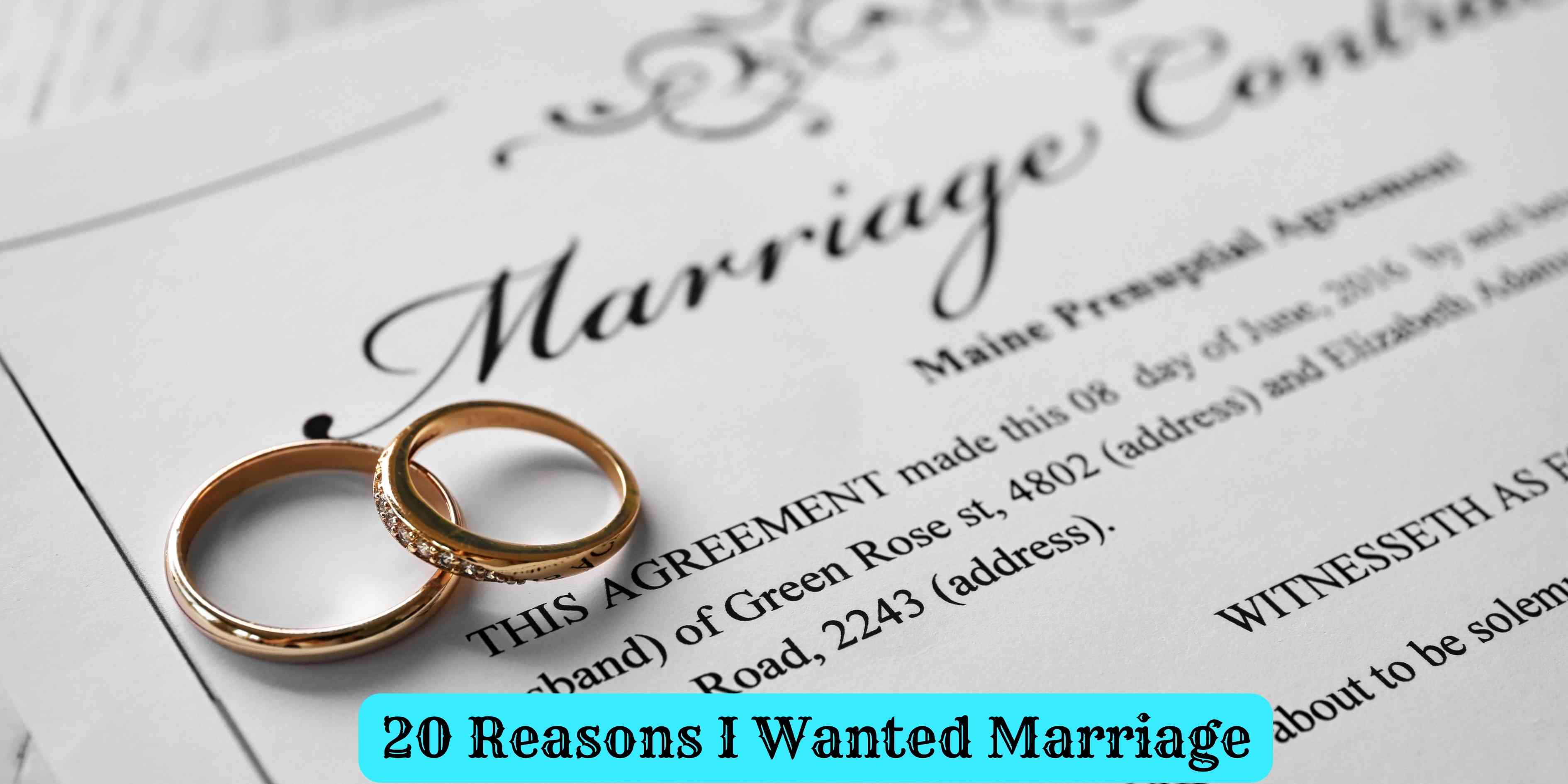
Marriage is one of the most significant commitments a person can make — and yet most people arrive at it through a combination of feeling and intuition rather than clear articulation of why they want it. Looking back at the reasons someone chose marriage can reveal a great deal about what the institution actually means to them, what they were hoping for, and whether the reasons are likely to sustain the relationship across the years that follow. These 20 reasons cover the emotional, practical, spiritual, and relational dimensions of wanting to get married.
Belonging and Partnership
-
I wanted a witness to my life. Marriage, at its core, is about being truly known by another person — having someone who sees the full arc of your life, not just the public portions. The desire to be witnessed, in joy and in ordinary moments and in difficulty, is one of the deepest reasons people seek marriage.
-
I wanted someone to come home to. The end of the day matters. Having a person to return to — to share the details of the day with, to decompress with, to simply be present with — provides a quality of daily life that solitude does not. This is not about dependence; it is about companionship.
-
I wanted a genuine partner, not just a companion. A partner — someone who shares the weight of decisions, who has a stake in outcomes, who contributes perspective on the big things as well as the small ones — is different from a companion. Marriage represented the commitment that makes genuine partnership possible.
-
I did not want to be alone in the hard seasons. Illness, loss, career failure, family crisis — the difficult seasons of life are better navigated with someone who is committed to going through them with you. The knowledge that you will not face difficulty alone is one of the most concrete practical benefits of marriage.
-
I wanted to stop starting over. Dating involves repeated cycles of early-relationship investment — getting to know someone, building trust, navigating compatibility — that are exhausting to repeat. Marriage represented choosing to stop starting over and instead invest continuously in the depth of a single relationship.
Love and Attraction
-
I found someone I couldn’t imagine my life without. The specific, irreplaceable quality of loving a particular person — the recognition that not just anyone will do, that this specific person has become essential to how your life feels — is one of the most compelling motivators for marriage.
-
I wanted to stop wondering. The commitment of marriage resolves a particular kind of uncertainty — the question of whether this relationship is permanent, whether this person is staying. Some people find the open question of non-committed relationships chronically unsettling. Marriage resolved it.
-
I wanted our relationship to have a name and a form. Commitment is partly social — it exists in the acknowledgment of others. Marriage provides a recognized structure that names the relationship publicly, gives it legal standing, and invites the community’s support of it.
-
I wanted to wake up next to the same person for the rest of my life. The quality of long-term intimacy — the ease, the familiarity, the history that accumulates — is available only in relationships sustained across time. Marriage represented the decision to build that kind of intimacy rather than always beginning again.
-
I was excited about the life we could build together. Not just the person, but the shared project — the home, the rhythms, the priorities, the vision of a life — was compelling. Marriage was the starting point of building something together rather than separately.
Family and the Future
-
I wanted to have children within a committed relationship. For those who want children, the desire to raise them within a stable, committed partnership is one of the most practical reasons for marriage. The evidence on children’s outcomes in stable two-parent families is consistent and clear.
-
I wanted my children to have a clear sense of family. Beyond the research, there is the personal desire to give children the stability of parents who are committed to each other and to the family as a unit — a foundation that shapes how children understand love, commitment, and security.
-
I wanted to share a future that was genuinely shared. Making decisions together about where to live, what to prioritize, how to spend money, and how to build a life requires the kind of genuine stake in each other’s futures that marriage formalizes. Cohabitation can approximate this; marriage makes it explicit.
-
I wanted extended family. Marriage creates family — in-laws, new relatives, the extended network of a partner’s people — that expands the family beyond what you were born into. For some people, the desire to belong to a larger family is a significant motivation for marriage.
-
I was thinking about who I wanted beside me as I age. The later seasons of life — retirement, health challenges, loss, the quieter years — are when partnership matters most. Choosing marriage was partly choosing who to grow old with.
Spiritual and Personal Reasons
-
My faith called me to marriage. For many people, marriage has theological meaning — it is a covenant before God, a sacrament, a calling, or a vow with spiritual dimensions that extend beyond the legal and social. This meaning adds weight to the commitment and frames it in terms that reach beyond individual preference.
-
I wanted to grow in ways that only commitment makes possible. Marriage requires love that is a choice, not just a feeling — love that persists through conflict, through seasons of low emotion, through the friction of genuinely merging two lives. The growth available within that kind of committed relationship is different from what individual life produces.
-
I wanted the accountability of a covenant. Uncommitted relationships allow both people an easy exit. The commitment of marriage creates accountability — to the vow, to each other, to the community that witnessed the commitment — that makes working through difficulty more likely than walking away from it.
-
I wanted to give someone the security of my commitment. Marriage is not only about what it provides to you; it is also about what it provides to another person. Giving someone the security of knowing you are choosing them permanently — not contingently — is itself a form of love.
-
Because the relationship was already everything, and marriage was just the formal recognition of that. For some people, the decision to marry is less a dramatic shift and more a naming of what already existed — a relationship that had already become the most important thing in their lives, now formalized in a way that matches its actual weight. Marriage, in these cases, is not a change of what you are to each other. It is an honest acknowledgment of it.