

Why Are Lichens a Good Pioneer Species After a Volcanic Eruption?
Lichens are good pioneer species because they can colonize bare rock, survive harsh conditions, and help create the first stages of soil.
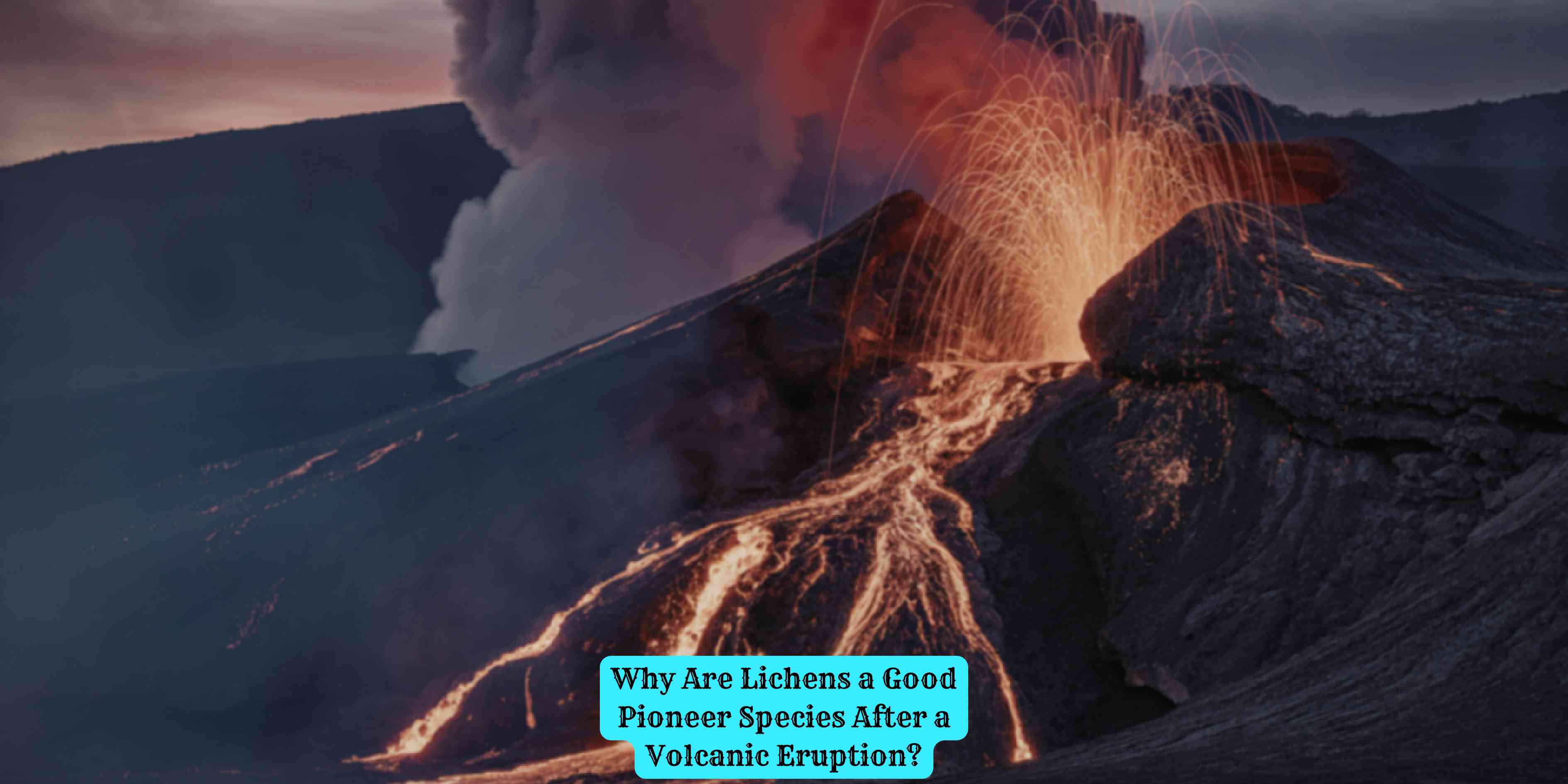
The Short Answer
Lichens are good pioneer species after a volcanic eruption because they can grow on bare rock, tolerate harsh conditions, break down rock surfaces, trap dust, and help begin soil formation. That makes them important in primary succession, the slow process in which life returns to a place that has little or no soil.
After lava cools or ash settles, many plants cannot grow because there is no developed soil, little water retention, high exposure, and extreme temperature changes. Lichens can handle those conditions better than most larger plants.
Lichens help turn lifeless volcanic rock into a surface where later plants can eventually survive.
What a Pioneer Species Does
A pioneer species is one of the first organisms to colonize a disturbed or newly formed environment. After a volcanic eruption, the landscape may be covered by lava, ash, or bare mineral material. There may be no roots, seeds, leaf litter, or topsoil.
Pioneer species do not simply “arrive first.” They change the environment in ways that make it more suitable for the next wave of life.
In volcanic areas, early colonizers may include lichens, mosses, algae, microbes, and small hardy plants.
Lichens Can Grow on Bare Rock
Lichens are not ordinary plants. A lichen is a partnership between a fungus and a photosynthetic partner, usually algae or cyanobacteria. This partnership allows lichens to survive where many organisms cannot.
They do not need deep soil to begin growing. Many lichens attach directly to rock surfaces. That is why they are often seen on cliffs, old walls, tree bark, and lava flows.
USGS materials on volcanic environments note that lichens commonly appear as pioneers on bare lava surfaces. Their ability to start on exposed rock is one reason they are so important after eruptions.
They Survive Harsh Conditions
New volcanic surfaces can be dry, hot, windy, nutrient-poor, and unstable. Lichens are well suited for these conditions because many can slow their activity during drought and resume growth when moisture returns.
They also grow slowly, which is useful in places where resources are limited. Instead of needing rich soil and steady water, lichens can persist through long periods of stress.
This patience gives lichens an advantage over grasses, shrubs, and trees that need better soil conditions.
They Help Weather Rock
Lichens help break down rock through physical and chemical weathering. As they grow, they can penetrate tiny cracks and hold moisture against the rock surface. Some lichens also produce weak acids that contribute to mineral breakdown.
This does not create deep soil overnight. Primary succession can take many years or even centuries. But the process begins with small changes.
Tiny fragments of weathered rock mix with trapped dust, dead lichen material, and other organic matter. Over time, that mixture becomes the beginning of soil.
They Add Organic Matter
When lichens grow and die, they leave behind organic material. That material helps improve the surface for other organisms.
Early soil formation depends on organic matter because it can:
- Hold moisture
- Provide nutrients
- Support microbes
- Create a better seedbed
- Reduce bare surface exposure
Even a thin layer of organic material can make a difference for mosses, grasses, or small plants that arrive later.
They Prepare the Way for Succession
Lichens do not usually create a mature ecosystem by themselves. Instead, they help start a chain of changes. Once rock begins to weather and organic matter accumulates, mosses and small plants may grow. Later, grasses, shrubs, and eventually trees may appear if climate and soil conditions allow.
This sequence is called ecological succession. After a volcanic eruption, it is often primary succession because the area begins without developed soil.
If you want a broader environmental connection, this article on why biodiversity is important explains why these recovery processes matter for ecosystems.
Why Lichens Are Not Enough Alone
Lichens are powerful starters, but they have limits. They grow slowly and may not produce enough soil quickly for larger plants. Weather, slope, rainfall, ash depth, seed arrival, and nearby living communities also affect recovery.
In some volcanic landscapes, microbes, mosses, windblown seeds, or surviving root fragments may also play major roles. Succession is rarely one simple path.
Practical Takeaway
Lichens are good pioneer species after a volcanic eruption because they can colonize bare rock, withstand harsh exposure, help weather minerals, trap particles, and add organic matter.
Their biggest contribution is not speed. It is preparation. Lichens make the first small changes that allow a damaged or newly formed volcanic landscape to slowly support more complex life.