

What Is a Mandala? Describe the Attributes and History of Mandalas
A mandala is a symbolic circular design used in art, meditation, ritual, teaching, and cultural expression.
The Short Answer
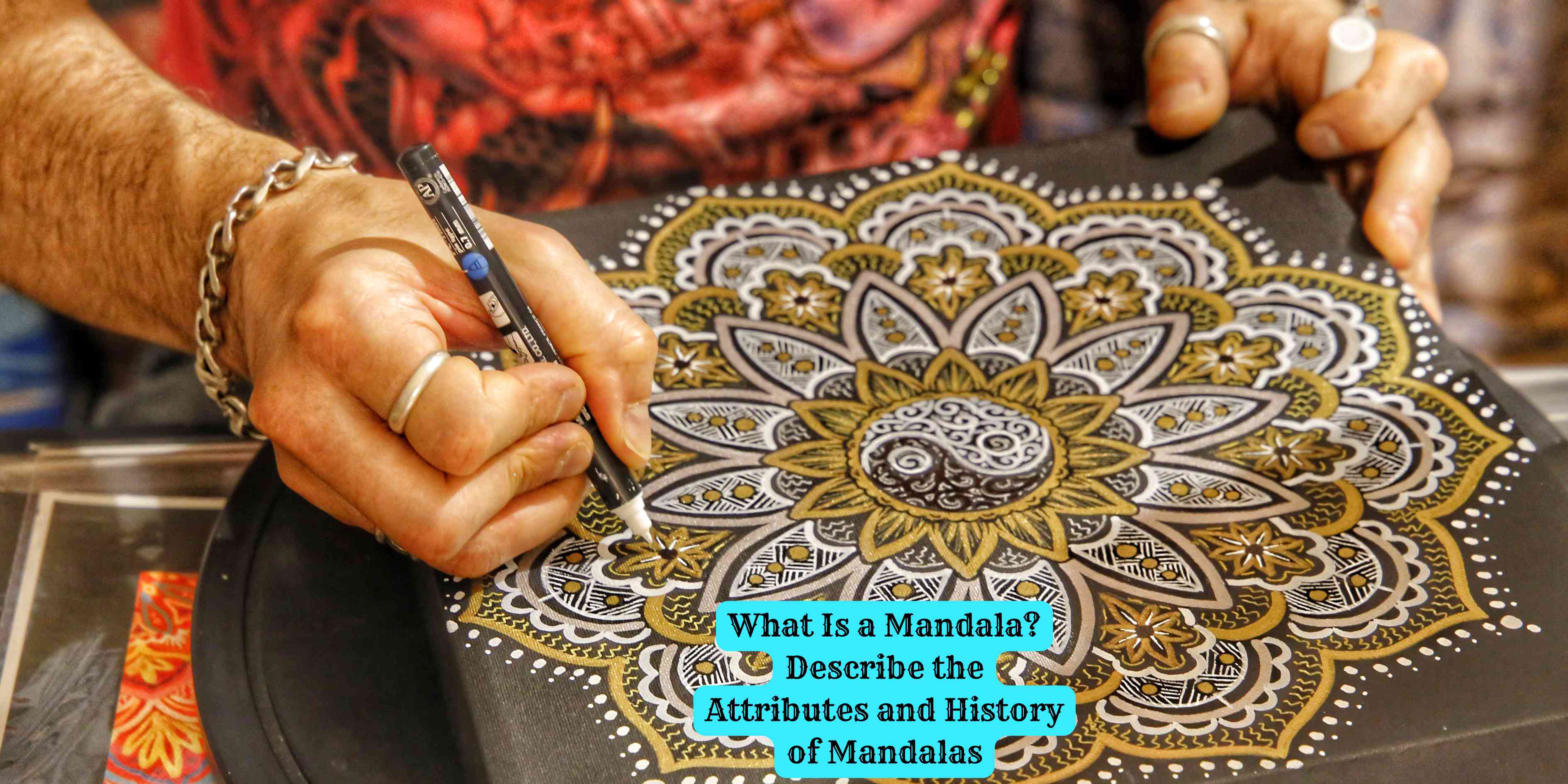
A mandala is a circular, often symmetrical design that represents wholeness, order, balance, or a spiritual universe. Mandalas appear in Hindu, Buddhist, and other cultural traditions, and they are also used in modern art, meditation, education, and therapy-inspired creative practices.
The most important attribute of a mandala is its organized circular structure, which often symbolizes unity and connection.
What a Mandala Is
The word mandala comes from Sanskrit and is often translated as “circle.” But a mandala is more than a simple circle.
It is usually a structured design built around a center point. Shapes, lines, symbols, colors, and patterns radiate outward from that center.
This structure can represent the universe, the self, a sacred space, or the journey from outer distraction toward inner focus.
Common Attributes of Mandalas
Mandalas often include circles, squares, triangles, petals, gates, repeated patterns, and balanced sections.
Symmetry is common because it creates a feeling of order. Repetition is also important because it guides the eye around the design.
Many mandalas use a center point to suggest origin, focus, or spiritual meaning.
Mandalas in Hindu Traditions
Mandalas have deep roots in South Asian religious and artistic traditions. In Hindu practice, mandala-like diagrams can be used for meditation, worship, temple design, and symbolic representation of cosmic order.
Some sacred geometric diagrams, such as yantras, are related to mandala concepts. They may include specific shapes and symbols connected to deities, energy, or spiritual focus.
The design is not only decoration. It can function as a visual tool for contemplation.
Mandalas in Buddhist Traditions
Mandalas are especially well known in Buddhist art and ritual. In some Buddhist traditions, mandalas represent sacred realms, enlightened states, or maps of spiritual practice.
Tibetan Buddhist sand mandalas are famous for their detail. Monks may spend many hours or days creating a colorful mandala from sand.
After completion, the mandala is often destroyed to symbolize impermanence.
Mandalas Beyond Religion
Mandalas also appear in architecture, textiles, ceramics, manuscripts, and decorative art across many cultures.
Although not every circular design is a sacred mandala, many cultures use circular patterns to express balance, cycles, seasons, life, and community.
Modern artists often borrow mandala forms for visual beauty, personal symbolism, or meditative drawing.
Why Mandalas Are Often Symmetrical
Symmetry gives mandalas a sense of harmony. When shapes repeat evenly around a center, the design feels stable and complete.
This balance can make a mandala calming to look at or create.
Symmetry also helps communicate the idea that many parts can belong to one whole.
Modern Uses of Mandalas
Today, mandalas are used in classrooms, coloring books, meditation practices, art therapy-inspired activities, and personal journaling.
Creating a mandala can help people slow down, focus, and express feelings through pattern and color.
However, it is important to respect mandalas’ cultural and religious roots rather than treating them only as trendy decoration.
Key Takeaway
A mandala is a circular symbolic design built around balance, repetition, and a center point.
Historically, mandalas have been important in Hindu and Buddhist traditions, where they can represent sacred space, cosmic order, meditation, and impermanence. In modern life, mandalas continue to be used for art, focus, reflection, and cultural expression.