

How to Stay Focused While Studying
Staying focused while studying is easier when you define the task, remove distractions, study actively, take planned breaks, and reset quickly when attention slips.
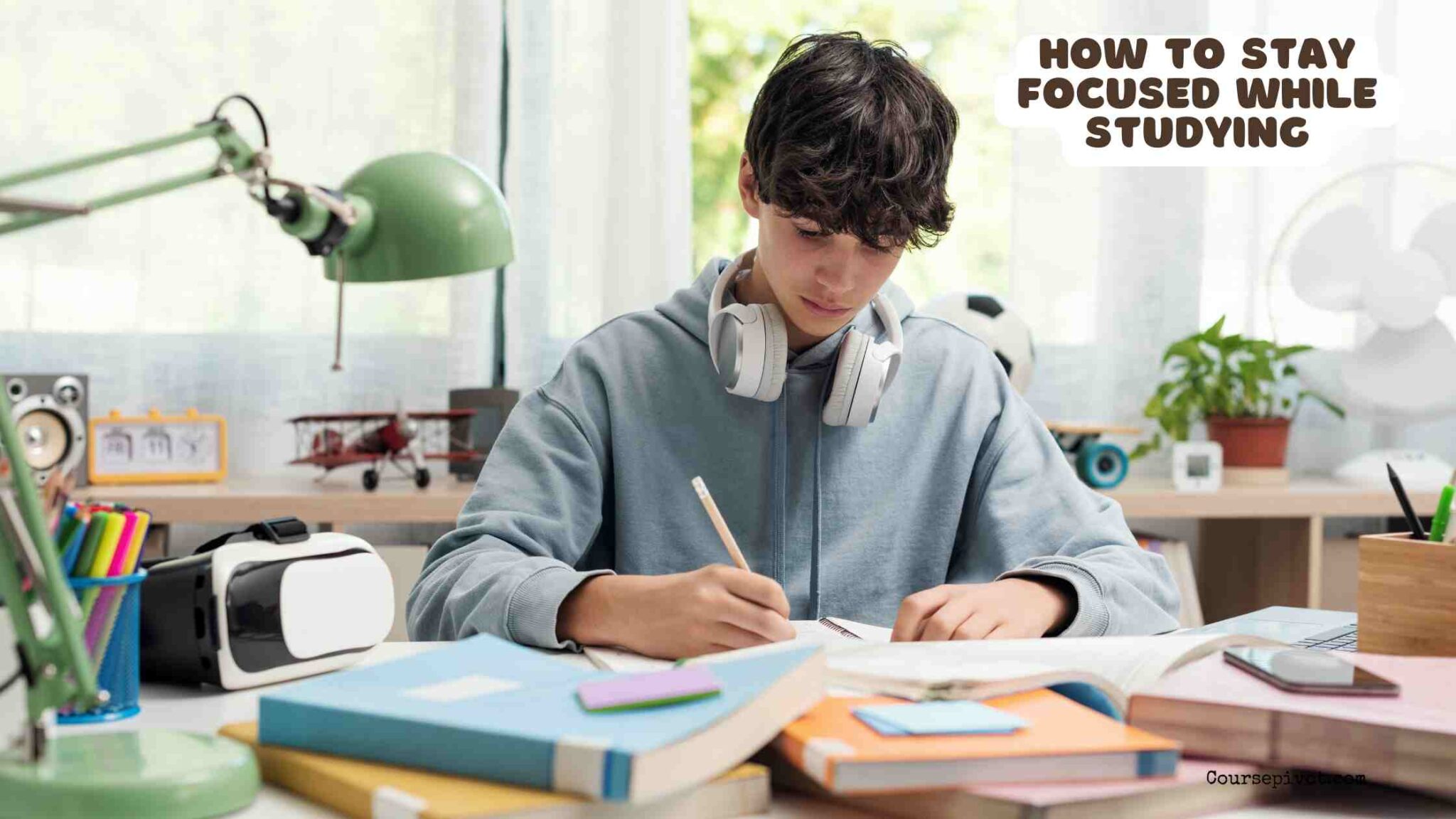
Staying focused while studying is easier when you stop treating focus as a personality trait and start treating it as a system. You do not need to feel perfectly motivated before you begin. You need a clear task, fewer distractions, a short time block, and a way to restart when your mind wanders.
Focus also changes during a study session. The first five minutes are often the hardest. The middle can become productive if the task is clear. The end can become sloppy if you push past your energy. A good study routine works with that pattern instead of pretending you can concentrate forever.
To stay focused while studying, choose one task, remove obvious distractions, use a timer, study actively, take planned breaks, and reset quickly when your attention slips.
Start With One Clear Task
Focus gets weaker when the task is vague. If your plan is only “study science” or “do homework,” your brain has to keep deciding what that means.
A better task sounds like:
- Read pages 22 to 30 and write five summary points.
- Complete math problems 1 to 12.
- Review vocabulary flashcards for 20 minutes.
- Write the introduction paragraph.
- Answer one practice exam question.
Before you begin, write the task in one sentence. The clearer the target, the easier it is to notice when you are drifting.
Set Up Before You Sit Down
Many students lose focus because they start before they are ready. Then they keep getting up for a charger, notebook, water, pen, calculator, or assignment instructions.
Before the session starts, prepare:
| Need | Why it helps |
|---|---|
| Water | Prevents unnecessary trips |
| Charger | Avoids battery anxiety |
| Notes and textbook | Keeps materials in one place |
| Pen and paper | Makes active recall easier |
| Assignment instructions | Prevents guessing what to do |
| Timer | Gives the session a clear boundary |
This setup does not have to take long. Two minutes of preparation can protect 30 minutes of attention.
Remove the Biggest Distraction First
You do not need to remove every possible distraction. Start with the one that usually breaks your focus fastest.
For most students, that is the phone. Put it in another room, inside a bag, on Do Not Disturb, or across the room where you cannot grab it automatically.
Other common distractions include:
- Open browser tabs
- Music with lyrics
- Group chats
- Cluttered desks
- Background TV
- Hunger
- Unclear instructions
- People interrupting you
If your focus keeps breaking for the same reason, do not rely on willpower. Change the setup.
For a broader distraction-control list, read 10 ways to improve concentration and focus while studying.
Use a Short Focus Block
Trying to focus for three hours straight is usually unrealistic. A short focus block makes the session feel possible.
Try one of these:
- 15 minutes if you are tired or avoiding the task
- 25 minutes for normal study
- 40 minutes for reading or writing
- 50 minutes for deeper work if your attention is strong
When the timer starts, your only job is the task you chose. If another thought appears, write it on a side note and return to the work.
This is useful because it separates “I need to do everything” from “I need to focus until this timer ends.”
Study Actively So Your Brain Has a Job
Passive studying makes distraction easier. If you only stare at notes, your mind can wander while your eyes keep moving.
Active studying gives your brain something to produce.
Use methods like:
- Answering practice questions
- Writing from memory
- Making flashcards
- Explaining a concept out loud
- Drawing a diagram
- Solving a problem without looking at the example
- Summarizing a page in three bullets
- Checking mistakes and correcting them
Active study is better for focus because it gives immediate feedback. You can tell whether you are working or pretending to work.
The guide on 7 secret methods for studying explains more active learning techniques.
Keep a Distraction Sheet
During studying, your brain will offer random thoughts: text someone, check a score, look up a song, clean your room, remember an errand, open another tab.
Do not argue with every thought. Capture it.
Keep a small distraction sheet beside you. When a thought appears, write it down in a few words:
- Reply to Maya
- Check schedule
- Find blue folder
- Email teacher
- Look up definition later
Then return to the task. This works because your brain gets reassurance that the thought is not lost, but you do not have to follow it immediately.
Take Breaks Before Your Focus Collapses
Breaks work best when they are planned. If you wait until your attention collapses, the break often turns into avoidance.
A good break should help you return to studying. Try:
- Standing up
- Stretching
- Walking for a few minutes
- Refilling water
- Resting your eyes
- Breathing slowly
- Getting a light snack
Avoid breaks that are hard to stop, especially social media, short videos, or games. They are designed to keep your attention longer than you planned.
When the break ends, restart with the same task or write the next task clearly.
Reset Quickly When You Lose Focus
Losing focus does not mean the session is ruined. It only becomes a problem when you drift for 20 minutes and then quit because you feel guilty.
Use a simple reset:
- Pause.
- Notice what pulled you away.
- Write the next tiny step.
- Restart for five minutes.
Example: “I got distracted by my phone. Next step: finish questions 6 and 7. Restart for five minutes.”
Small restarts matter. Focus is not about never drifting. It is about returning faster.
End With a Quick Review
Before you stop, spend two minutes reviewing what you did.
Ask:
- What did I complete?
- What do I understand better?
- What is still confusing?
- What is the next step?
- When will I return to this?
This helps your next session start faster. It also turns studying into a visible record of progress, which makes motivation easier.
If you are building a bigger school routine, the article on three strategies for academic success can help connect focus with planning and support.
Final Thoughts
Staying focused while studying is not about forcing your brain to behave perfectly. It is about giving your attention fewer reasons to escape.
Choose one task, prepare your space, remove the biggest distraction, use a short timer, study actively, take breaks before your focus collapses, and reset quickly when you drift.
The more often you repeat that pattern, the less studying depends on mood. Focus becomes a routine you can restart, not a rare feeling you have to wait for.