

7 Secret Methods for Studying
The best study methods are not really secret; they are underused habits like retrieval practice, spaced review, interleaving, and self-explanation.
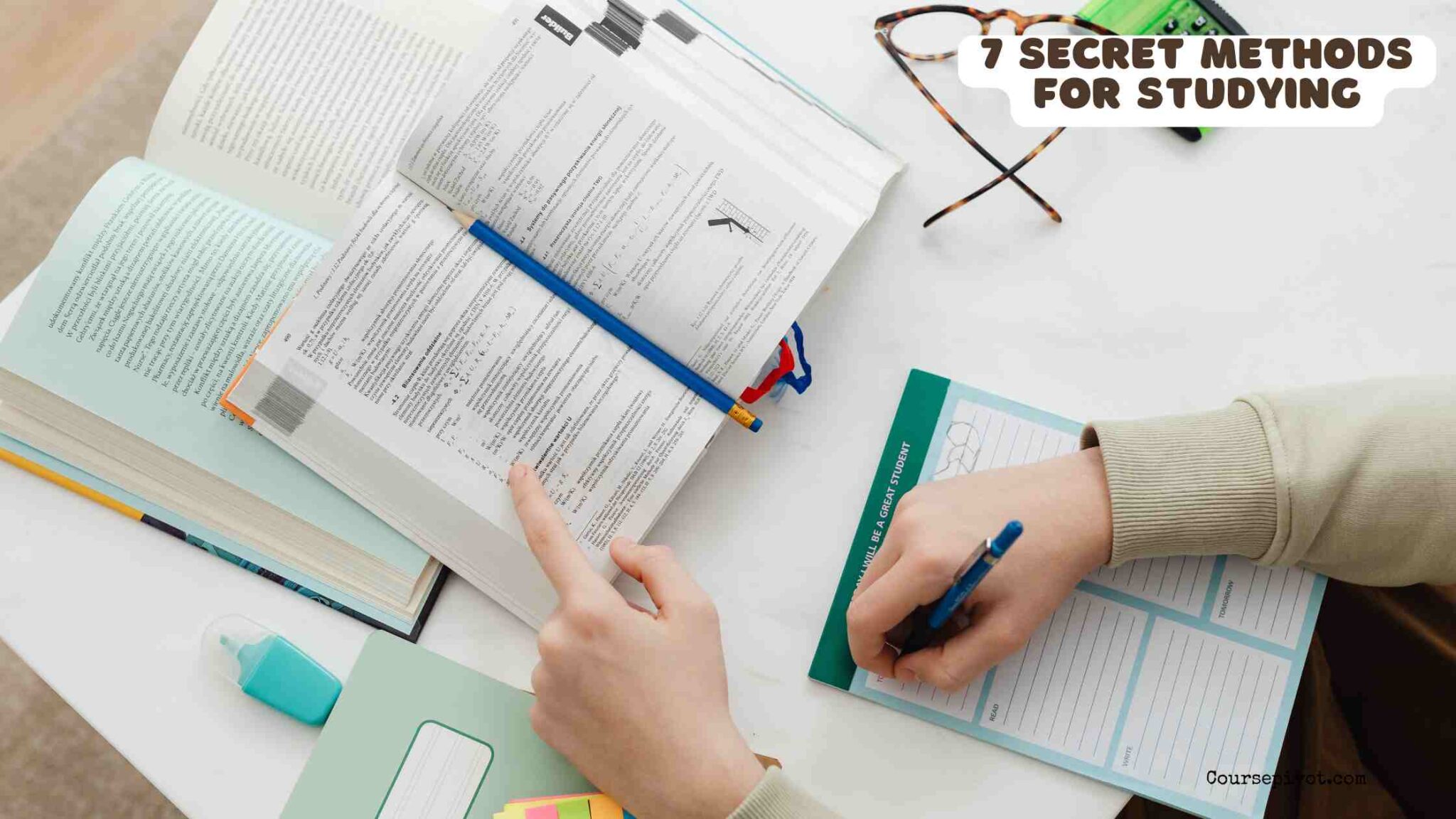
Most students do not need more hours of studying. They need better study methods. Spending three hours staring at notes can feel responsible, but it often produces less learning than one focused hour of practice, recall, and correction.
The real secret is that effective studying is active. It makes your brain retrieve information, explain ideas, connect topics, and fix mistakes before the exam exposes them.
The best secret methods for studying are retrieval practice, spaced repetition, interleaving, self-explanation, mistake tracking, teaching, and strategic rest.
The Short Answer
The seven secret methods for studying are:
- Test yourself before you feel ready.
- Space your review over several days.
- Mix related topics instead of studying one type too long.
- Explain ideas in your own words.
- Keep a mistake log.
- Teach the topic to someone else.
- Use sleep and breaks as part of learning.
These methods work because they train memory, understanding, and recall. They are not magic tricks. They are practical habits that make studying more efficient.
1. Test Yourself Before You Feel Ready
Many students wait until they “know the material” before testing themselves. That is backwards. Testing is one of the best ways to learn the material.
This method is called retrieval practice. It means pulling information from memory instead of only putting information into memory.
Try:
- Closing your notes and writing what you remember
- Answering practice questions
- Making flashcards
- Explaining a concept without looking
- Taking a blank-page quiz
- Reworking homework problems from scratch
Retrieval feels harder than rereading, but that is why it works. The effort strengthens memory and shows what you actually know.
2. Space Your Studying Over Time
Cramming can help you survive a quiz, but it is weak for long-term learning. Spaced repetition works better because you review information across multiple sessions instead of all at once.
A simple spaced schedule might look like this:
| Review session | Timing |
|---|---|
| First review | Same day as class |
| Second review | Next day |
| Third review | Three days later |
| Fourth review | One week later |
| Final review | Before the test |
Each review does not need to be long. Ten focused minutes repeated several times can beat one exhausted hour the night before.
Spacing also lowers stress because studying becomes part of your week, not a last-minute emergency.
3. Mix Similar Topics Together
Interleaving means mixing related topics instead of studying one type of problem or idea for too long.
For example, instead of doing 20 identical math problems in a row, mix different problem types. Instead of studying only one biology process, compare it with similar processes. Instead of reviewing one grammar tense alone, compare past, present, and future tense examples.
Interleaving is useful because exams rarely tell you exactly which method to use. You have to recognize the problem type yourself.
This method trains your brain to ask, “What kind of question is this?” rather than simply repeating the same move.
4. Explain Ideas in Your Own Words
If you cannot explain an idea simply, you may only recognize it, not understand it.
Self-explanation means pausing during study and asking:
- What does this mean?
- Why is this true?
- How does it connect to the previous idea?
- What is an example?
- What would confuse someone about this?
- How would I explain this to a younger student?
This works especially well for science, history, economics, literature, and essay topics. It turns studying from memorizing sentences into building meaning.
Students working on writing-heavy classes can combine this with clearer paragraph structure. The guide on how many sentences are in a paragraph can help turn explanations into organized writing.
5. Keep a Mistake Log
Most students look at mistakes, feel bad for a moment, and move on. Strong students study their mistakes.
A mistake log is a simple record of what went wrong and how to fix it.
| Mistake | Why it happened | Fix |
|---|---|---|
| Forgot a formula | Memorized it without practice | Use flashcards and apply it in problems |
| Misread the question | Rushed | Underline key words before answering |
| Weak essay evidence | Did not plan examples | Build evidence list before drafting |
| Lost marks on citation | Did not know format | Check style guide before submission |
The goal is not to shame yourself. The goal is to stop losing marks for the same reason again and again.
Mistake logs are especially useful after quizzes, homework, essay feedback, and practice exams.
6. Teach the Topic to Someone Else
Teaching reveals gaps quickly. When you explain a topic to another person, you notice where your understanding becomes vague.
You can teach:
- A classmate
- A younger sibling
- A study group
- An imaginary student
- A voice memo on your phone
- A blank sheet of paper
Use simple language. Avoid reading from notes. If you get stuck, mark that part and review it later.
This method works because teaching forces organization. You have to decide what comes first, what matters most, and how each idea connects.
7. Use Breaks and Sleep Strategically
Rest is not the opposite of studying. Rest helps learning consolidate. If you study while exhausted, distracted, and sleep-deprived, your memory and focus suffer.
Use breaks deliberately:
- Study for 25 to 50 minutes.
- Take a 5 to 10 minute break.
- Move your body during breaks.
- Avoid turning every break into a long phone session.
- Stop before your brain is completely fried.
Sleep matters too. Reviewing before bed can help if you have already studied actively, but staying up all night usually damages attention and recall.
The goal is not to be lazy. The goal is to make your brain useful when you need it.
How to Combine These Methods
You do not need to use all seven methods every day. A simple study session might look like this:
- Review the topic for five minutes.
- Close your notes and answer practice questions.
- Check mistakes and write them in a mistake log.
- Explain the hardest idea out loud.
- Schedule the next review for tomorrow or later in the week.
That is a stronger session than rereading the same page five times.
For a wider student-success system, read three strategies for academic success. If your main issue is speed and focus, start with getting homework done fast.
What Not to Do
Some common study habits feel productive but do not work well by themselves.
Avoid relying only on:
- Rereading notes
- Highlighting entire pages
- Watching videos passively
- Copying notes without testing yourself
- Studying only the night before
- Keeping your phone beside you
- Ignoring feedback from teachers
These habits are not always useless, but they are incomplete. Reading and highlighting can introduce material. Active practice is what helps you keep and use it.
Final Thoughts
The seven secret methods for studying are not mysterious. They are simply underused. Test yourself early, space your review, mix related topics, explain ideas in your own words, track mistakes, teach the material, and protect rest.
Studying becomes easier when you stop measuring effort only by time spent. The better question is: did this session make recall, understanding, and application stronger?
If the answer is yes, you are not just studying longer. You are studying smarter.