

Describe the Importance of Getting Enough Sleep
Sleep is the foundation of physical and mental health — not a luxury but a biological necessity. Here's what the science says about why adequate sleep matters so profoundly.
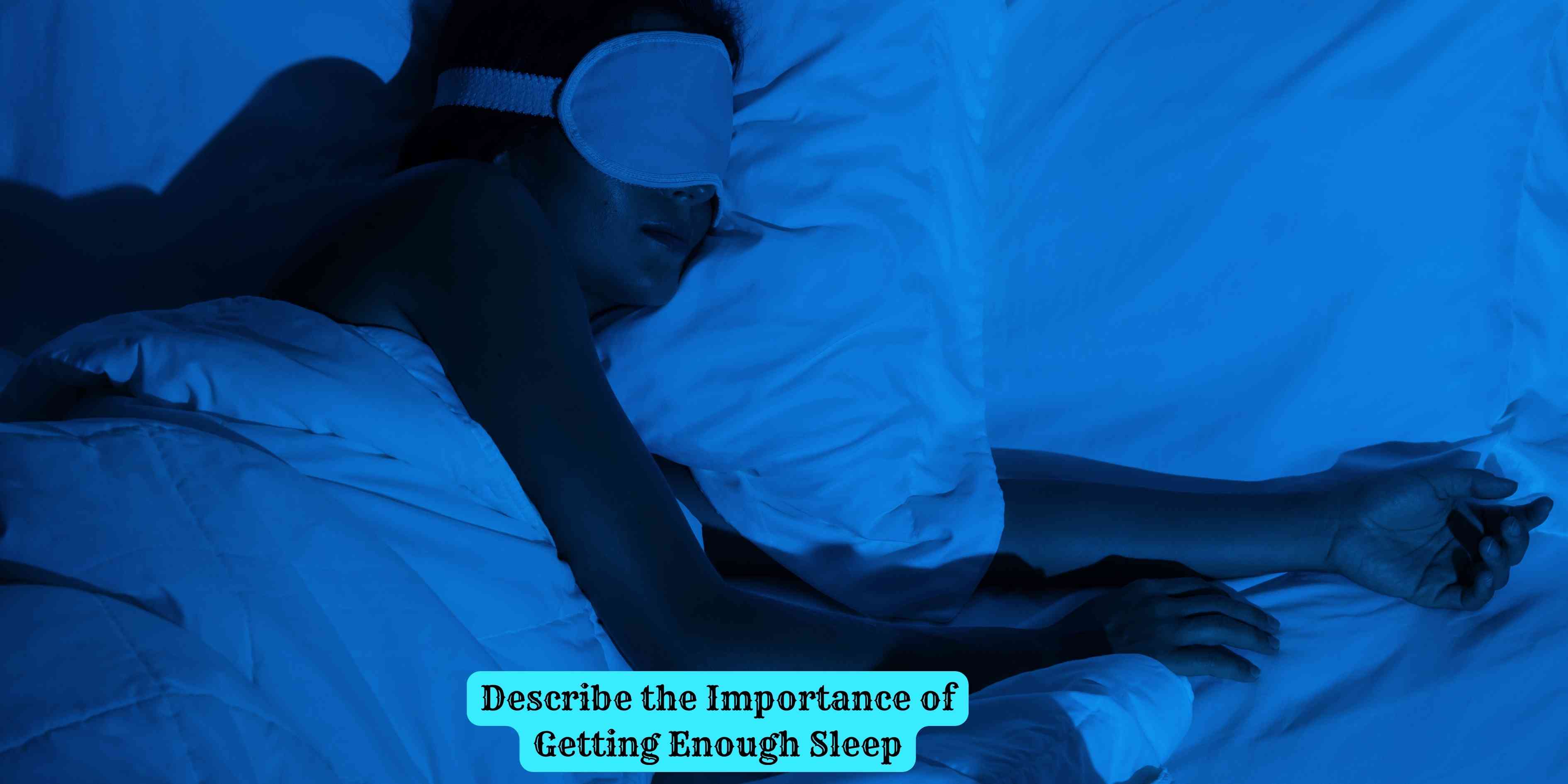
Sleep is not passive downtime — it is an active biological process during which the brain consolidates memory, clears metabolic waste, regulates hormones, and performs maintenance that cannot occur during waking hours. The body undergoes physical repair, immune function is strengthened, and emotional processing occurs during sleep. Chronic sleep deprivation — regularly getting less than the recommended 7-9 hours for adults — is associated with increased risk of cardiovascular disease, diabetes, obesity, immune dysfunction, depression, anxiety, cognitive decline, and significantly reduced lifespan. Sleep is as foundational to health as nutrition and exercise, and it is the one most frequently sacrificed without adequate appreciation of the cost.
Sleep and Brain Function
The brain uses sleep for several functions that cannot be efficiently performed during wakefulness:
Memory consolidation: During slow-wave (deep) sleep, the hippocampus — the brain’s short-term memory center — transfers memories to the cortex for long-term storage. Without adequate deep sleep, information learned during the day is not fully consolidated. This is why sleep before and after learning significantly improves retention compared to staying awake, and why sleep deprivation so severely impairs learning and recall.
Glymphatic clearance: During sleep, the brain’s glymphatic system (a waste-clearance system) becomes highly active, flushing out metabolic byproducts — including amyloid-beta proteins associated with Alzheimer’s disease. This clearance occurs primarily during deep sleep and is one of the reasons that chronic sleep deprivation is now being studied as a risk factor for neurodegenerative disease.
Cognitive performance: Processing speed, attention, working memory, decision-making quality, and creative problem-solving all decline significantly with sleep deprivation. Research consistently shows that moderately sleep-deprived individuals perform on cognitive tests comparably to individuals who are legally drunk, yet underestimate their own impairment.
Physical Health Effects
Cardiovascular health: Chronic short sleep (less than 6 hours) is associated with significantly increased risk of hypertension, heart attack, and stroke. Sleep regulates blood pressure through nighttime dips that don’t occur with insufficient sleep, contributing to cardiovascular strain.
Metabolic function: Sleep deprivation disrupts glucose metabolism and insulin sensitivity, increasing risk of type 2 diabetes. It also dysregulates appetite hormones — increasing ghrelin (hunger hormone) and decreasing leptin (satiety hormone) — which increases appetite and promotes weight gain. Research has found that sleep-deprived people consume significantly more calories and preferentially choose high-calorie, high-carbohydrate foods.
Physical recovery and growth: Growth hormone is primarily released during deep sleep, making adequate sleep essential for physical recovery from exercise, tissue repair, and development in children and adolescents. Athletes with inadequate sleep show impaired performance, slower reaction time, and higher injury rates.
Immune Function
During sleep, the immune system produces cytokines — signaling molecules that coordinate immune responses — and T-cells and other immune cells that fight infection and regulate inflammation. Chronic sleep deprivation reduces vaccine effectiveness (sleep-deprived individuals produce fewer antibodies after vaccination), slows recovery from illness, and increases susceptibility to infection. Studies exposing subjects to the common cold virus found that those sleeping less than 6 hours per night were significantly more likely to develop symptomatic illness than those sleeping 7+ hours.
Emotional Regulation and Mental Health
The prefrontal cortex — responsible for emotional regulation, impulse control, and rational decision-making — is highly sensitive to sleep deprivation. Without adequate sleep, the amygdala (the brain’s threat-detection center) becomes hyperreactive to negative stimuli, and the prefrontal cortex’s ability to modulate that reactivity is impaired. This produces the irritability, emotional volatility, and reduced frustration tolerance that characterize sleep deprivation in everyday experience.
Chronically, sleep deprivation significantly increases risk of depression and anxiety disorders. The relationship is bidirectional — depression disrupts sleep, and disrupted sleep worsens depression — but improving sleep quality is consistently one of the most effective interventions for improving mental health symptoms.
How Much Sleep Is Needed
The National Sleep Foundation recommends 7-9 hours per night for adults (18-64), 7-8 hours for older adults (65+), 8-10 hours for teenagers, and 9-12 hours for school-age children. Individual variation exists — a small percentage of people genuinely function optimally on 6 hours or less due to genetic factors — but the overwhelming majority of people who believe they have adapted to short sleep have simply adapted to the impairment, misidentifying their new baseline of functioning as normal. The scientific evidence for the importance of sleep is now among the most robust in health science: there is essentially no biological system that is not compromised by chronic sleep deprivation, and no fully effective substitute for it. Prioritizing sleep — treating it as a health behavior with as much intentionality as diet or exercise — is one of the highest-return investments in wellbeing available to most people.