

Check Engine Light Reasons: Why It's On and What You Should Know
A check engine light can mean something trivial or something serious. Here's what the most common causes are, how to read the signals, and what you should actually do.
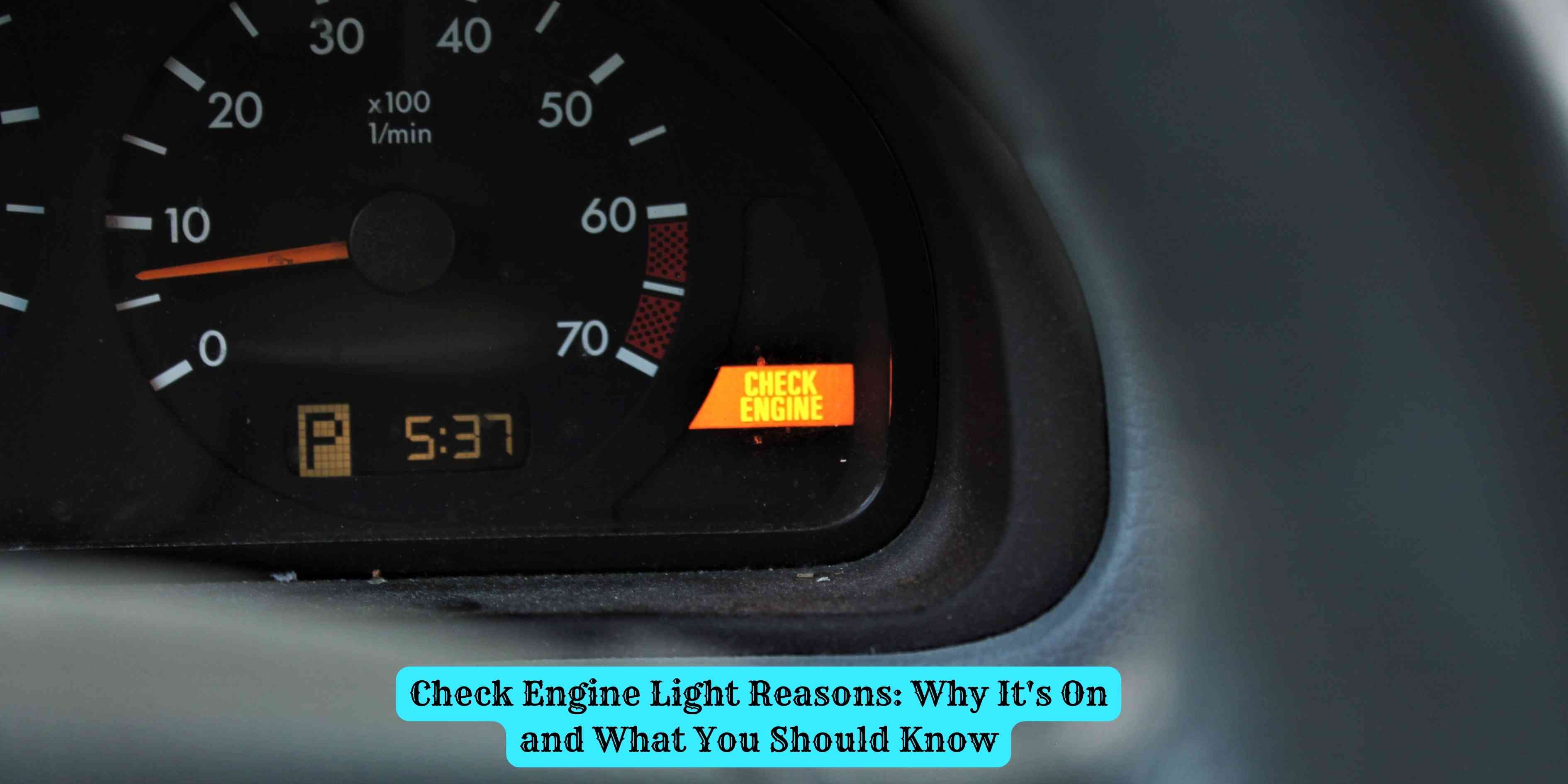
The check engine light (CEL) — officially called the Malfunction Indicator Lamp (MIL) — illuminates when the vehicle’s onboard diagnostic system (OBD-II) detects a fault code in any of dozens of monitored systems: the engine, transmission, emissions system, fuel system, and more. A steady CEL may indicate anything from a loose gas cap to a failing catalytic converter. A flashing CEL is a more urgent warning, typically indicating a misfire serious enough to damage the catalytic converter. Neither should be ignored indefinitely — but their urgency varies considerably by cause.
What Triggers the Check Engine Light
Every vehicle made after 1996 includes an OBD-II system — a standardized diagnostic computer that monitors hundreds of sensor readings across engine and emissions systems. When any reading falls outside its specified parameters, the system stores a Diagnostic Trouble Code (DTC) and illuminates the check engine light. The specific DTC can be read with an OBD-II scanner, which plugs into the diagnostic port (typically under the dashboard on the driver’s side) and displays the fault code and description.
Many auto parts stores (AutoZone, O’Reilly, Advance Auto Parts) will read your codes for free. This is always the first step — reading the code is the only way to know what the CEL is actually indicating.
The Most Common Reasons the CEL Is On
Loose or faulty gas cap: One of the most common and most benign causes. The fuel system is sealed; a loose or cracked gas cap allows vapor to escape and triggers an evaporative emission fault code (P0440-P0456 series). Check that the cap is fully tightened; if the seal is cracked, replace it.
Faulty oxygen sensor: Oxygen sensors measure the oxygen content of exhaust gases and inform fuel delivery calculations. A failing O2 sensor causes inefficient fuel combustion, reduced fuel economy, and eventually catalyst damage. There are typically 2-4 oxygen sensors per vehicle; replacement cost varies by location and vehicle.
Catalytic converter failure: The catalytic converter reduces harmful exhaust emissions. It fails when contaminated by oil or coolant consumption, when overheated by engine misfires, or simply from age. Catalytic converter replacement is expensive ($800-$3,000+) but essential for both emissions compliance and engine health.
Mass airflow (MAF) sensor failure: The MAF sensor measures the amount of air entering the engine to calculate the correct fuel mixture. A dirty or failing MAF produces rough idle, poor acceleration, and increased fuel consumption.
Spark plug or ignition coil failure: Worn spark plugs or failing ignition coils cause engine misfires — incomplete combustion in one or more cylinders. A misfire fault code (P0300 series) triggers the CEL; a severe or persistent misfire triggers a flashing CEL because unburned fuel damages the catalytic converter.
Evaporative emission (EVAP) system leak: Beyond a gas cap, any leak in the vapor recovery system that captures fuel vapors from the fuel tank triggers an EVAP fault.
Thermostat or coolant temperature sensor: Problems in the engine temperature regulation system trigger CEL and, if the engine overheats, can cause severe damage.
Steady vs. Flashing CEL: Critical Distinction
Steady check engine light: The system has detected a fault that should be investigated, but the situation is generally not immediately dangerous to the engine. It is safe to continue driving to a repair facility, but the issue should be diagnosed soon rather than ignored for weeks.
Flashing check engine light: This indicates an active engine misfire severe enough to damage the catalytic converter in a short period. A flashing CEL warrants reducing speed, avoiding heavy acceleration, and having the vehicle diagnosed and repaired as soon as possible — ideally the same day. Continuing to drive with a flashing CEL risks catalytic converter damage that can multiply repair costs significantly.
When to Act Immediately vs. When It Can Wait
Act immediately (do not drive or drive only minimally) if the check engine light is flashing, if it is accompanied by other warning lights (especially temperature or oil pressure), if the vehicle is running rough, overheating, or producing unusual sounds or smells.
Can reasonably wait a few days: A steady CEL with no other symptoms and normal vehicle operation — get it scanned soon to identify the code, but it is not a driving emergency.
Do not simply clear the code without addressing the underlying cause: many people learn they can clear the code by disconnecting the battery or using a scanner, but the code will return if the fault isn’t repaired. Clearing codes without diagnosis is not a fix.
Preventive Maintenance That Reduces CEL Events
The majority of common check engine light causes are preventable through consistent maintenance: regular spark plug replacement at manufacturer-recommended intervals, keeping the fuel system clean, addressing oil consumption promptly (which protects oxygen sensors and the catalytic converter), replacing the PCV valve as recommended, and using quality fuel. A check engine light is the vehicle’s diagnostic system telling you something has gone wrong — treating it as an opportunity for early diagnosis and repair rather than an annoyance to ignore or clear without addressing consistently produces lower total maintenance costs and longer vehicle life. The cost of a $20 OBD-II scanner and the habit of reading and researching codes pays for itself quickly.