

10 Common Reasons for Check Engine Light
The check engine light is one of the most anxiety-inducing things that can happen while driving. Most of the time, the cause is one of these ten — and several of them are inexpensive to fix.
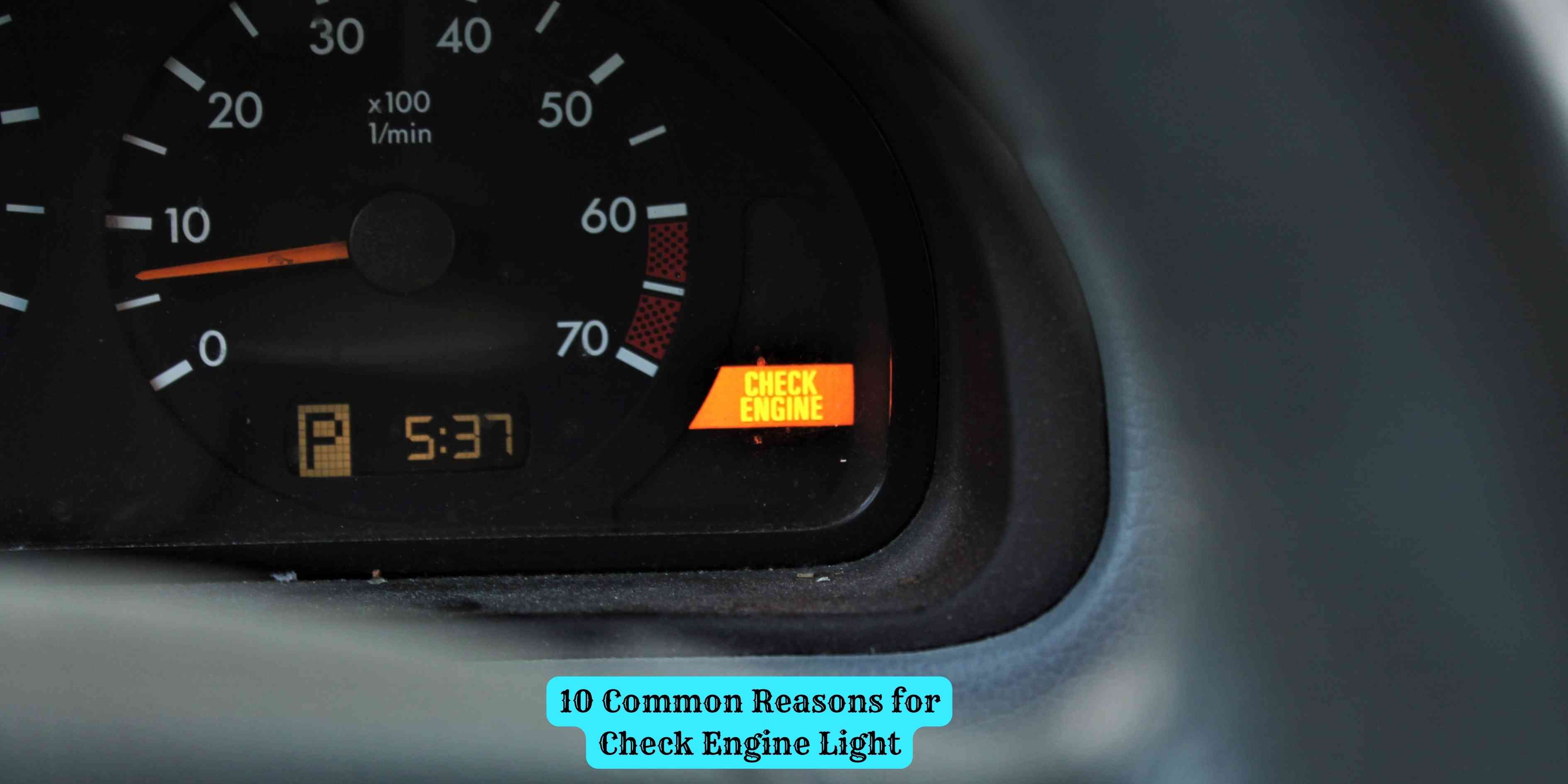
The check engine light (more formally called the malfunction indicator lamp) illuminates when the vehicle’s onboard diagnostic system detects a fault code in one of the monitored systems. The light can indicate anything from a loose gas cap to a catalytic converter failure — a range that explains why the light alone tells you very little. Reading the fault code with an OBD-II scanner (available at auto parts stores, often for free) narrows it down to a specific system and usually a specific cause.
1. Loose or Missing Gas Cap
The most common and least expensive cause of a check engine light is a loose, damaged, or missing gas cap. The fuel system is sealed to prevent fuel vapor from escaping, and the gas cap is part of that seal. When it is loose or missing, the evaporative emission control system detects a leak and triggers a code.
If your check engine light came on shortly after refueling, tighten the gas cap until it clicks and drive for a day or two. The light will often turn off on its own once the system confirms the leak is resolved. Replacing a damaged gas cap costs between ten and twenty dollars.
2. Oxygen Sensor Failure
Oxygen sensors measure the amount of unburned oxygen in the exhaust and send this information to the engine control module to optimize the fuel-to-air ratio. A failed oxygen sensor allows the engine to run with incorrect fuel mixture, reducing fuel efficiency and increasing emissions. Over time, driving with a failed oxygen sensor can damage other components, including the catalytic converter.
Most vehicles have two to four oxygen sensors. The cost of replacement varies by vehicle but is typically between $150 and $500 depending on which sensor has failed and labor costs.
3. Catalytic Converter Failure
The catalytic converter converts harmful exhaust gases into less harmful compounds before they are released through the tailpipe. A failing catalytic converter can cause reduced performance, decreased fuel economy, and a smell of rotten eggs from the exhaust.
Catalytic converters can fail due to contamination from oil or coolant leaking into the exhaust, damage, or simply age. They are among the more expensive repairs associated with a check engine light — replacement can cost $1,000 to $2,500 or more depending on the vehicle. Many catalytic converter failures are caused by untreated upstream issues (like oxygen sensor failure or misfires), making those smaller repairs important to address promptly.
4. Spark Plug or Ignition Coil Issues
Worn or failing spark plugs cause engine misfires — incomplete combustion events that trigger fault codes and illuminate the check engine light. Misfires can be felt as a rough idle, hesitation during acceleration, or a shaking sensation in the engine. Ignition coils (which provide the electrical charge to the spark plugs) can also fail, producing similar symptoms.
Spark plug replacement is one of the more accessible DIY repairs on modern vehicles — plugs typically cost $10 to $30 each, and most engines have four to eight. Ignition coils are slightly more involved but still relatively affordable.
5. Mass Airflow Sensor Failure
The mass airflow (MAF) sensor measures the amount of air entering the engine so the control module can determine the correct fuel quantity. A failing MAF sensor causes poor fuel economy, rough idle, difficulty starting, and hesitation under load. The sensor is sensitive to contamination from dirty air filters — a clean air filter extends the life of the MAF sensor.
MAF sensor replacement typically costs $150 to $400 depending on the vehicle.
6. Thermostat Problems
The engine thermostat regulates coolant flow to maintain optimal operating temperature. A stuck-open thermostat causes the engine to run cooler than normal and reduces fuel efficiency significantly; a stuck-closed thermostat causes overheating, which is a much more serious concern. Either condition triggers a check engine light.
Thermostat replacement is typically a moderate repair — parts are inexpensive ($20-$50), but labor costs vary depending on the thermostat’s location in the engine.
7. Exhaust Gas Recirculation (EGR) Valve Issues
The EGR valve recirculates a portion of exhaust gas back into the engine to reduce nitrogen oxide emissions and improve fuel efficiency. EGR valves become clogged with carbon deposits over time, which can cause rough idle, hesitation, and a check engine light. Cleaning or replacing an EGR valve typically costs $150 to $400.
8. Evaporative Emission Control System (EVAP) Leak
Beyond the gas cap, the entire EVAP system — which prevents fuel vapor from escaping into the atmosphere — can develop leaks in its hoses, valves, or canister. These leaks trigger the same evaporative emission fault codes as a loose gas cap but require more investigation to locate. A smoke test performed by a mechanic is typically used to find the source of an EVAP leak. Repairs range from minor (a cracked hose) to moderate (a failed purge valve or charcoal canister).
9. Battery or Charging System Issues
A weak or failing battery, or issues with the alternator or voltage regulator, can produce check engine lights in modern vehicles because the vehicle’s computer systems are sensitive to voltage fluctuations. If the check engine light came on alongside other electrical symptoms — dimming lights, difficulty starting, warning lights — the battery and charging system should be tested first.
Battery replacement typically costs $100 to $300 depending on the vehicle; alternator replacement is more expensive, usually $400 to $800.
10. Issues Identified by a Recent OBD-II Scan
The tenth category is not a specific cause but a reminder: a check engine light without a specific symptom is best addressed by reading the fault code first, before replacing parts. OBD-II scanners are available at auto parts stores for free code reading, or for purchase from $25 to $100 for a basic unit. The code narrows the likely cause significantly and prevents the common mistake of replacing inexpensive parts when the actual issue is a different system entirely.
Many auto parts stores will read codes at no charge and can often tell you whether the fault is one of the common, less expensive causes or whether it suggests a more significant diagnosis is needed.