

8 Signs That You Need Dental Implants
Dental implants are the most durable long-term solution for tooth loss — but not everyone knows when they've become necessary. These 8 signs indicate it may be time to consult an implant specialist.
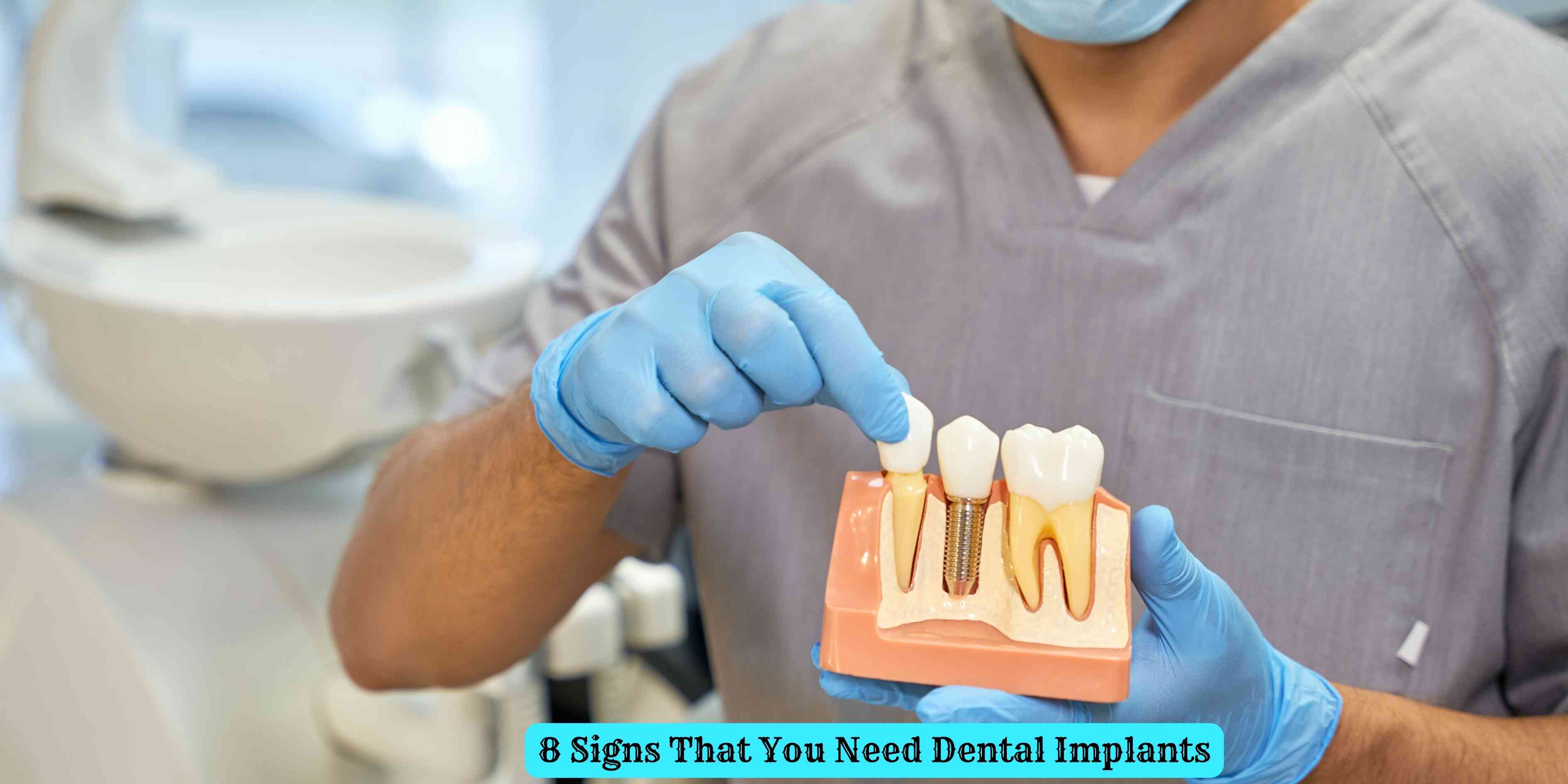
Dental implants — titanium posts surgically placed into the jawbone to replace missing tooth roots, topped with artificial crowns — are the closest modern dentistry comes to a permanent replacement for natural teeth. They preserve bone structure, restore function, and do not require alteration of adjacent teeth the way bridges do. Knowing when implants have become the right solution, rather than other options, depends on a set of clinical indicators. These 8 signs suggest it may be time to discuss dental implants with a qualified dentist or oral surgeon.
1. You Have One or More Missing Teeth
The most obvious indication for dental implants is already-missing teeth. Whether a tooth was lost to decay, trauma, infection, or extraction, the gap it leaves creates both functional and structural problems over time. Missing teeth change how you bite and chew, can cause adjacent teeth to shift, and lead to bone loss in the jaw due to absence of root stimulation. Implants address all of these consequences.
2. You Have a Tooth That Is Too Damaged to Save
A tooth that has severe decay, a significant fracture, or extensive damage that cannot be effectively restored with a crown, filling, or root canal has reached the end of its functional life. Attempting to preserve a tooth that cannot be meaningfully saved may only delay an extraction and the bone loss that follows. Your dentist can evaluate whether extraction and implant placement is the better clinical path.
3. You Have Loose or Ill-Fitting Dentures
Dentures that once fit well and now slip, shift, or cause discomfort often do so because of progressive jawbone resorption — the natural process in which bone that no longer has tooth roots to stimulate gradually diminishes. Dentures sit on the gum surface and provide no stimulation, so bone loss continues under them over time. Implant-supported dentures, or full arch implant restorations, address this by anchoring to the bone directly.
4. You Are Experiencing Jawbone Loss
Bone loss in the jaw — visible on X-rays as a reduction in bone density or height — is both a consequence of missing teeth and a reason to act before further loss makes implant placement more complicated. Implants require sufficient bone volume and density for the titanium post to integrate successfully. Early placement preserves more bone; significant bone loss may require grafting before implants become possible.
5. You Have an Infection That Has Compromised a Tooth
A severe dental infection — particularly one that has spread to the root or the surrounding bone — may necessitate tooth removal even if the visible structure of the tooth appears intact. Chronic infection can destroy the supporting bone and periodontium around a tooth to the point where the tooth cannot be saved. Extraction followed by implant placement, after the infection clears, is often the appropriate treatment sequence.
6. You Have Sunken Facial Features
Loss of teeth and subsequent jawbone resorption changes the structural support of the face. Significant bone loss can create a sunken appearance around the mouth and cheeks — sometimes described as a prematurely aged look — because the jawbone that supports facial soft tissue has diminished. Implants that integrate with the remaining bone and help stimulate it can contribute to better facial structure than dentures that sit on shrinking ridges.
7. You Want a Permanent, Low-Maintenance Solution
If you are currently using removable dentures or a bridge and find the daily maintenance, adhesives, removal, or limitations on what you can eat frustrating — or if you are looking ahead to a long-term solution rather than one that will need replacement or adjustment every several years — dental implants offer the most functionally permanent and low-maintenance option currently available. They are brushed and flossed like natural teeth, require no removal, and with proper care can last decades. The upfront cost and recovery time are higher than alternatives, but the long-term functional and structural benefits are significant.
8. Your Dentist Has Recommended an Evaluation
A recommendation from your dentist or periodontist to discuss implants with an oral surgeon is not something to defer indefinitely. Timing matters: implants placed relatively soon after tooth loss preserve more bone than those placed after years of resorption. If your dental provider has raised the subject, seeking a consultation with an implant specialist is a reasonable next step.