

5 Signs That You Have Stopped Growing in Height
Most people stop growing in height in their late teens, but the timing varies. These five signs are the reliable indicators that your growth has reached its endpoint.
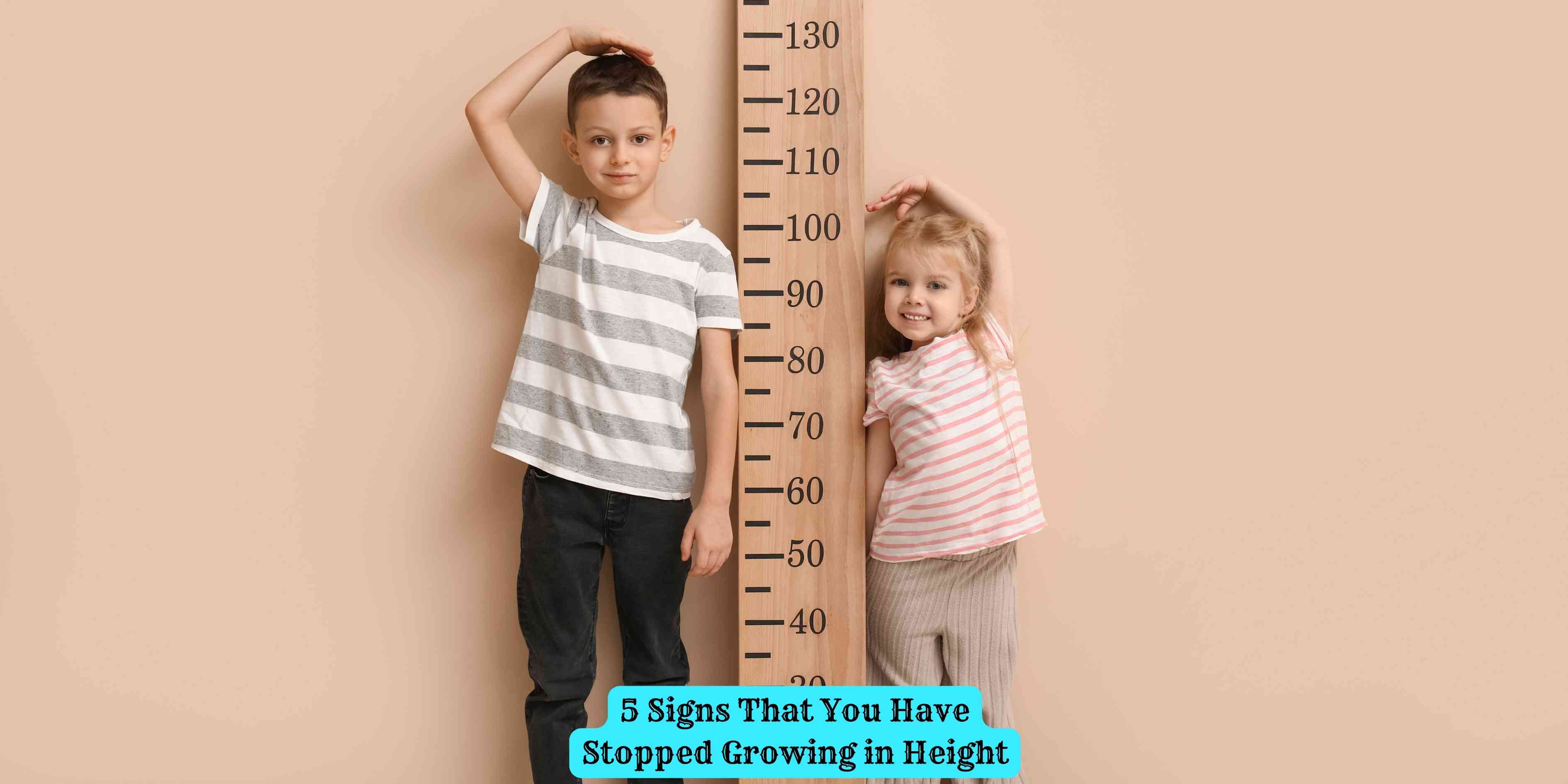
Human height is determined by bone growth — specifically, the lengthening of long bones in the legs and spine. This growth occurs at growth plates (epiphyseal plates), which are areas of cartilage near the ends of bones. When growth plates close — which happens at the end of puberty — bone lengthening stops and height is essentially fixed. The five signs below indicate that this process has completed.
The average age for growth plate closure is 16-18 for females and 17-20 for males, but individual timing varies substantially based on genetics, nutrition, and the timing of puberty. The only definitive confirmation of growth completion is an X-ray showing closed growth plates.
1. Your Height Has Not Changed in 12 to 24 Months
The most practical and accessible sign that you have stopped growing is stable height measurements over a prolonged period. During active growth phases, measurable height increases occur over months. Once growth has stopped, measurements taken months apart will be identical.
To be confident in this indicator, measurements need to be taken consistently: at the same time of day (height is slightly greater in the morning before spinal compression from gravity occurs throughout the day), in the same conditions, by the same method. A difference of half a centimeter or less across measurements taken a year or more apart indicates that growth has likely stopped or is very nearly complete.
2. The Signs of Puberty Have Completed
Growth in height is closely tied to puberty. The most significant period of height increase — the pubertal growth spurt — occurs during puberty, and height increase slows dramatically and then stops as puberty concludes. Recognizing that puberty has been completed is therefore a strong indicator that significant further height growth is unlikely.
In females, the growth spurt typically peaks about two years before the first menstrual period, and significant height growth is generally complete within one to two years after menstruation begins. Most girls reach their final height by 14-16, though some continue growing slightly until 18. In males, the growth spurt occurs later in puberty and continues for longer — most males have completed significant growth by 17-18, though growth plate closure in some males extends to 19-21.
Other signs of puberty completion in females include mature breast development, pubic and underarm hair, adult body composition, and stable menstrual cycles. In males, completed puberty includes adult genital development, voice that has fully deepened, facial hair growth, and adult body composition.
3. Your Growth Rate Has Slowed to Near Zero
During the peak of the pubertal growth spurt, children can grow 8-13 centimeters per year. In the years following the peak, the rate declines — from several centimeters per year, to one or two, to fractions of a centimeter, to zero. Tracking growth rate over time shows this deceleration clearly.
If your measured height is growing by less than half a centimeter per year and the trend has been consistently slowing for the past two to three years, you are likely approaching the end of growth or have already reached it. A growth rate that has held steady at near-zero for two or more years indicates that growth has stopped.
4. X-Ray Shows Closed Growth Plates
The only definitive confirmation of completed growth is medical imaging of the growth plates. An X-ray of the hand and wrist — a standard method for assessing bone age — allows a physician to evaluate whether growth plates are still open (indicating potential for further growth) or have fused (indicating growth has stopped).
Open growth plates appear as visible gaps in the bone on X-ray, indicating that cartilage is still present and bone lengthening can continue. Closed growth plates show no gap — the cartilage has been replaced by bone and the plate is fused. Once all growth plates in the long bones have closed, no further height increase is possible.
This imaging is typically ordered when there is clinical reason to assess growth status — unusual height for age, concern about growth disorders, or evaluation for growth hormone treatment consideration. It is not routinely performed simply to confirm that a healthy adolescent has stopped growing naturally.
5. You Are in Your Early-to-Mid Twenties
As a general guide, reaching the early-to-mid twenties without having experienced any measurable height change for several years is itself a reliable indicator that growth is complete. The upper limit for growth plate closure in males — who take the longest — is approximately 21-25 in some individuals, but these are outliers. By the mid-twenties, virtually all people have completed skeletal growth.
This age-based indicator is less precise than the others but provides useful context: someone who is 23 and has not noticed any height change in several years can be reasonably confident that their height is final, even without formal measurement tracking or medical confirmation.
If there is genuine concern about growth — either that it has stopped too early or that expected growth has not occurred — a pediatrician or endocrinologist can assess growth status with appropriate measurements, growth charts, and if indicated, bone age X-ray.