

5 Reasons Why My Check Engine Light Is On
The check engine light can mean something minor or something serious. These 5 common causes cover the most likely reasons it's on — and how urgent each one actually is.
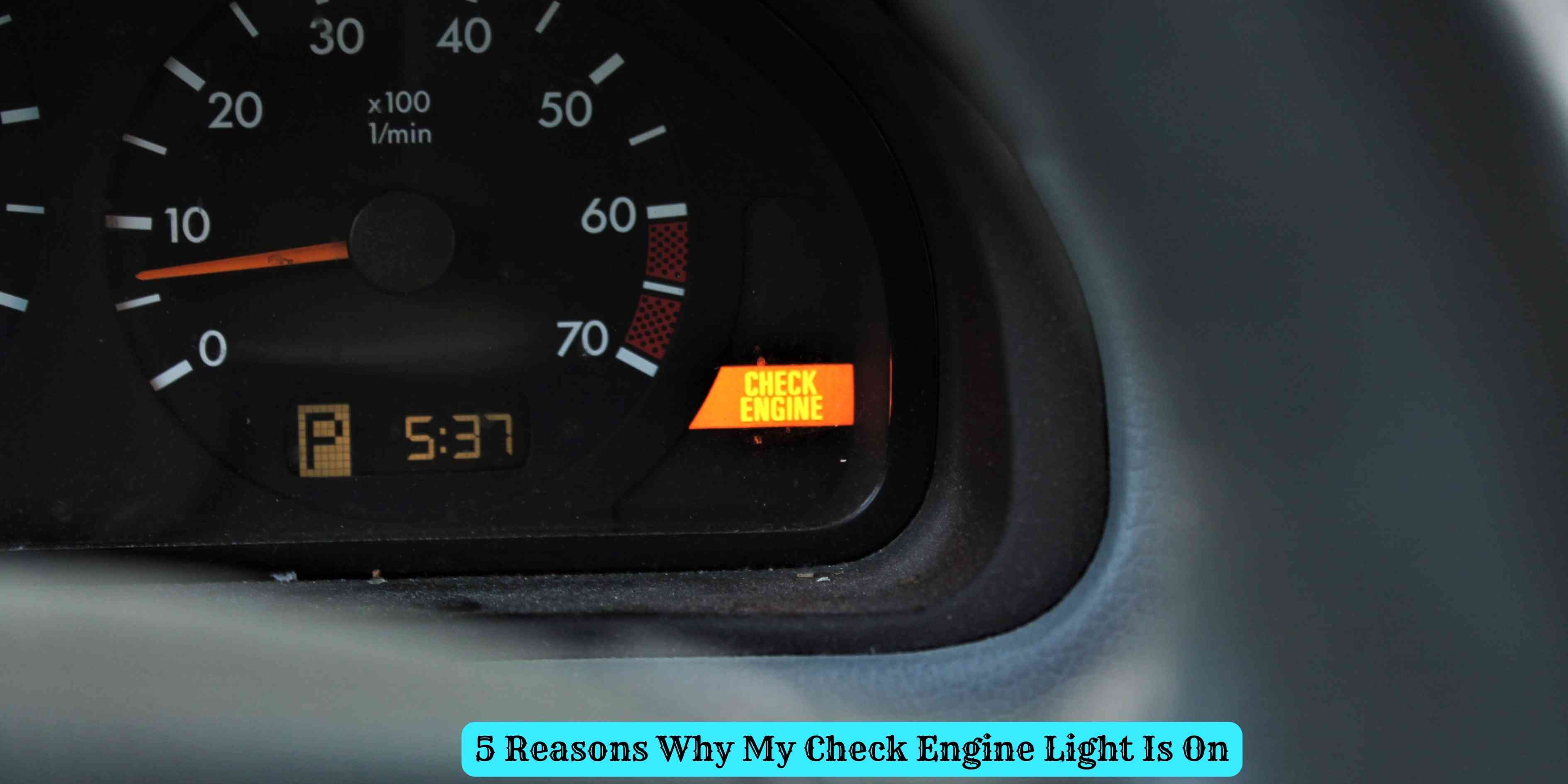
The check engine light (technically the malfunction indicator lamp, or MIL) comes on when the engine control module detects a reading outside the expected range from one of the vehicle’s sensors. It stores a diagnostic trouble code (DTC) that identifies the specific system involved. The only reliable way to know exactly why the light is on is to read the stored code with an OBD-II scanner — available at most auto parts stores for free, or purchasable for $30-$100. The five reasons below are the most statistically common across all vehicles, but the code reading is the starting point for any accurate diagnosis.
1. Loose or Damaged Gas Cap
The gas cap seals the fuel system and prevents fuel vapors from escaping. If the cap is loose, cracked, or missing, the evaporative emission control system detects a vapor leak and triggers the check engine light. This is the most common reason for a check engine light and the easiest fix.
How to identify it: If the check engine light came on shortly after filling up with gas, a loose cap is likely. You may see a stored code like P0440, P0441, or P0442 (evaporative emission system malfunction).
What to do: Remove the gas cap and reinstall it, tightening until you hear a click (or until the cap seats firmly on vehicles without a click-style cap). Drive normally for a day or two — if the cap was the issue, the light should turn itself off after several drive cycles. If the cap itself is cracked or damaged, a replacement gas cap typically costs $10-$25.
Urgency: Low. This is a maintenance issue with no immediate risk to the vehicle.
2. Faulty Oxygen Sensor
Oxygen sensors (O2 sensors) measure the amount of oxygen in the exhaust stream, which the engine control module uses to adjust the fuel-to-air mixture for efficient combustion. A failing oxygen sensor provides inaccurate readings, causing the engine to run too rich (too much fuel) or too lean (too little fuel), which reduces fuel economy and can damage the catalytic converter if left unaddressed.
How to identify it: Common codes include P0131, P0132, P0133 (and similar codes), which specify which sensor on which bank is reading incorrectly. The car may also show reduced fuel economy or slightly rough idling.
What to do: Oxygen sensors are a relatively straightforward replacement on most vehicles. The part itself ranges from $20 to $100+ depending on whether it’s a universal fit or vehicle-specific. Labor is usually one to two hours.
Urgency: Moderate. The car will continue running, but fuel economy suffers and a bad O2 sensor can accelerate catalytic converter deterioration, which is a much more expensive repair.
3. Failing Catalytic Converter
The catalytic converter processes exhaust gases and converts harmful compounds (carbon monoxide, hydrocarbons, nitrogen oxides) into less harmful ones before they exit the tailpipe. A failing or clogged catalytic converter triggers the check engine light and can cause reduced power, a sulfur (rotten egg) smell from the exhaust, and failed emissions tests.
How to identify it: Codes like P0420 or P0430 (catalyst system efficiency below threshold) specifically indicate catalytic converter issues. These codes sometimes come up alongside oxygen sensor codes because a failing O2 sensor can damage the catalytic converter over time.
What to do: Catalytic converter replacement is one of the more expensive repairs — the converter itself can cost $200-$2,500+ depending on the vehicle, and labor adds to that. On vehicles without emissions testing requirements, a failing catalytic converter may not be an immediate urgency — but it will eventually affect performance. Catalytic converters are also a frequent theft target; the valuable metals inside them (platinum, palladium, rhodium) make them worthwhile to steal.
Urgency: Moderate to high depending on severity.
4. Mass Airflow Sensor Malfunction
The mass airflow (MAF) sensor measures the volume of air entering the engine so the computer can calculate the correct amount of fuel to inject. A dirty or failing MAF sensor provides inaccurate readings, resulting in incorrect fuel mixture, poor fuel economy, rough idling, stalling, or difficulty starting.
How to identify it: Common codes include P0101 or P0102. Symptoms often include rough idle, hesitation when accelerating, or reduced fuel efficiency. The MAF sensor sits in the air intake tube between the air filter and the throttle body.
What to do: Before replacing the sensor, clean it — a can of MAF sensor cleaner (not standard electronics cleaner) can sometimes restore a dirty sensor’s function. The cleaner costs about $10-$15. If cleaning doesn’t resolve it, replacement sensors range from $50 to $150 and are usually straightforward to replace.
Urgency: Moderate. The vehicle will likely run but with reduced efficiency and potential driveability issues.
5. Spark Plug or Ignition Coil Issues
Spark plugs ignite the air-fuel mixture in the combustion chamber. Worn, fouled, or damaged spark plugs misfire — fail to ignite the mixture — which the engine control module detects and logs as a misfire code. Ignition coils, which power the spark plugs, can also fail individually and cause the same result.
How to identify it: Misfire codes (P0300 for random misfire, P0301-P0308 for specific cylinder misfires) appear. Symptoms include rough idling, hesitation or jerking during acceleration, reduced power, and occasionally a flashing check engine light (which indicates an active misfire serious enough to damage the catalytic converter).
What to do: Spark plugs are a regular maintenance item — on most modern vehicles they last 60,000-100,000 miles, but some vehicles require them sooner. A full set of spark plugs typically costs $30-$100. If replacing plugs doesn’t resolve the misfire, ignition coils are the next likely culprit — they’re cylinder-specific, so you can often replace just the one on the misfiring cylinder first.
Urgency: High if the check engine light is flashing (active misfire). Moderate if the light is steady. A flashing check engine light means pull over soon — sustained misfiring can destroy a catalytic converter in a short period.