

5 Reasons Why My Car Is Overheating
An overheating engine is one of the most urgent problems a car can have. These 5 common causes explain why it happens — and how to address each one before it becomes a much more expensive repair.
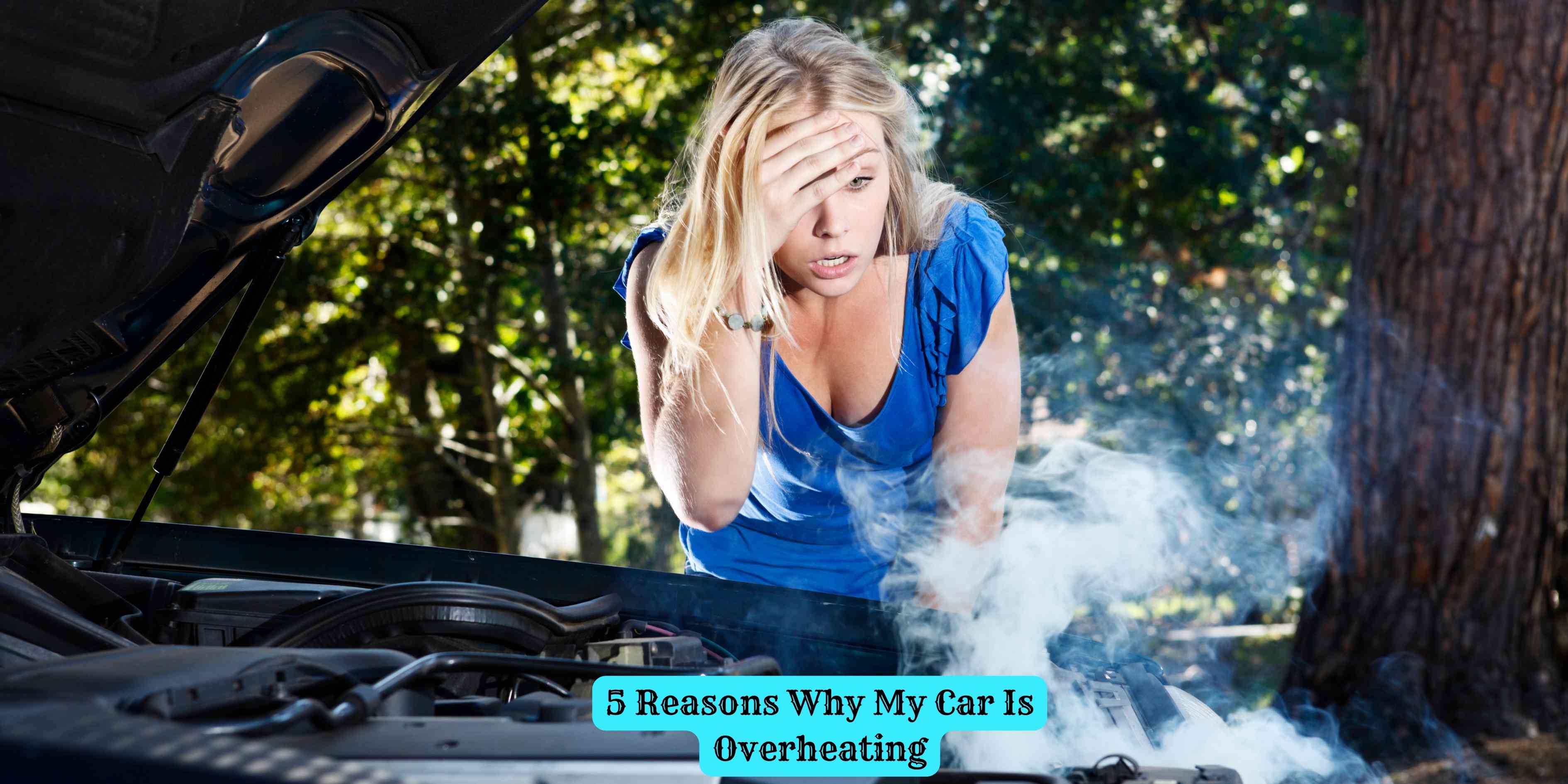
An overheating engine is one of the most serious problems your car can experience — if ignored, it can warp cylinder heads, blow head gaskets, and cause permanent engine damage that costs thousands of dollars to repair. The five most common causes are all rooted in the cooling system failing to move heat away from the engine fast enough. Identifying which one applies to your car determines whether the fix is a $15 coolant top-off or a $1,500 water pump replacement. If your temperature gauge is in the red, pull over safely and let the engine cool before attempting to diagnose or drive further.
1. Low Coolant Level
Coolant (antifreeze) is the fluid that absorbs heat from the engine and carries it to the radiator to be dissipated. If the coolant level is low — due to a leak or gradual evaporation — the cooling system doesn’t have enough fluid to manage engine temperature, and overheating results.
How to identify it: Check the coolant reservoir (the translucent plastic tank connected to the radiator by a hose) when the engine is cool. The level should be between the MIN and MAX lines. If it’s below minimum or empty, that’s your problem.
What to do: Add the correct coolant type specified in your owner’s manual. If the level was significantly low, investigate why — coolant doesn’t simply disappear unless there’s a leak, a blown head gasket, or a cracked component. A one-time top-off without finding the source of the loss is a temporary fix.
2. Coolant Leak
Coolant can leak externally (you’ll see a puddle under the car, often greenish, orange, or pink depending on coolant type) or internally (coolant enters the combustion chamber or oil system, which is more serious). External leaks can come from a cracked radiator, a loose or deteriorated hose, a faulty water pump seal, or a leaking heater core.
How to identify it: Check under the car after it has been parked for an hour. A sweet-smelling puddle under the front of the car is a strong indicator of a coolant leak. You may also see steam from under the hood if the leak is landing on a hot component.
What to do: Small external leaks can sometimes be temporarily addressed with a radiator sealant product, but the correct repair is finding and fixing the leak source. A professional diagnosis is typically needed to locate leaks accurately, especially internal ones.
3. Faulty Thermostat
The thermostat is a valve that stays closed while the engine warms up (to reach operating temperature faster) and opens once the engine reaches operating temperature to allow coolant to flow through the radiator. If the thermostat is stuck closed, coolant can’t circulate through the radiator, and the engine overheats rapidly.
How to identify it: A stuck thermostat typically causes the temperature gauge to rise quickly and stay high. You may also notice that the upper radiator hose stays cool when the engine is at operating temperature — this suggests coolant isn’t flowing through the radiator as it should be.
What to do: A thermostat is one of the less expensive cooling system repairs — the part typically costs $15 to $30, and labor is usually under two hours. This is a repair many mechanically inclined people do themselves, and it’s worth getting it checked early because a stuck-closed thermostat can cause serious engine damage quickly.
4. Water Pump Failure
The water pump is the mechanical heart of the cooling system — it circulates coolant throughout the engine and radiator. If the water pump fails (worn impeller, broken belt driving it, seized bearing, or a leaking seal), coolant circulation stops and the engine overheats.
How to identify it: Water pump failures can be accompanied by a whining or grinding noise from the front of the engine, a coolant leak at the water pump location, or overheating despite adequate coolant level. A mechanic can diagnose it by checking coolant flow and inspecting the pump.
What to do: Water pump replacement is a more significant repair — parts and labor can range from $300 to $800 depending on vehicle make and accessibility. On many vehicles, the water pump is replaced at the same time as the timing belt (they’re often driven by the same belt and it’s more efficient to replace both simultaneously).
5. Blocked or Damaged Radiator
The radiator is where the heat exchange actually happens — hot coolant flows through the radiator’s thin passages, and air flowing through the fins carries the heat away. A blocked radiator (from debris, bugs, internal mineral deposits, or sediment buildup) or a physically damaged radiator (bent fins, cracked tanks) reduces this heat exchange capacity and causes overheating, particularly at lower speeds or in stop-and-go traffic where airflow is reduced.
How to identify it: If overheating is worse in traffic than on the highway (where more air passes through the radiator), blockage or airflow restriction is likely involved. A mechanic can perform a coolant flush to address internal deposits, or inspect physically for external damage.
What to do: External debris can sometimes be carefully removed or rinsed. Internal deposits require a coolant system flush. Physical damage to the radiator typically requires radiator replacement, which ranges from $300 to $900 for most vehicles depending on make and labor rates.
Immediate safety rule: Any time your temperature gauge enters the danger zone, pull over, turn off the engine, and let it cool for at least 30 minutes before opening the hood. Never open a hot radiator cap — the pressurized, boiling coolant can spray and cause severe burns.