

3 Reasons Why School Buses Should Not Have Seat Belts
School buses are already the safest form of student transportation — and the way they achieve that safety is by design, not by lap belts. Here is why that matters.
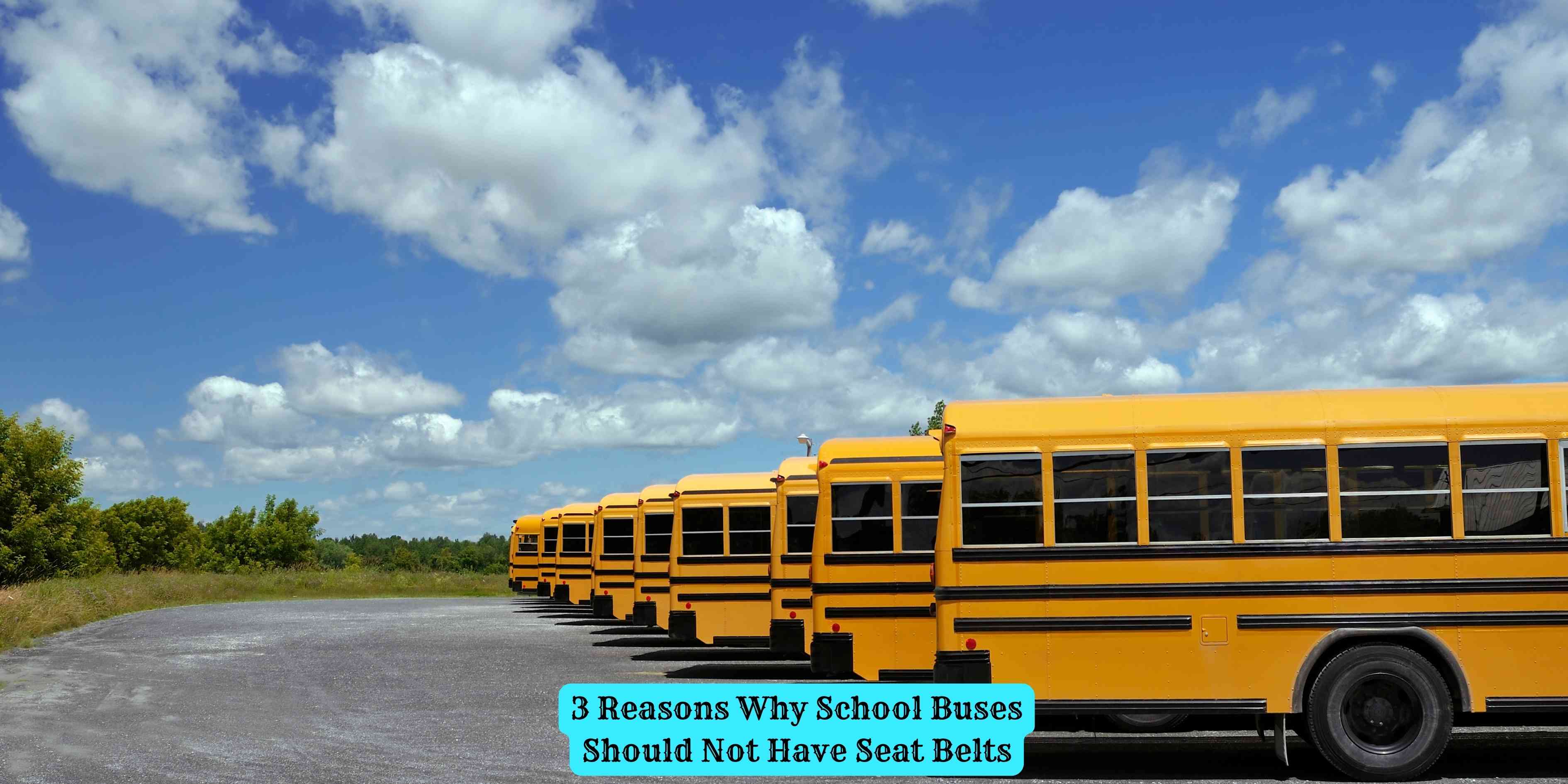
School buses in the United States do not have seat belts on most large buses — not because safety is an afterthought, but because they are designed to be safe through a different mechanism entirely. The design is called compartmentalization, and it is specifically engineered for the realities of school bus crashes. The arguments against requiring seat belts on large school buses are made primarily by safety engineers and transportation researchers, not by people who oppose student safety — and they are worth understanding clearly.
1. Compartmentalization Is Already a Proven Safety System
Large school buses are engineered for safety through a design standard called compartmentalization. The seats are positioned close together, with high, energy-absorbing seat backs made of padded material that deflects and absorbs impact energy. In a frontal collision or sudden stop — which accounts for the vast majority of school bus accidents — the student’s body is contained by the seat in front of them, which absorbs the impact and prevents the kinds of injuries associated with being thrown.
This system works because school buses are large, heavy vehicles with a very high ride height. The center of gravity and mass of a large school bus mean it is rarely moved significantly in a collision with a smaller vehicle — it is typically the smaller vehicle that suffers the catastrophic outcome. Within the bus, compartmentalization keeps students from being thrown forward or ejected.
The National Highway Traffic Safety Administration (NHTSA) has studied school bus safety extensively and concluded that compartmentalization is effective. According to NHTSA data, school buses are approximately 70 times safer per mile than riding in a passenger vehicle. The current design — without seat belts — is already the safety gold standard for student transport.
Adding seat belts to a system that is already highly effective is not automatically an improvement. It is a change to a proven design, with its own implications for safety in specific crash scenarios.
2. Seat Belts Can Create New Safety Risks in Specific Crash Scenarios
In the kinds of crashes most likely to harm school bus occupants — rollovers and side-impact crashes — seat belts introduce their own risks. In a rollover, a student secured by a seat belt is held in position as the bus rolls, potentially putting them in contact with surfaces that could cause injury. In a bus without seat belts, students tend to fall to the floor and the compartmentalized structure limits the severity of impacts.
Evacuation is also a serious concern. After a crash, particularly one involving fire or a risk of submersion, students need to be able to exit the bus quickly. Young children, children with disabilities, and children in emergency situations may not be able to release a seat belt quickly or at all. A bus driver managing an emergency cannot simultaneously direct 40 children to exit and help those who cannot release their belts.
The logistics of evacuation — 40 to 72 children, different ages, different physical and cognitive abilities, potentially injured, potentially in the dark or smoke — are significantly more complicated when each child is secured by a restraint that must be individually released. The current design allows the bus to be evacuated quickly because students can stand and move without having to undo anything.
3. The Cost Does Not Match the Safety Benefit for Large Buses
Installing seat belts on every school bus in the United States would cost billions of dollars — in hardware, installation, maintenance, and the reduction in bus capacity that comes from adding seat belt hardware to existing seat configurations (belted seats typically require more space per student, reducing capacity by 15–20%). This cost would be borne by school districts that are already significantly underfunded in most states.
The NHTSA position is that for large school buses — those over 10,000 pounds — seat belts do not represent a meaningful improvement in safety outcomes and the cost cannot be justified by the safety benefit. This is a conclusion based on crash data and engineering analysis, not on budget priorities.
Smaller school buses — those under 10,000 pounds — are treated more like passenger vehicles in terms of safety standards and are already required to have seat belts. The distinction matters: the safety argument is specifically about large buses, where the compartmentalization design is most effective and seat belt benefits are least clear.
The important caveat: Several states — including California, Florida, New York, New Jersey, Louisiana, and Texas — have passed laws requiring seat belts on new school buses, and their experience is producing additional data on the real-world outcomes of seat-belt-equipped large buses. This is a live policy debate, not a settled one, and research continues to evaluate whether the evidence base for the NHTSA position still holds in contemporary crash data.
The case for keeping large school buses without seat belts is not an argument against student safety — it is an argument that the current design is already highly effective, that changing it introduces new risks, and that the cost of change is significant relative to the measurable safety benefit. Whether that balance should shift as new data arrives from states that have implemented seat belt requirements is a question that updated research will answer.