

10 Reasons Why School Lunch Should Be Free
A child who is hungry in school learns less, behaves differently, and faces long-term consequences that no family income requirement or lunch debt should determine.
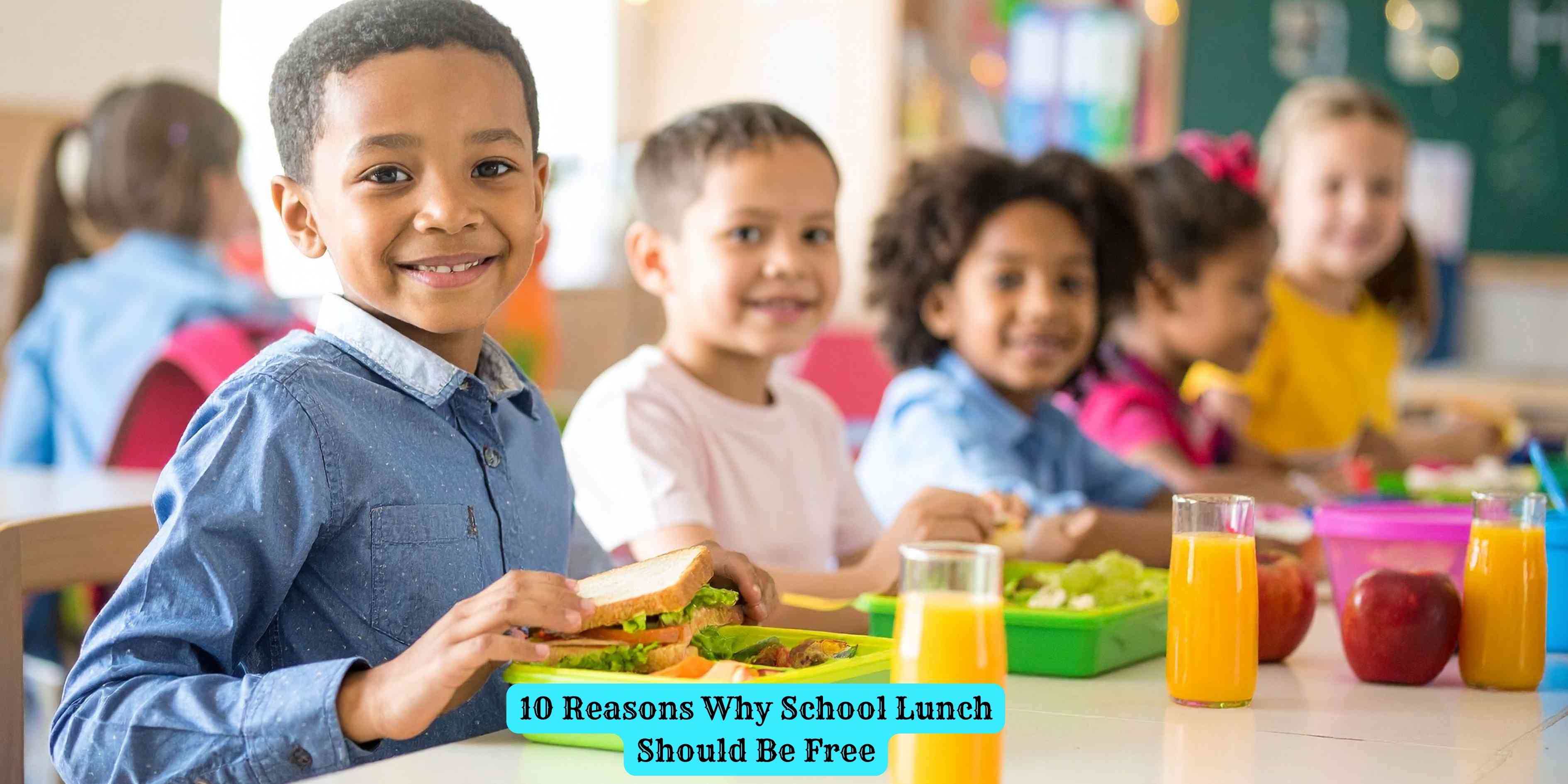
Free school lunch — universal meals provided to all students without cost, income verification, or administrative hurdles — produces measurable educational, health, and equity benefits that pay for themselves over time. The United States has had free school lunch programs since the 1940s, but they have always been means-tested, leaving many children in the gap between qualifying for free meals and being able to afford the paid version. The case for universal free school lunch is both practical and moral.
1. Hungry Children Cannot Learn
The connection between food and cognitive function is direct and well-documented. Hunger reduces attention span, impairs working memory, slows processing speed, and increases behavioral problems in school-aged children. A student who has not eaten adequately in the morning or who is waiting for an inadequate or absent lunch cannot perform at the level that adequate nutrition would allow.
Studies consistently show that children who eat school lunch perform better academically than comparable students who do not — with measurable differences in test scores, attendance rates, and grade progression. Food is not a nice-to-have for learning; it is a prerequisite for it. Universal free lunch removes the food insecurity barrier from the learning environment.
2. The Current System Creates Stigma That Harms Children
In schools where some students pay for lunch and others receive it free through means-tested programs, students are often visibly identified by their payment status. Children who qualify for free meals may be required to take a different tray, use a separate line, or have their accounts flagged in ways that are visible to peers. The stigma of receiving free lunch is real and documented — some students go without food rather than be identified as needing assistance.
Universal free lunch eliminates this dynamic entirely. When every student receives the same meal with no transaction or identification, there is no stigma to attach to. This is not just an equity argument; it is a practical argument about ensuring that the students who most need the food actually eat it.
3. It Reduces Administrative and Collection Burden
The current means-tested system requires significant administrative infrastructure: income verification, paperwork, eligibility determination, payment systems, collection of unpaid debt, and management of the gap between those who qualify and those who do not. Schools spend real money and staff time on this administration — money that could be spent on education.
Universal free lunch simplifies the entire system. Every student eats; no one is tracked individually for payment or eligibility. Several states that have moved to universal free lunch report significant administrative savings that partially offset the cost of providing meals universally.
4. It Addresses the Problem of Lunch Debt
School lunch debt — the accumulated unpaid balance in student lunch accounts when families cannot pay — has become a significant policy and ethical issue in school districts across the United States. Some districts have responded to unpaid lunch debt by providing students with cheese sandwiches or a lesser meal as a visible consequence, or by denying lunch entirely.
Denying a child adequate food as a consequence for a family’s inability to pay is an outcome that virtually no one defends explicitly — yet it is a regular occurrence in means-tested systems. Universal free lunch makes it structurally impossible because there is no individual payment to fail to make.
5. It Supports Families Experiencing Temporary Financial Hardship
The means-tested system requires families to apply for free or reduced-price meals, which captures households in documented chronic poverty but often misses families experiencing temporary financial hardship — job loss, unexpected medical expenses, divorce, housing instability — who have not yet qualified for assistance or who do not want to navigate the application process.
These children can be food insecure in ways that affect their school performance without their family appearing in any eligibility system. Universal free lunch provides food regardless of documentation status or the timing of hardship.
6. It Improves School Nutrition Standards for Everyone
When all students eat school lunch, the incentive to provide high-quality, nutritious food increases. Programs serving only lower-income students can face underfunding and stigmatization that reduces food quality. Universal programs, which serve all students and are therefore more politically visible, tend to attract more funding and attention to meal quality.
Research on universal meal programs shows improved nutritional quality of meals served compared to means-tested programs — partly because of political attention and partly because programs that serve all students must appeal to a broader constituency.
7. It Reduces Childhood Food Insecurity Overall
Approximately one in eight children in the United States experiences food insecurity — uncertain access to adequate food. School lunch, where it is free and accessible, is often the most reliable daily meal for these children. Means-tested programs reach many food-insecure children but not all.
Universal free lunch is a direct mechanism for reducing childhood food insecurity in the school-age population during the school year. Its effects are particularly significant for children in households just above the poverty threshold — too economically stable to qualify for assistance, not stable enough to reliably pay.
8. The Long-Term Public Health Benefits Are Real
Children who eat adequate, nutritious lunches have lower rates of obesity, type 2 diabetes, and other diet-related health conditions. These are not abstract future-cost arguments — they are measurable outcomes in the communities where better school nutrition programs have been studied.
The long-term cost of preventable childhood diet-related health conditions — in healthcare spending, productivity, and quality of life — exceeds the cost of providing free lunches to all students. This is not a speculative point; it is an economic conclusion supported by public health research.
9. Universal Programs Build Broader Community and Civic Investment in Schools
Schools that provide universal services — meals, health screenings, before-and-after care — tend to build broader community investment in the institution. When a school is seen as providing concrete value to all families, not just those who are economically struggling, the political and community support for the school increases.
Universal free lunch is a visible, tangible expression of what a school provides to the community it serves. That visibility has practical benefits for school funding, community engagement, and civic support for public education generally.
10. Several Places Have Already Proven It Works
This is not a theoretical proposal. Universal free school lunch has been implemented at state level — California, Maine, Colorado, Minnesota, and others have passed universal school meals legislation in recent years. District-level programs have been studied for longer.
The results are consistent: participation in school meal programs increases, food insecurity among students decreases, academic outcomes improve, and administrative costs go down. The practical case for universal free lunch is supported by the documented results of programs that have actually done it.
The arguments against universal free school lunch center on cost and means-testing philosophy. The arguments for it center on outcomes — and the outcomes, wherever universal programs have been studied, consistently favor them. For more on the school policy debate, 10 reasons why school should start later covers another evidence-backed school reform that faces similar institutional resistance.