

20 Reasons Why Recess Should Not Be Longer
Most education research favors more recess, not less. But there's a serious countercase — about injuries, supervision gaps, academic time, and who recess actually benefits. These 20 reasons lay it out.
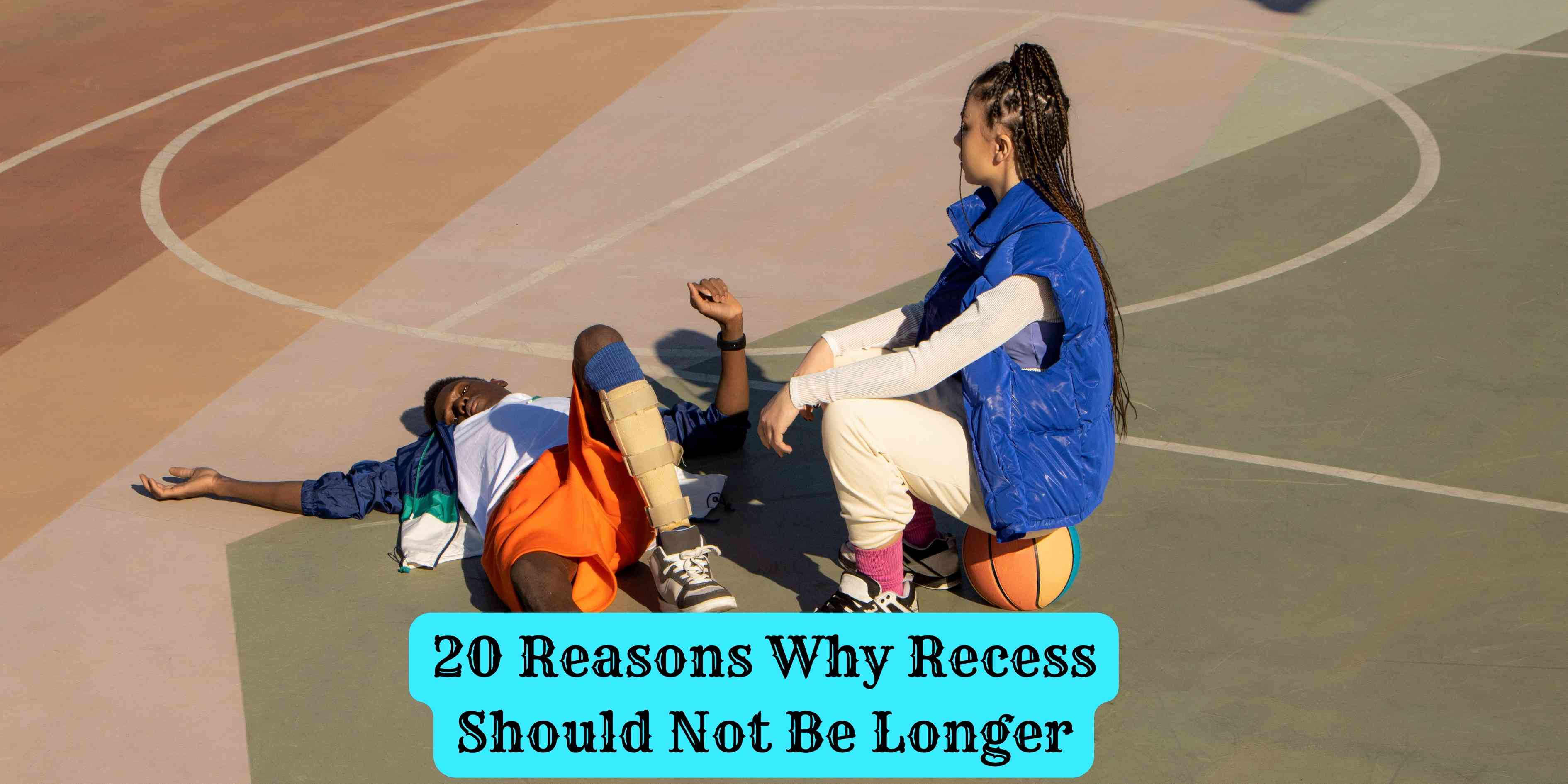
The political and public health conversation around recess has moved almost entirely in the direction of more — more time, more play, more freedom. The American Academy of Pediatrics recommends at least 60 minutes of physical activity per day, and recess advocates have used this to push for longer daily recess periods. But the case for extending recess runs into a significant body of practical, safety, equity, and academic concerns. These 20 reasons represent the strongest arguments against making recess longer, organized by the type of concern they address.
Safety and Supervision Concerns
1. More recess time means more unsupervised time. Supervision ratios during recess are already inadequate in most schools. Extending recess extends the period during which children are monitored by far fewer adults per child than in any other school setting. Incidents of bullying, injury, and conflict scale with time and reduced oversight.
2. Playground injuries increase with extended exposure time. More time on playground equipment produces more injuries. School playground injuries already account for approximately 200,000 emergency department visits annually in the U.S. Longer recess periods increase the statistical probability of accidents.
3. Conflict resolution demands spike with longer unstructured time. Longer recess periods generate more interpersonal conflicts that teachers must address when students return to class. The time spent by teachers resolving post-recess conflicts is often not counted as part of the “lost” instructional time that recess opponents cite, but it represents a real cost.
4. Student behavior becomes harder to manage after long recess periods. Longer outdoor play periods can increase physical arousal to levels that make the transition back to quiet, focused classroom work more difficult — particularly for high-energy students and those with attention or behavioral challenges.
5. Hot and cold weather extremes make longer recess periods dangerous. Extended outdoor time in extreme heat increases the risk of heat-related illness. Extended time in cold weather increases exposure risk for inadequately dressed students. The safety window for comfortable outdoor play is narrower in many climates than advocates acknowledge.
Academic and Instructional Concerns
6. Longer recess directly reduces instructional time. Each additional 10 minutes of recess is 10 minutes not spent in direct instruction. At 180 school days per year, 10 extra minutes of daily recess equals 30 instructional hours per year — nearly a full week of school.
7. Schools with achievement gaps cannot afford to trade instruction for play. Schools serving populations with significant academic deficits face a genuine tradeoff. Additional instructional time in literacy and math produces measurable gains for these students; the marginal benefit of additional recess time is less clear and harder to measure.
8. Transition time costs increase proportionally with recess length. The longer recess is, the more time is consumed getting students out, managing them outside, and resettling them inside. In many schools, a 30-minute recess consumes 45+ minutes of the school day when preparation and transition time are included.
9. Extended recess reduces the attention-restoration effect. The cognitive science case for recess is about attention restoration — brief breaks restore the capacity for focused attention. This effect is not linear; a very long recess does not produce proportionally greater attention restoration than a shorter one, and the academic case for extending recess is much weaker than the case for having it at all.
10. Some students use recess time destructively. Extended free time for students who struggle to self-direct, who have unresolved social conflicts, or who don’t have established peer groups becomes a longer period of unproductive and sometimes distressing experience.
Equity and Inclusion Concerns
11. Longer recess increases exclusion time for socially marginalized students. Students who are excluded by playground social hierarchies experience longer periods of isolation and distress. The children who enjoy recess most are the popular, athletic, and socially skilled — the children who benefit least are those who are most vulnerable.
12. Students with disabilities face extended marginalization. Longer recess means a longer period during which students with physical disabilities, sensory processing differences, or social communication difficulties navigate an environment poorly suited to their needs.
13. Recess benefits are not distributed equally across genders. Research consistently shows that boys occupy more physical playground space and engage in more physical activity during recess than girls, particularly as children age. Extended recess tends to amplify these differences rather than reduce them.
14. Children from different cultural backgrounds have different play norms. School playground culture reflects particular cultural norms about games, physical contact, competition, and social organization. Students from different backgrounds may not share these norms and may be further marginalized by longer periods in an environment structured around norms they don’t share.
School Management and Practical Concerns
15. Many schools lack adequate outdoor space for longer recess periods. Longer recess requires more space for more children for more time. Schools with limited outdoor space already experience crowding and conflict during short recess periods; extending that time worsens the problem.
16. Staffing longer recess periods requires more resources. Additional supervision for a longer recess period has a real staffing cost. In schools with tight budgets, this cost competes with instructional resources.
17. Extended recess creates more clothing and cleanliness issues. Longer outdoor play time means more students returning with muddy shoes, wet clothing, scraped knees, and disheveled states that take additional time to address and create additional distraction during subsequent instruction.
18. Extended recess in urban schools raises safety concerns beyond the school grounds. Playgrounds adjacent to streets or in urban environments with security considerations require heightened monitoring during any recess period. Extended recess periods extend the exposure to these concerns.
Arguments About What the Time Could Better Provide
19. The same time could be used for structured physical education with equal health benefits and more equity. Structured PE provides guaranteed physical activity for all students in an inclusive, supervised, developmentally intentional environment. It achieves the health goals of extended recess more equitably.
20. Schools already have insufficient time for arts, enrichment, and specialized instruction. The curriculum has been compressed by academic testing demands, and many schools have already reduced or eliminated art, music, library, and elective time. Extending recess competes with these enrichment activities for schedule space — and there is a legitimate argument that a half hour of art instruction is more developmentally valuable for many children than a half hour of additional unstructured outdoor time.
The overall research on recess strongly supports having it. The case for making it substantially longer is weaker — and the concerns above, particularly around safety, supervision, equity, and instructional time, deserve to be part of any policy conversation about how school time is best allocated.