

10 Reasons Why Recess Is Bad
Most research supports recess — but critics have raised real concerns about safety, supervision, bullying, time loss, and equity. These 10 arguments represent the case against recess as it's typically practiced.
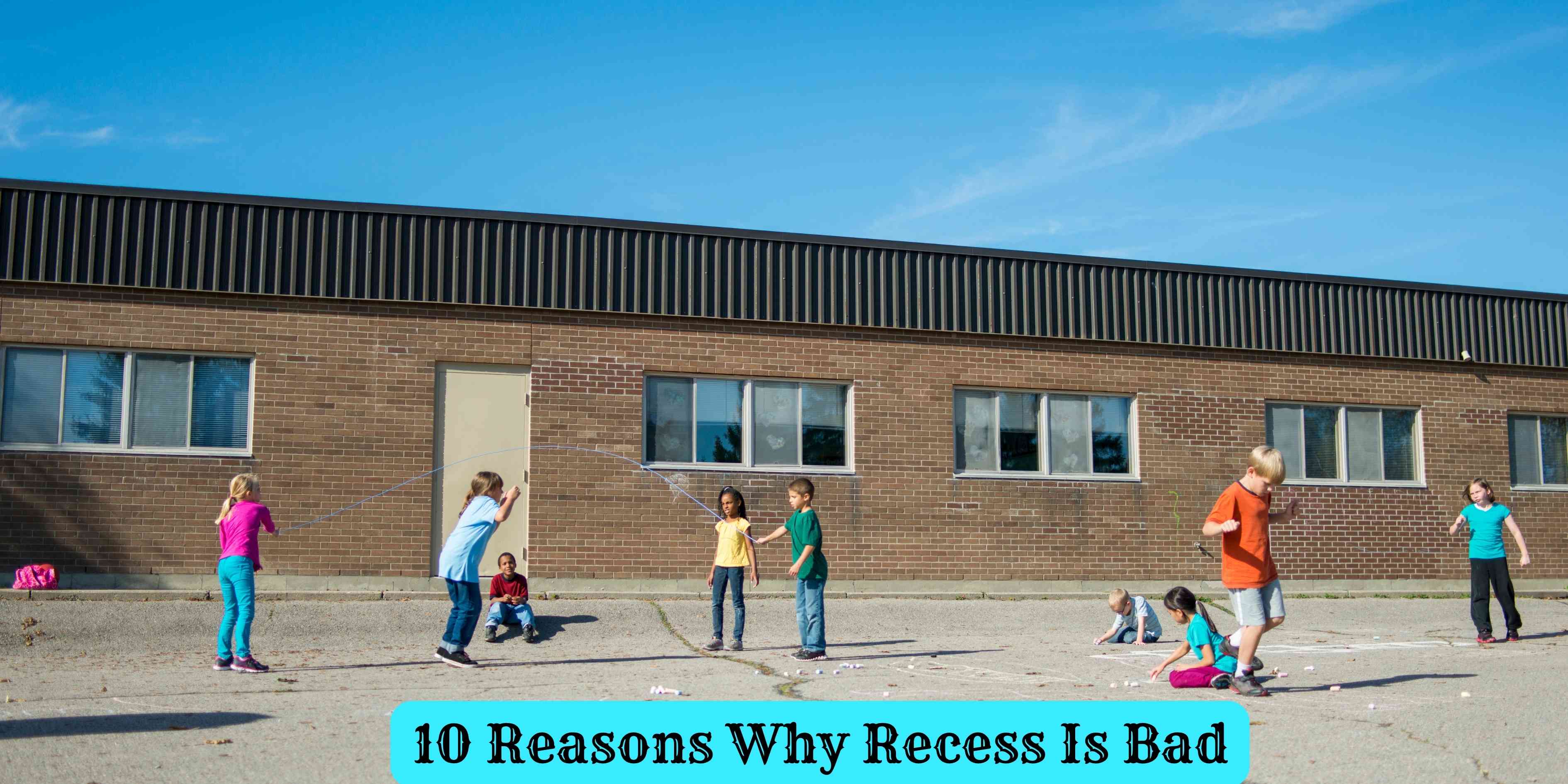
The research on recess is strongly positive: it improves attention, physical health, social development, and academic performance. Most pediatric, educational, and public health organizations recommend daily recess for elementary students. But recess as typically practiced in American schools has real critics, and their arguments — about safety, supervision challenges, bullying, equity, and time use — reflect genuine concerns rather than simple anti-play sentiment. This article presents the case critics make against recess, alongside the counterarguments that explain why the research still broadly supports it.
1. Recess Is When Most School Injuries Occur
Playgrounds and unstructured play generate a significant share of school injuries. The CDC estimates approximately 200,000 playground-related injuries per year in the U.S. among children 14 and under. Broken arms, head injuries, and soft tissue injuries from falls, collisions, and equipment accidents are common. Schools with limited supervision or aging equipment face particular risk. Some administrators have concluded that the liability and injury burden of recess is not worth the claimed benefits.
Counter: The solution to playground injuries is better supervision, age-appropriate equipment, and surface materials — not elimination of outdoor play, which carries its own significant developmental and health costs.
2. Recess Is a Primary Setting for Bullying
Unstructured peer time with limited supervision is an environment where bullying, exclusion, and social cruelty flourish. Research consistently identifies recess as one of the most common settings for bullying behavior. Children who are socially marginal, physically small, or behaviorally different are particularly vulnerable during unstructured time. For these children, recess is not a joyful break — it is a stressful environment they must navigate with minimal adult support.
Counter: The bullying problem is a supervision and school culture problem, not a recess problem. Proper monitoring and structured play facilitation significantly reduces recess bullying.
3. It Takes Time Away From Academic Instruction
Every 20-minute recess period is 20 minutes not spent in direct instruction. For schools under significant academic pressure — urban schools with tested grade levels, schools serving populations with learning gaps — every instructional minute is weighted. Some administrators and teachers feel that the academic benefit of an additional literacy block outweighs the benefit of unstructured play time.
Counter: The research on recess and attention consistently finds that children learn more in the instructional time after recess than they would in an equivalent amount of additional instruction without a break. The trade is not 1:1.
4. Recess Supervision Is Inadequate in Most Schools
The ratio of supervisors to students during recess in most schools is far higher than in classrooms — often one adult monitoring 100 or more students across a large outdoor area. This means that conflicts, accidents, and bullying incidents often occur without adult awareness, response, or resolution. The gap between the adult oversight available during instruction and during recess creates a supervision environment that critics argue is genuinely inadequate.
5. Recess Exacerbates Social Inequalities Among Students
Children from more socially disadvantaged backgrounds — those with fewer developed social skills, less physical fitness, different cultural play norms, or less experience with the social structures of playground games — are at a disadvantage during unstructured peer time. Playground hierarchies often reinforce and amplify the social sorting already present in the classroom. The most popular, athletic, and socially powerful children dominate recess; the least socially connected are excluded.
6. Weather and Facilities Limit Its Actual Value
In many parts of the country, weather conditions make outdoor recess impractical or unpleasant for much of the school year — extreme cold in northern states, extreme heat in southern ones, and rain throughout. Indoor recess alternatives (typically watching a video or sitting quietly in a hallway) provide little of the physical activity or social benefit attributed to outdoor play. The argument for recess often assumes an outdoor, active, weather-appropriate experience that many students don’t consistently get.
7. It Can Disrupt Academic Momentum
Teachers frequently report that transitions into and out of recess — getting students lined up, outdoors, supervised, and then back inside and settled — consume additional time beyond the formal recess period. Students who have conflicts, injuries, or difficult social experiences during recess return to the classroom emotionally dysregulated and not ready to learn. The transition cost is a real classroom management burden.
8. Children With Disabilities May Be Further Marginalized
Children with physical disabilities, developmental conditions, sensory processing differences, or social difficulties often struggle in unstructured recess environments in ways that are not true of structured academic time. The equipment may be inaccessible; the social dynamics may be overwhelming; the noise and unpredictability may be distressing. For these students, recess as typically structured is not an equitable experience.
9. Safety Concerns Drive Risk-Averse Equipment Decisions
Liability concerns have stripped many school playgrounds of the equipment that made them genuinely interesting and physically engaging — merry-go-rounds, tall climbing structures, seesaws, and monkey bars have been removed from most school playgrounds in favor of lower, safer, less exciting alternatives. Critics argue that the resulting “safe” playground is so sanitized that it provides little actual physical challenge or engagement value, undermining the developmental case for recess.
10. The Benefits Attributed to Recess Could Be Achieved More Equitably Through Physical Education
Structured physical education classes provide all children — regardless of social status, athletic ability, or weather conditions — with guaranteed physical activity and movement. PE programs can be designed to be inclusive, supervised, developmental, and equitable in ways that unstructured recess cannot. Critics argue that using PE time to provide supervised, structured physical activity achieves the developmental goals of recess more reliably and equitably than leaving children unsupervised on a playground.
Counter: This argument is strongest in schools with genuinely excellent PE programs — but the research suggests that recess provides benefits (unstructured social interaction, child-directed play, cognitive restoration from academic work) that structured PE does not fully replicate.