

20 Reasons why Marijuana Should be Legalized in all 50 States
A majority of Americans now support marijuana legalization — and the policy case for federal legalization across all 50 states is based on substantial evidence, not just shifting public opinion.
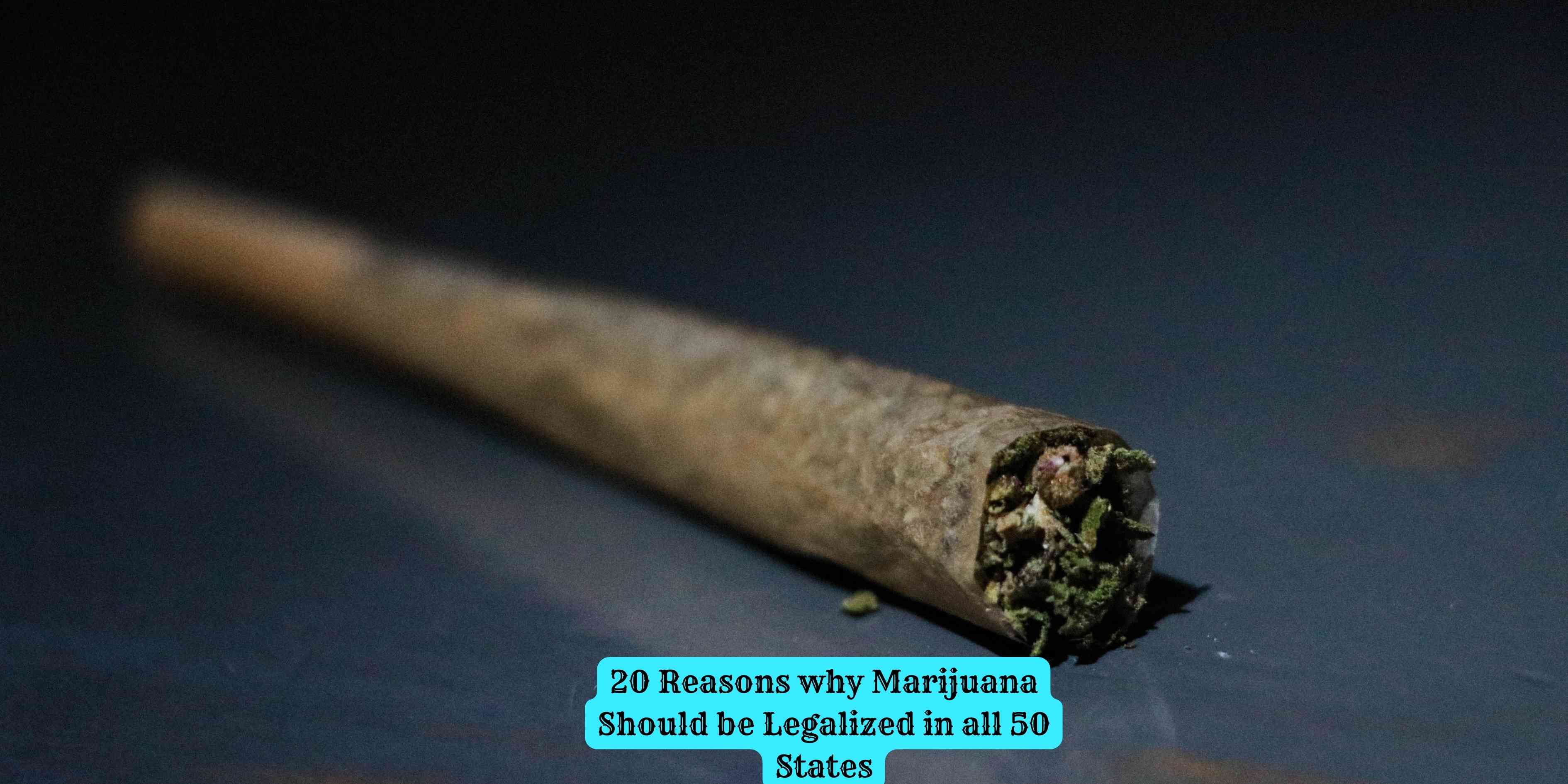
The case for marijuana legalization in all 50 states is built on medical evidence, criminal justice data, economic research, and principles of individual liberty. Prohibition has not eliminated marijuana use — it has criminalized it in ways that cause significant social harm, particularly to communities of color and low-income populations. Legalization, with appropriate regulation, addresses these harms while expanding access for medical use and generating substantial tax revenue.
Marijuana is currently legal in more than half of US states and has been consumed by a large percentage of the American adult population, yet federal prohibition treats it as a Schedule I substance with no accepted medical use — a classification that most researchers and medical professionals consider inconsistent with the evidence.
Here are 20 reasons the federal legalization argument has gained broad and growing support.
Medical and Health Benefits
1. Marijuana has documented medical applications. Research and clinical experience support marijuana’s effectiveness for pain management, nausea associated with chemotherapy, muscle spasms from multiple sclerosis, seizure disorders, appetite stimulation in patients with wasting conditions, and anxiety in certain presentations. Keeping it federally illegal impedes research, access, and medical standardization.
2. It offers an alternative to opioids for pain management. States that have legalized medical marijuana have consistently shown reductions in opioid prescriptions and opioid-related deaths. Providing patients with a non-addictive alternative to opioid pain management is a public health benefit in the context of an ongoing opioid crisis.
3. CBD, derived from cannabis, already has FDA-approved medical applications. Epidiolex, a CBD-based medication, received FDA approval for the treatment of severe epilepsy. The active ingredients in cannabis clearly have accepted medical uses — the blanket Schedule I classification is at odds with this regulatory reality.
4. Federal prohibition blocks meaningful clinical research. Because marijuana is Schedule I federally, researchers face significant barriers to studying it, including restrictions on the strains available for research, approval delays, and institutional reluctance to participate in federally restricted studies. Legalization would unlock clinical research that could better define therapeutic applications and risks.
Criminal Justice and Social Equity
5. Marijuana arrests disproportionately affect communities of color. Despite similar rates of marijuana use across racial groups, Black Americans are significantly more likely to be arrested for marijuana possession than white Americans. This disparity has been documented consistently across decades and jurisdictions and represents a systematic inequity in criminal enforcement.
6. Prohibition has created large-scale unnecessary incarceration. Hundreds of thousands of Americans have been arrested, prosecuted, and incarcerated for marijuana offenses that would not be crimes in states where it is now legal. These convictions have cascading consequences — affecting employment, housing, financial aid eligibility, and voting rights — that extend far beyond any prison term served.
7. Law enforcement resources are poorly allocated to marijuana enforcement. Police departments, prosecutors, and courts invest significant resources in marijuana enforcement that could be redirected toward violent crime, property crime, and other priorities with greater social harm. The opportunity cost of marijuana prohibition is substantial.
8. Expungement of prior convictions remains incomplete and inconsistent. Even in states that have legalized marijuana, the process of expunging prior convictions has been slow, incomplete, and inconsistent. Federal legalization would create a framework for more uniform and comprehensive relief for people whose lives were affected by prosecutions for conduct that is now legal.
Economic and Fiscal Impact
9. Legal marijuana markets generate substantial tax revenue. States that have legalized recreational marijuana — including Colorado, California, Illinois, and others — have generated billions of dollars in tax revenue that funds education, public health, infrastructure, and substance use treatment programs. Federal legalization would expand this revenue source nationally.
10. Legalization creates legal employment and industry growth. The cannabis industry employs hundreds of thousands of Americans in cultivation, processing, retail, testing, and ancillary services. Federal legalization would allow this workforce to operate with full access to banking, investment, and the protections available to legal employees in other industries.
11. Cannabis businesses currently operate under severe banking restrictions. Because marijuana remains federally illegal, cannabis businesses in legal states are largely denied access to standard banking services. Many operate as cash-only businesses, creating safety risks and accounting and tax compliance complications. This is an irrational consequence of the mismatch between state and federal law.
Personal Liberty and Individual Rights
12. Adults should be able to make their own choices about personal consumption. The philosophical case for individual liberty argues that adult decisions about consuming a substance that primarily affects the individual themselves — and that is less harmful than alcohol by most measures — should not be subject to criminal prohibition. Most legal frameworks that prohibit marijuana apply no consistent reasoning that distinguishes it from alcohol, which is legal.
13. Alcohol and tobacco, which are more harmful by several measures, remain legal. By measures including addiction potential, acute toxicity, long-term organ damage, and mortality, alcohol and tobacco cause more measurable harm than marijuana. Prohibiting marijuana while permitting alcohol and tobacco represents an inconsistency that is difficult to defend on public health grounds alone.
14. Prohibition has not meaningfully reduced marijuana use. Decades of enforcement have not produced meaningful reductions in marijuana use rates. Use rates in states before and after legalization have been broadly similar, suggesting that legality does not substantially change behavior but does change who is criminalized for it.
Regulatory Control and Consumer Safety
15. Legalization allows for quality control and consumer safety. Illegal marijuana markets have no labeling, testing, or quality standards. Legal markets require testing for contaminants (pesticides, heavy metals, mold), accurate potency labeling, and packaging that prevents accidental ingestion. Consumers in legal markets have far more information about what they are consuming than those in illegal markets.
16. Regulation can include age restrictions and purchase limits. Legal marijuana markets implement age verification and purchase limits that are impossible in illegal markets, where sellers have no incentive to restrict sales to minors. Paradoxically, regulated legal markets often provide better protection for minors than prohibition does, because illegal sellers do not card.
17. Tax revenue can fund public health education and substance use treatment. Many legalization frameworks dedicate portions of tax revenue to substance use disorder treatment, mental health services, and public health education. This is a more constructive response to problematic use than criminalization, which restricts access to treatment.
Policy Consistency and Public Support
18. Public support for legalization is at an all-time high. Polling consistently shows that a majority of Americans — across party lines — support marijuana legalization. Policy that is broadly opposed by the public raises democratic legitimacy questions. When enforcement of a prohibition falls primarily on specific communities while a majority of the general public supports repeal, the policy’s continued existence is difficult to defend democratically.
19. The state-federal mismatch creates legal chaos and inequity. The current situation — where marijuana is legal in more than half of US states but federally prohibited — creates legal inconsistency that affects workers who travel across state lines, employees of federally regulated industries who test positive despite legal state use, and businesses that cannot access federal protections available to other legal industries.
20. International comparisons show that legalization and regulation work. Countries that have moved toward decriminalization or legalization of marijuana have not experienced the catastrophic social outcomes that prohibition advocates warned about. Portugal’s broad drug decriminalization led to reduced drug-related harm. Canada’s legalization framework has been operational since 2018 without the predicted increases in youth use or road accident rates.
The policy case for marijuana legalization across all 50 states has strengthened significantly as evidence from legal states has accumulated. The argument is not that marijuana is harmless — it is that prohibition causes greater harm than regulated legalization, and that the current enforcement pattern is both ineffective and inequitable. For those interested in related policy questions, 10 reasons why it is important to vote covers how citizens can participate in shaping the policies that govern these decisions.