

12 Things to Always Remember
The things worth remembering are rarely complicated. But we forget them consistently, especially when life is hard. These 12 things are worth returning to.
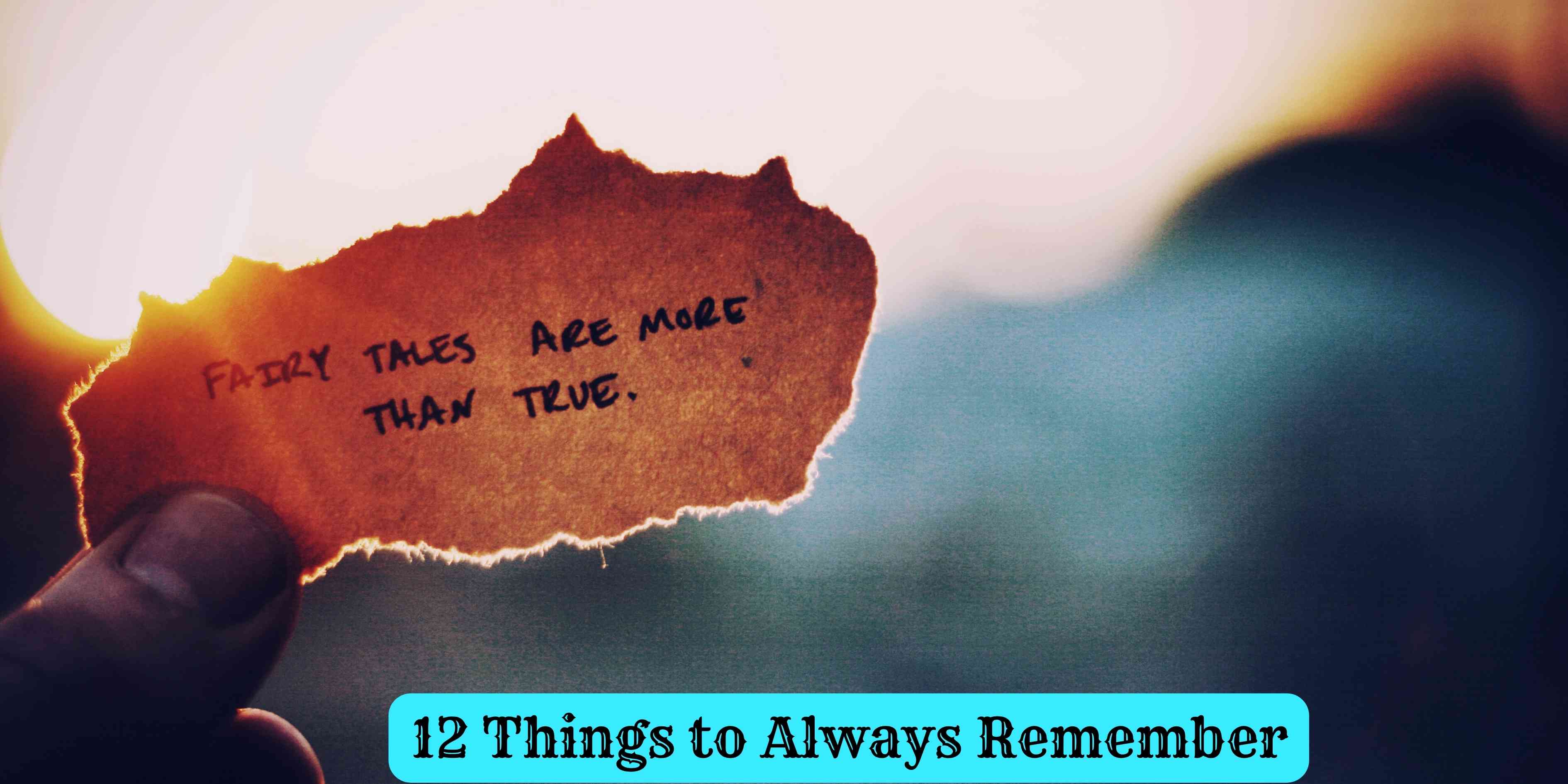
There is a category of truth that everyone knows and almost everyone regularly forgets — particularly in the moments when remembering it would help the most. These 12 things fall into that category. They are not complicated. They do not require a philosophy degree. They are the kinds of things you nod at when you read them and then completely fail to recall the next time life offers you the opportunity to apply them.
1. This Too Shall Pass
Whatever is happening right now — the painful thing, the overwhelming thing, the impossible-seeming thing — will not feel the way it feels right now indefinitely. Every experience in your life to date has eventually changed or ended, including the ones that felt permanent while they were happening. “This too shall pass” is not a dismissal of present difficulty; it is a genuine historical observation about the nature of your life so far, and the likelihood that it will continue to apply.
2. You Are Not What People Think of You
The opinion others hold of you — even when expressed confidently, even when delivered by people you respect — is a story those people have formed about you from incomplete information, through the lens of their own experiences and projections. It is data, not truth. The parts of you that are real exist independent of whether anyone can see them accurately. Other people’s inability to see you clearly is not evidence about who you are.
3. Most People Are Doing Their Best with What They Have
The person who frustrates you, disappointed you, or hurt you is almost certainly not the villain in a story where they know they’re the villain. They are operating from their own history, their own limitations, their own fears. This does not mean their behavior is acceptable or that you are required to tolerate it. It does mean that understanding the source of behavior is more useful than condemning it.
4. Comparison Is a Waste of the Life You Actually Have
When you compare your situation to someone else’s, you are comparing your interior experience — which you know in full — to someone else’s exterior presentation — which you know partially and inaccurately. No comparison made on this basis is valid information about your life’s quality. The person whose life looks better than yours is probably comparing their interior to someone else’s exterior and arriving at the same miserable conclusion.
5. The Kindest Thing You Can Do Is Pay Attention
Most of what people need from each other is not complex: to be seen, to be heard, to matter to someone else enough that someone notices what is happening for them. Attentive presence — actually looking, actually listening, actually being there — is a rarer form of kindness than grand gestures, and it is the one that people remember.
6. Your Body Needs Care to Be There When You Need It
The body that is expected to carry you through difficulty, to work under pressure, to recover from stress, and to show up for the people who depend on you — this body requires sleep, food, movement, and rest. Neglecting these things feels like an option when life is busy, and it eventually becomes clear that it was not. The maintenance your body needs is not optional; it is the price of having one.
7. Most of What You Worry About Will Not Happen
Studies on worry consistently find that the majority of what people spend anxious energy anticipating either never occurs or is significantly less bad than feared. The mind runs threat simulations as a protective function; it is not a reliable predictor of what the future actually holds. Worrying about something is not preparation for it — preparation is preparation. Worry is just expenditure.
8. The People You Love Know It Best When You Show It, Not Say It
Love expressed in consistent, small actions — showing up, following through, noticing, being available — lands more permanently than love that is declared loudly and then absent in the ordinary days. The people you love remember how you behaved more clearly than they remember what you said you felt.
9. Mistakes Are Part of the Process, Not Interruptions to It
Every meaningful thing any person has ever built or become was built through a process that included mistakes, misjudgments, and failures along the way. The mistakes are not evidence that you should not have tried or that the effort was wrong — they are evidence that you were doing something real and learning from the results.
10. You Will Not Get This Time Back
Not in a paralyzing way — just as a practical observation. The years move faster than you expect. The ordinary Tuesday you take for granted is also, from a future vantage point, a day you would pay something to have back. The people you have right now will not always be available in the way they are now. Pay attention to what is happening in the life you are currently living.
11. Asking for Help Is Not Weakness
The belief that needing help is a failure of self-sufficiency is one of the most reliably harmful beliefs a person can hold. Every human being who has achieved anything significant did so with the help of others. Every human being who has survived difficulty did so better when supported than when isolated. Asking for help is the recognition that you are human and that being human is enough.
12. You Are Already Enough for This Moment
Not for every ambition or every version of yourself you are working toward — those are worth pursuing. But for right now, in the moment you are actually in, you are sufficient. Whatever you bring to this day — your experience, your limitations, your particular combination of strengths and struggles — is enough for what this day actually requires of you. The rest can be developed. The moment is already yours.