

10 Ways to Survive the Zombie Apocalypse
When the dead start walking, most people make the same fatal mistakes. These ten survival strategies — drawn from everything movies, games, and actual emergency preparedness have to offer — give you a fighting chance.
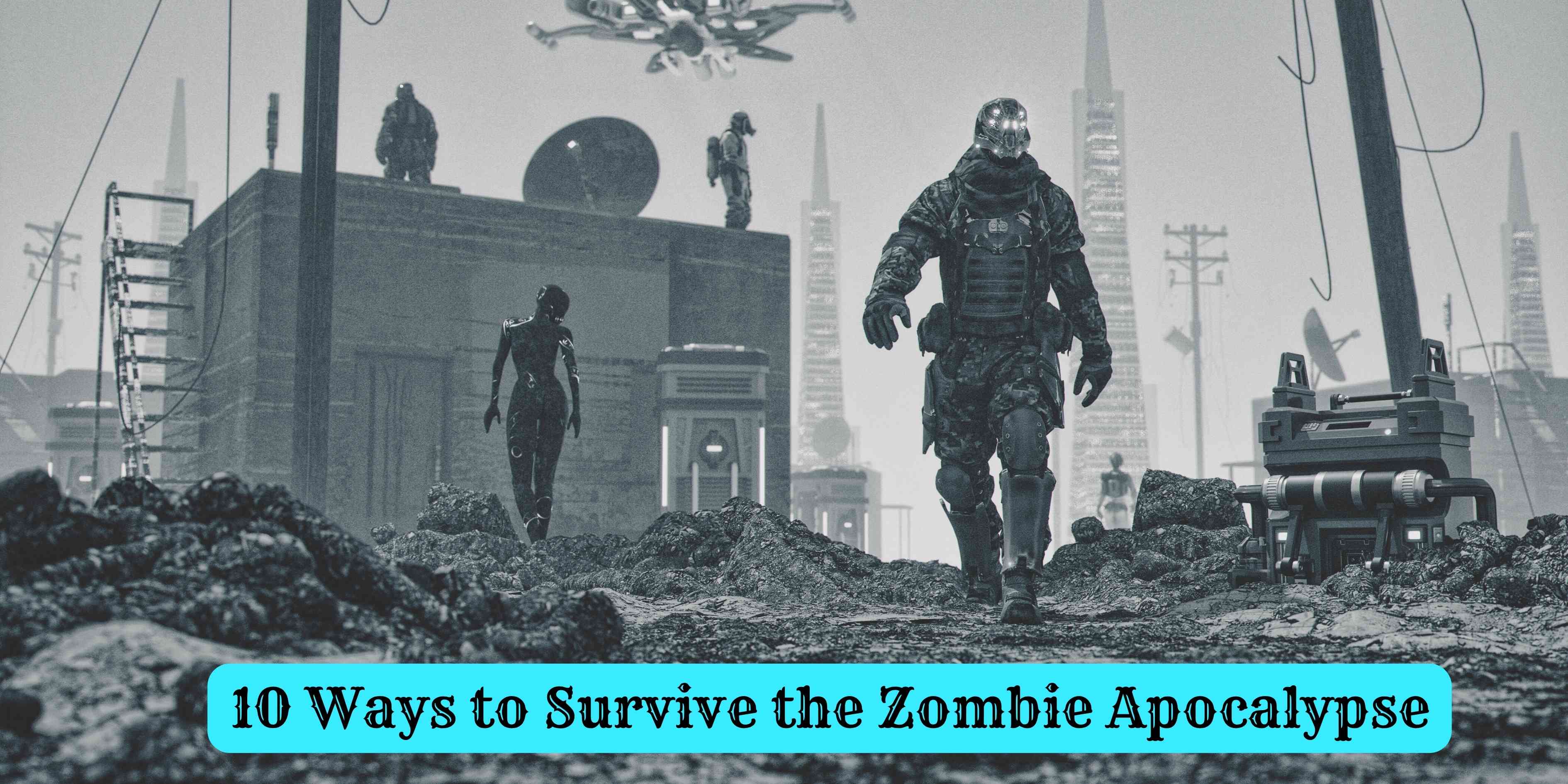
The zombie apocalypse is, by definition, a total collapse scenario: no power grid, no supply chain, no emergency services, no rule of law. Most people who don’t survive die not from zombie bites in the first week but from starvation, dehydration, infection, hypothermia, or other survivors with bad intentions over the following months. These ten strategies account for both the zombies and everything else — because the undead are the obvious problem, not always the most dangerous one.
1. Get Out of the City Immediately
Cities are death traps in a zombie apocalypse. High population density means an enormous number of zombies concentrated in a small area. Supply chains that feed cities collapse within days. Infrastructure — water treatment, power, waste management — fails within weeks. The buildings and crowds that make cities normally safe and convenient make them immediately lethal when the undead take over.
Leave early. The people who survive in zombie fiction and in real disaster scenarios are the people who leave before the situation becomes critical, not the ones who wait until it is obvious that evacuation is necessary. By the time leaving looks clearly necessary, the roads are gridlocked and the resources are depleted. Head for rural areas with low population density, access to clean water, defensible shelter, and the possibility of food production.
2. Secure Water Before Food
A human being can survive approximately three weeks without food but only three days without water. In a grid-down scenario, municipal water supplies fail within days. Knowing how to source, transport, and purify water is more important than any other survival skill in the immediate aftermath of collapse.
Learn to identify natural water sources — rivers, streams, springs, and rainwater collection. Learn to purify water through boiling (the most reliable method), chemical treatment (water purification tablets), and filtration. Store water immediately — containers, bathtubs, anything you have. In the first hours after collapse, the water still in municipal pipes is clean. Use it.
3. Find the Right Shelter — and Fortify It
Shelter in a zombie apocalypse needs to be defensible, sustainable, and quiet. The wrong shelter kills you. Key principles:
The ideal location is elevated (harder to be surrounded), on the outskirts of low-population areas, structurally solid, and capable of being secured from multiple entry points. A farmhouse outside a small town beats a fortified apartment in a city. A hardware store in a rural area beats a mall in a suburb. Islands, peninsulas, and locations with limited access points reduce the perimeter you need to defend.
Once you have shelter, fortify it: board or barricade low-level windows and doors, establish sight lines so you can see approaching threats before they are close, and create multiple exit routes so you are never trapped with a single point of egress.
4. Build the Right Group — Carefully
Lone survival is possible but extremely difficult. The survivor who does everything alone has no redundancy — if they get injured or sick, everything fails. A group provides watch rotation, division of labor, mutual support, and combined skills. But the wrong group is more dangerous than no group.
The ideal survival group is small enough to move quickly and consume limited resources but large enough to maintain round-the-clock watch rotations and divide critical skills. Five to fifteen people is the range most commonly cited by survival planning experts. Group composition matters: prioritize people with practical skills (medical training, mechanical knowledge, farming experience, construction ability), people who function well under stress, and people you can actually trust. Numbers are less important than quality and trust.
Beware of taking in strangers indiscriminately. In a collapsed society, other survivors represent an unpredictable variable. Vet carefully, don’t allow weapons to be kept secret within the group, and establish clear rules of conduct early.
5. Master Quiet Weapons First
A gun is loud. A single gunshot in an otherwise silent post-apocalyptic environment can be heard for miles and attracts zombies from a wide radius. Firearms are valuable for human threats and for situations where speed and stopping power are critical, but routine zombie encounters are better handled without broadcasting your location to every undead creature in the area.
Prioritize learning to use quiet weapons effectively: a machete, a crowbar, a hatchet, a sturdy knife, a bow, or a crossbow. These require physical effort and proximity, which is dangerous, but the silence tradeoff is significant. Use firearms for genuine emergencies or organized defense situations where your location is already known — not for routine patrol or single-zombie encounters.
6. Learn Basic Medical Skills
In a scenario without hospitals or pharmacies, basic medical knowledge becomes life-saving. The leading causes of death in pre-antibiotic eras were infections from minor wounds — cuts, scrapes, and bites (non-zombie variety) that became septic. Without access to antibiotics, wound management is critical: clean wounds immediately with the cleanest water available, keep them covered, watch for signs of infection, and know how to manage fever.
Learn to recognize and treat: wound infection, dehydration, hypothermia, hyperthermia, fractures, dislocations, and appendicitis symptoms. Stock a serious first aid kit: antiseptic, sutures or closure strips, antibiotics (if you can acquire them), analgesics, and comprehensive wound care supplies. At least one person in your group should have medical training.
7. Develop a Sustainable Food Strategy
Stockpiled food runs out. The survivors who make it long-term are not the ones who stored the most cans — they are the ones who established food production. As quickly as possible after securing shelter, begin establishing sustainable food sources.
Gardening is the long-term solution: learn to grow calorie-dense crops (potatoes, squash, corn, legumes) in the soil conditions available to you. Foraging supplements gardening: know the edible plants in your region before the apocalypse, not after. Hunting and trapping provide protein: learn to set snares, fish, and field-dress game. Livestock — chickens for eggs, goats for milk — provide ongoing protein and calories without requiring butchering.
Preserve what you produce: drying, smoking, pickling, and fermentation extend food across seasons without refrigeration.
8. Stay Mobile and Have an Exit Plan
No shelter is permanent. A location that seems secure can be overrun, discovered by hostile survivors, or become untenable through resource depletion. Always have a backup plan for where you will go if your primary location fails, what you will take, and how you will leave.
Maintain a bug-out bag — a pre-packed bag containing everything you need to survive 72 hours if you have to leave immediately with no time to gather supplies. Keep vehicles fueled or have an alternative transport plan (horses, bicycles). Know multiple routes to your backup location in case primary roads are blocked.
9. Control Information and Manage Noise
Noise kills. In a quiet world, sounds travel farther and attract both zombies and hostile humans. Maintain noise discipline: speak quietly, avoid unnecessary activity at night, muffle generators, and minimize vehicle use to necessary trips. Keep animals quiet — a barking dog can compromise an otherwise safe location.
Manage what information you share with strangers and with your group. In a resource-scarce environment, knowledge of your food stores, your location, your defensive capabilities, or your group size can make you a target. Trust is earned slowly; information is shared on a need-to-know basis.
10. Maintain Mental Health — It Matters as Much as Physical Survival
The psychological collapse of survivors is often what ends survival groups — not zombie attacks. Depression, paranoia, grief, and interpersonal conflict under extreme stress have ended more fictional and real survival scenarios than external threats.
Maintain routines. Routine provides psychological stability in chaotic environments — consistent meal times, sleep schedules, watch rotations, and group activities create the sense of normalcy that sustains mental health under duress. Grieve losses — suppressing grief eventually produces psychological breakdown. Assign meaningful roles to everyone in the group — purposelessness is demoralizing and dangerous. Maintain some form of play, humor, and recreation — these are not luxuries but psychological necessities. Take care of each other’s mental states as seriously as physical health.
The zombie apocalypse is a physical survival challenge and a psychological endurance test. Both require deliberate preparation.