

10 Reasons Why Video Games Are Good for You
The case against video games gets more coverage than the case for them. These ten reasons represent the research on what gaming actually does well — for the mind, for social connection, and for wellbeing.
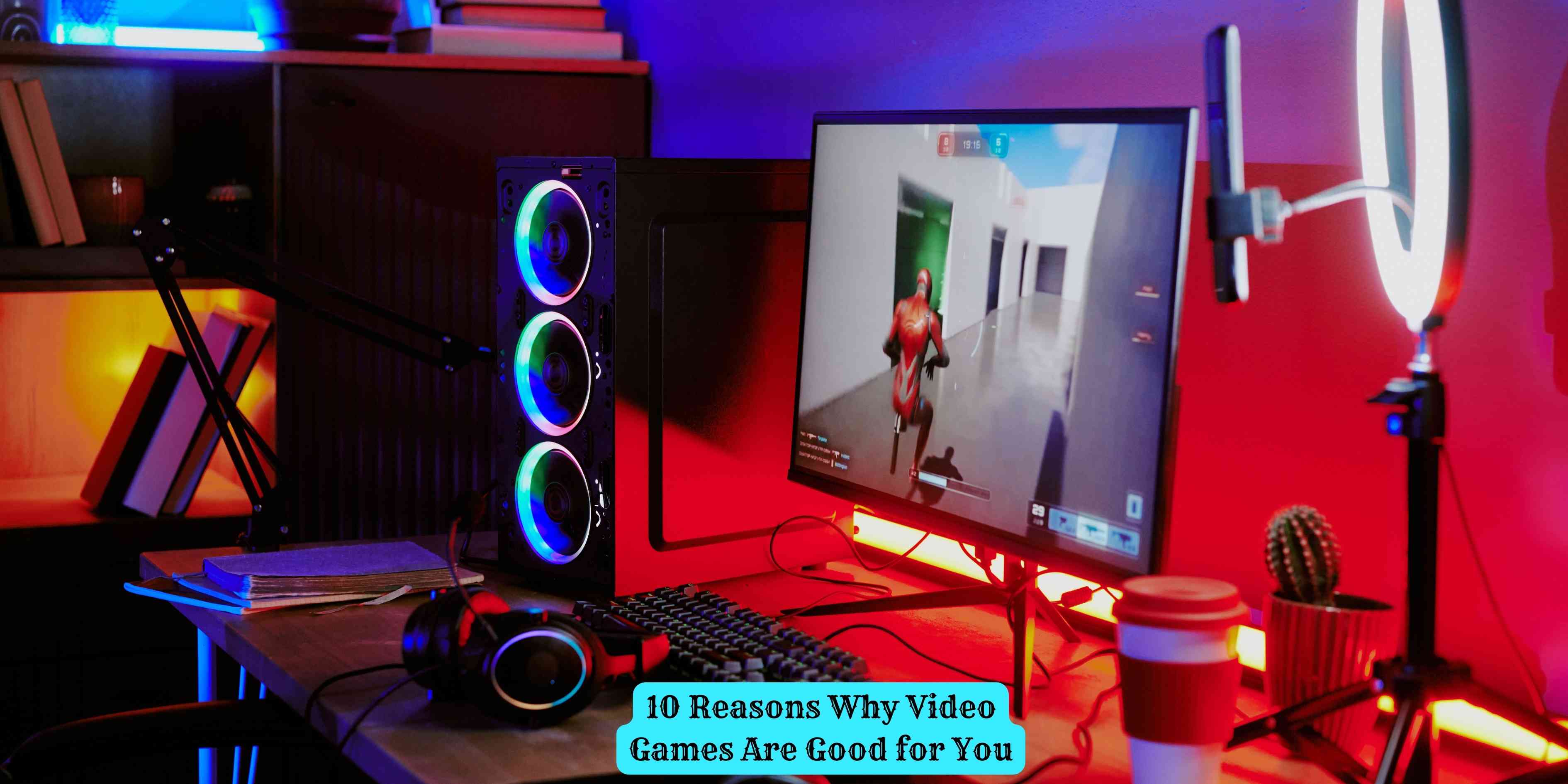
Video games have been studied extensively as both a potential harm and a potential benefit to cognitive development, social connection, and wellbeing. The research supporting their benefits is substantial and growing — and increasingly being applied in therapeutic, educational, and military training contexts. These ten reasons are grounded in that research.
1. They Improve Problem-Solving and Strategic Thinking
Video games — particularly strategy games, role-playing games, and puzzle games — require continuous, rapid problem-solving within complex rule systems. Research consistently finds that gamers develop stronger problem-solving skills, are better at generating multiple possible solutions, and approach novel problems with greater flexibility than non-gamers. These cognitive skills transfer to academic and professional contexts, as the problem-solving demands of games develop general cognitive approaches that are not specific to gaming.
2. They Enhance Spatial Reasoning
Action video games, in particular, have been repeatedly shown to improve spatial reasoning — the ability to mentally manipulate objects, navigate three-dimensional space, and understand spatial relationships. Research by Daphne Bavelier and colleagues at the University of Rochester found that action game players outperform non-gamers on a variety of spatial reasoning tests. These skills are relevant to STEM fields, surgery, architecture, and numerous professional domains where spatial reasoning is important.
3. They Improve Attention and Processing Speed
Action gamers show superior performance on tasks requiring sustained visual attention, selective attention (the ability to focus on relevant stimuli while filtering distractions), and processing speed. These attentional advantages are not trivial — they reflect genuine neurological adaptations to the demands of action games, which require processing multiple simultaneous streams of visual information at high speed. Studies have found that non-gamers trained on action games develop measurable improvements in these attentional capacities.
4. They Provide Effective Stress Relief
Gaming is one of the most commonly cited leisure activities for stress relief, and the research supports its effectiveness for this purpose. Absorbing gameplay — which requires sustained attention and engagement — produces a state of flow that effectively displaces stress and negative emotion. Studies on gaming and mood consistently find that brief gaming sessions reduce self-reported stress and improve mood, with effects comparable to other recognized stress management activities.
5. They Build Social Connection
The stereotype of gaming as an isolating, antisocial activity does not match the research. The majority of gamers — over 70 percent by most surveys — play with others, either locally or online. Multiplayer games create social environments in which friendships form, cooperation is required, and social skills including communication, negotiation, and teamwork are practiced. For socially anxious individuals, online gaming provides a lower-stakes social environment in which connection is accessible that might be more difficult to access in person.
6. They Can Teach Persistence and Resilience
Games — particularly those with significant difficulty — teach persistence through repeated failure. The structure of most games involves attempting something, failing, analyzing what went wrong, and trying again with adjusted strategy. This cycle of failure, analysis, and adaptive retry is a model of resilient problem-solving. Research on gaming and academic resilience suggests that gamers develop greater tolerance for failure and greater persistence on difficult tasks than non-gamers.
7. They Have Documented Therapeutic Applications
Video games are increasingly used in therapeutic contexts with demonstrated effectiveness. Action video games have been used in vision therapy for amblyopia (lazy eye). Games specifically designed for cognitive rehabilitation have shown benefits for stroke patients, patients with ADHD, and individuals with anxiety disorders. Virtual reality gaming is used in pain management, phobia treatment, and PTSD therapy.
The evidence for gaming’s therapeutic value in specific contexts is sufficiently robust that games are being developed specifically for clinical use and being evaluated in clinical trials.
8. They Develop Multitasking Capacity
Complex games — those that require simultaneous management of multiple objectives, resources, or characters — develop the capacity to manage multiple cognitive streams simultaneously. Research on real-time strategy games in particular has found improvements in cognitive flexibility (the ability to rapidly switch between tasks) and multi-objective management that transfer to non-gaming contexts. These skills are relevant in fast-paced professional environments where managing competing priorities is a core demand.
9. They Can Foster Creativity
Open-world games, sandbox games, and building games (Minecraft being the most prominent example) provide creative environments in which players design, build, and imagine within extensive possibility spaces. Research on creative expression in gaming contexts finds that children who engage in creative gaming demonstrate improvements in creativity measures comparable to other creative activities. The problem-solving creativity required in complex games also develops general creative thinking approaches.
10. They Improve Hand-Eye Coordination and Fine Motor Skills
The manual dexterity required by many games — particularly fast-paced action games that require precise, rapid inputs — improves hand-eye coordination and fine motor skills. Research on surgical training has found that surgeons who are active gamers perform certain laparoscopic procedures with significantly fewer errors and greater precision than non-gaming surgeons. The motor skill demands of gaming translate to real-world manual performance in a variety of skilled tasks.
As with any activity, the benefits of gaming are associated with moderate engagement rather than excessive play. The evidence supports gaming as a legitimate and beneficial leisure activity — not a passive or harmful default, but an active, cognitively engaging pursuit with measurable benefits for the people who do it well and in appropriate measure.