

10 Reasons Why Older Women Are Not Remarrying
Older women are remarrying at lower rates than at any point in recent history. The reasons go deeper than circumstance — they reflect a fundamental shift in what older women want and what they know.
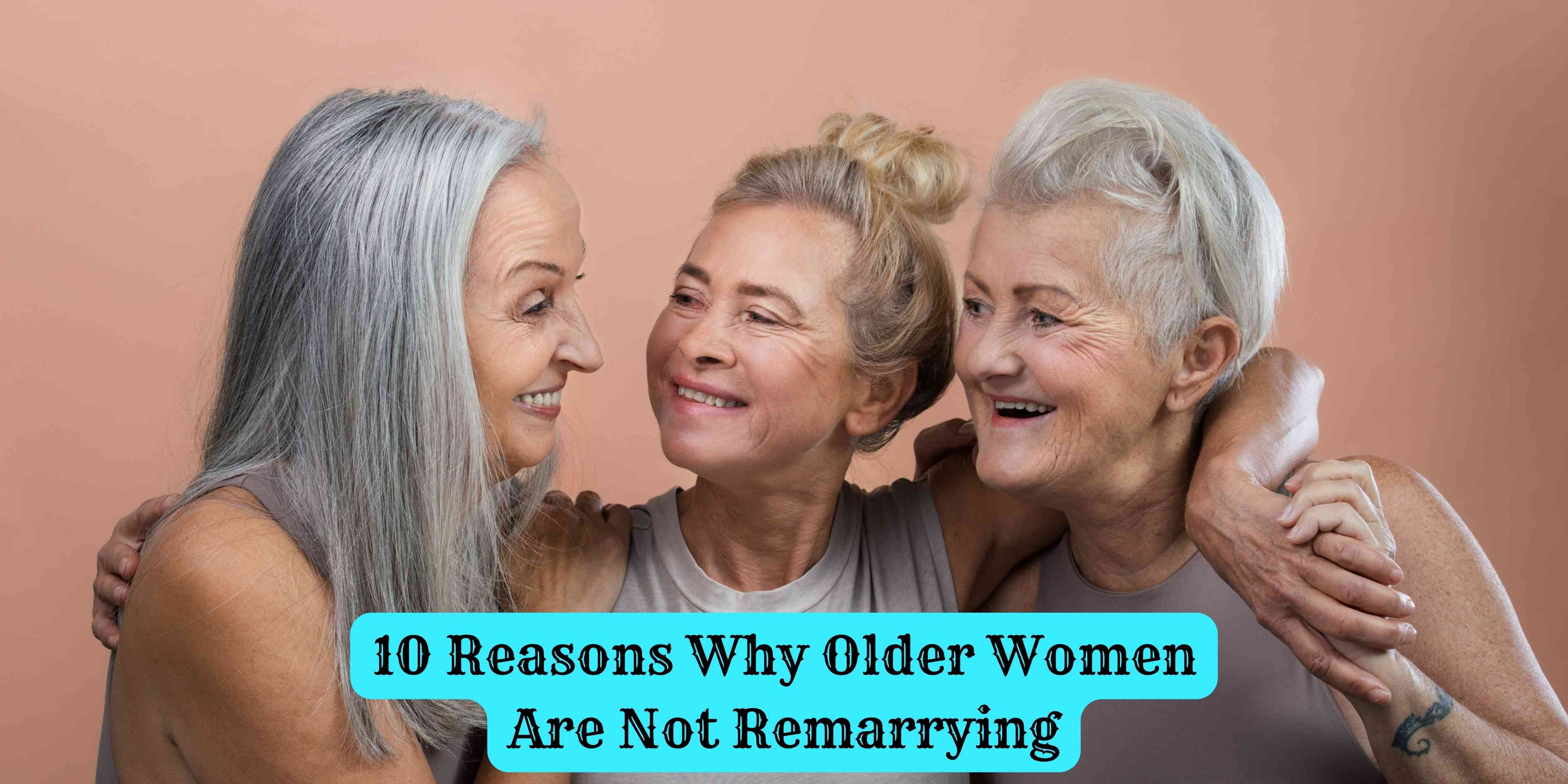
Remarriage rates for older women have declined significantly and consistently over the past several decades. Research from the Pew Research Center and similar organizations shows that while older men who are widowed or divorced are far more likely to remarry, older women in the same situations increasingly choose not to. This is not primarily a story about women failing to find partners — it is a story about women not seeking them.
The reasons are varied and, when examined honestly, are largely positive: they reflect greater financial independence, clearer self-knowledge, accumulated relationship experience, and a genuine preference for the lives they have built.
1. Financial Independence Has Changed the Calculus
Historically, marriage offered women financial security that was not available through other means. This is no longer true for most older women, particularly those who have worked full careers, built retirement savings, own property, or receive survivor benefits or their own Social Security. When financial security is no longer a primary driver of partnership, the calculation about whether to remarry changes fundamentally.
Research consistently finds that financial independence is the single most significant factor predicting whether an older woman will choose to remain unmarried after becoming single.
2. They’ve Learned What They Don’t Want
Women who have been through one or more long-term relationships — including difficult marriages — have a clear picture of what partnership requires and what it can cost. They know which patterns they do not want to repeat, which personality types are poor fits, and which relationship dynamics are worth the work they require. This knowledge often leads to standards that are more specific, more informed, and harder to meet than those of younger women entering relationships with less experience.
3. Research Shows Older Women Are Happier Alone
Several studies have found that older women living alone report higher life satisfaction than older men in the same situation — and sometimes higher satisfaction than older women who are partnered. This counterintuitive finding reflects the particular burden that many women carried in long-term marriages: the invisible domestic and emotional labor that is associated with the caretaker role. For many women, living alone means not performing that labor for a partner — and the freedom that comes with it is experienced as genuine gain.
4. They Have Strong Social Networks That Meet Their Connection Needs
Women, on average, maintain richer and more diverse social networks than men throughout their lives. By older age, many women have deep friendships, family relationships, community connections, and support structures that provide the emotional connection that marriage is often sought to provide. The need for partnership as a solution to loneliness is less acute because the problem it would solve is already being met through other means.
5. They Don’t Want to Become a Caregiver Again
Older men typically have shorter life expectancies than older women and are more likely to require caregiving in their final years. Many older women who have already cared for aging parents, in-laws, or a first husband are clear about not wanting to enter a relationship that will eventually position them as a caregiver again. The romantic framing of partnership can obscure a realistic projection of what the relationship will require in its later stages.
6. Their Independence Is a Gain, Not a Loss
Many older women who have spent significant time living alone after becoming single describe the experience of running their own household, making their own decisions, managing their own finances, and structuring their own time as genuinely liberating — particularly women who were in long-term marriages where they did not have full autonomy in these areas. The independence is not a consolation prize for not having a partner; it is something they actively value and don’t want to give up.
7. The Dating Pool for Older Women Is Genuinely Smaller
Older women face a structural disadvantage in the marriage market: men their own age are more likely to seek younger women, and there are fewer men than women in older age cohorts due to earlier male mortality. Many older women find the available pool of appropriate partners to be genuinely limited — and conclude that being alone is preferable to the compromises required to be in a relationship with the options available.
8. They’ve Prioritized What Actually Matters to Them
By their 50s, 60s, and 70s, many women have a clear sense of what they find meaningful, what they enjoy, and how they want to spend their remaining time. Pursuing a relationship for relationship’s sake — without genuine enthusiasm for a specific person — is less appealing than spending that time on the things and people they already know matter to them.
9. Social Expectations Have Changed
The social pressure to be partnered — which was intense for women of previous generations — has significantly reduced. Being an older single woman no longer carries the same social stigma or practical difficulty that it once did. When being unmarried is socially acceptable, the incentive to remarry for social acceptability disappears, and the decision is made on its actual merits.
10. They Simply Don’t Need It the Way They Once Did
The most honest summary of the research is that older women are not remarrying primarily because they don’t need to — not financially, not socially, not emotionally, and not structurally. The needs that marriage historically met are being met through other means, or were already met, or have changed in ways that don’t require partnership to address. For many older women, the question is not “why haven’t I remarried?” but “what would remarrying actually give me that I don’t already have?” — and the answer, for a growing number, is: not enough to justify what it would cost.