

10 Reasons Why I Left The Villages Florida
The Villages is genuinely impressive as a planned retirement community. It is also not for everyone — and the reasons people leave tell you as much about it as the reasons people come.
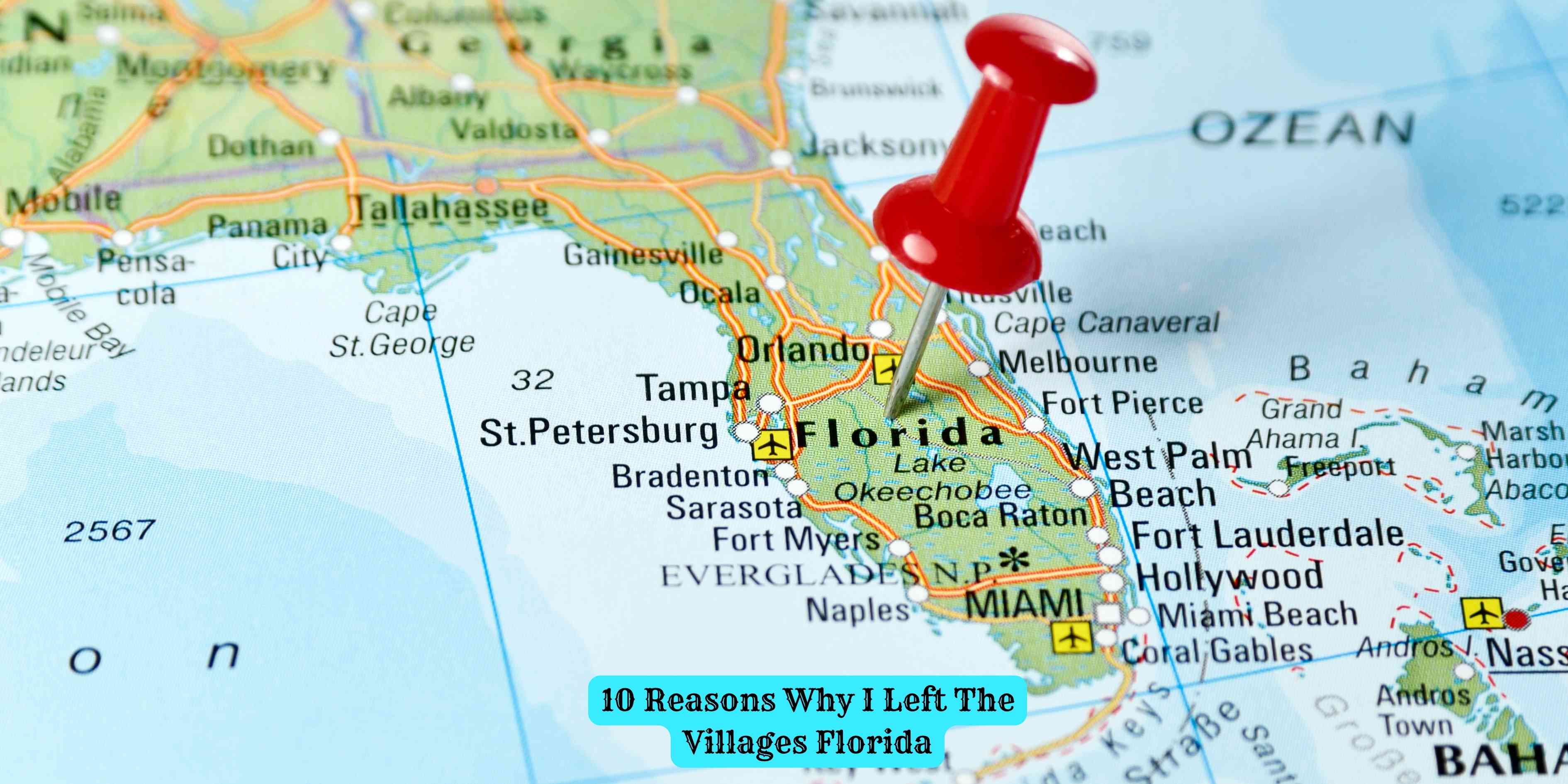
The Villages, Florida is one of the most successful planned retirement communities in the world, with over 150,000 residents and a marketing operation that makes it look like a permanent vacation. Many people love it and stay for decades. Others arrive with high expectations and leave within a few years. The reasons for leaving cluster around several consistent themes — the environment, the culture, the social dynamics, and the gap between the brochure and the reality.
1. The Heat Is Relentless and Gets Worse
Central Florida heat is not like vacation heat. It is persistent, humid, and intense from May through October in ways that limit outdoor activity for months at a time. Many people who move to The Villages imagine spending significant time outdoors — golf, biking on the extensive trail system, outdoor social events — and discover that the heat makes this genuinely unpleasant or medically risky for a substantial portion of the year.
For retirees with health conditions — heart issues, heat sensitivity, mobility challenges that reduce the ability to regulate body temperature — the Florida summer heat is not merely uncomfortable. It is a real health consideration. Many people who were active in cooler climates find their activity levels drop significantly, which affects not just enjoyment but health outcomes.
2. Traffic Has Gotten Significantly Worse
The Villages was designed before its growth reached current scale, and the traffic infrastructure has not kept pace. What was manageable a decade ago has become a genuine daily frustration, particularly around the main commercial areas. The golf cart infrastructure — one of The Villages’ most celebrated features — does not reduce car traffic; it adds to the congestion at major intersections.
Sumter County roads were not built for a community of 150,000-plus people all running errands, going to medical appointments, and attending the entertainment events that are The Villages’ primary social offering. People who leave often cite the time spent in traffic to accomplish basic tasks as something they did not anticipate.
3. The Social Culture Is Intense and Can Feel Exclusionary
The Villages has an extremely active social culture — activities, clubs, organized events, squares with live entertainment every night. This is genuinely appealing, and for people who want that level of programmed social engagement, it delivers. But it comes with social dynamics that not everyone finds comfortable.
The culture rewards social participation and can feel like middle school in the sense that social hierarchies form quickly and visibility matters. People who are not joiners, who do not drink, who are introverted, or who simply do not fit the dominant social style can find it isolating in a community specifically designed to prevent isolation. The very structure that makes it feel like a party for some makes it feel like a performance for others.
4. It Is Not Very Diverse
The Villages is predominantly white, predominantly Christian, and predominantly politically conservative. This is not a criticism of the people who live there — it is a demographic reality that matters for residents who do not fit that profile. People who are non-white, non-Christian, politically progressive, or who value cultural diversity in their daily environment often find The Villages culturally homogenous in ways they did not anticipate.
The political environment in particular can be a source of daily low-grade friction for people who hold different views. The 2020 and 2024 elections made this visible at a national level, but it is a persistent feature of daily life for residents who are politically out of step with the dominant community culture.
5. Medical Access Is Not What You Expect
The Villages has grown faster than its medical infrastructure. While there are medical facilities in and around the community, the volume of elderly residents seeking medical care has stressed the local healthcare system considerably. Specialist appointments can involve significant wait times. Complex medical needs often require travel to Orlando or Gainesville.
For people who moved to Florida partly for the perception of better medical access — or whose health needs increase as they age — the reality of healthcare access in a large, fast-growing retirement community can be a significant disappointment and a practical reason to relocate closer to major medical centers.
6. The HOA and Community Rules Are Extensive
The Villages is a deed-restricted community with rules governing appearance and behavior that are comprehensive and actively enforced. What color you can paint your house, what plants are acceptable, how long guests can stay, where you can park, how your yard must be maintained — these are not suggestions. They are rules with enforcement mechanisms.
Some people find this reassuring — it is why the community looks the way it does. Others arrive not fully understanding the scope of what they are agreeing to and find the level of community management of private life more than they want to live with.
7. Cost of Living Has Increased Substantially
The perception that The Villages is affordable for retirement has become less accurate as the community has grown. Home prices in The Villages have risen significantly over the past decade. Amenity fees, which are ongoing and significant, add to monthly costs. Insurance in Florida — home, flood, car — has increased dramatically. The overall cost of living in the community is no longer as favorable relative to other retirement destinations as it once was.
People who carefully budgeted for retirement based on earlier cost estimates have found the actual ongoing costs of living in The Villages to be a significant financial adjustment.
8. Isolation From Family Is Real
The Villages is geographically isolated from most of the country. Flying out of Florida for family visits or receiving family visitors requires travel from Orlando — which is manageable, but not as simple as living near a major hub. Adult children and grandchildren do not tend to live in or near the community. The social life of The Villages can substitute significantly for family connection, but it does not replace it, and over time the distance from family becomes a genuine emotional cost for many residents.
9. The Community Keeps Growing and Changing
The Villages was a different community when it was smaller. The scale of ongoing development — new squares, new neighborhoods, new commercial areas, more residents — continuously changes the character of the place. Some long-term residents describe the community they moved to as essentially gone, replaced by something larger and more crowded. The pace of development shows no sign of slowing.
For people who moved to a certain version of The Villages, the community they are now living in may feel like a significantly different place.
10. It Can Feel Like the Last Stop
This is the quietest and perhaps the most honest reason. For some people, at some point, living in a community that is entirely composed of retirees — where the visible reality of aging and mortality is present in ways that are less visible in mixed communities — begins to feel less like a vacation and more like a waiting room.
The vitality and activity of The Villages is genuine, but so is the awareness of its context. Not everyone who leaves can fully articulate this reason, but it appears in accounts of departure with enough consistency to belong on the list.