

10 Characteristics of a Simping Man
A simping man is not simply kind or romantic; the problem begins when affection turns into approval-seeking, self-abandonment, and weak boundaries.
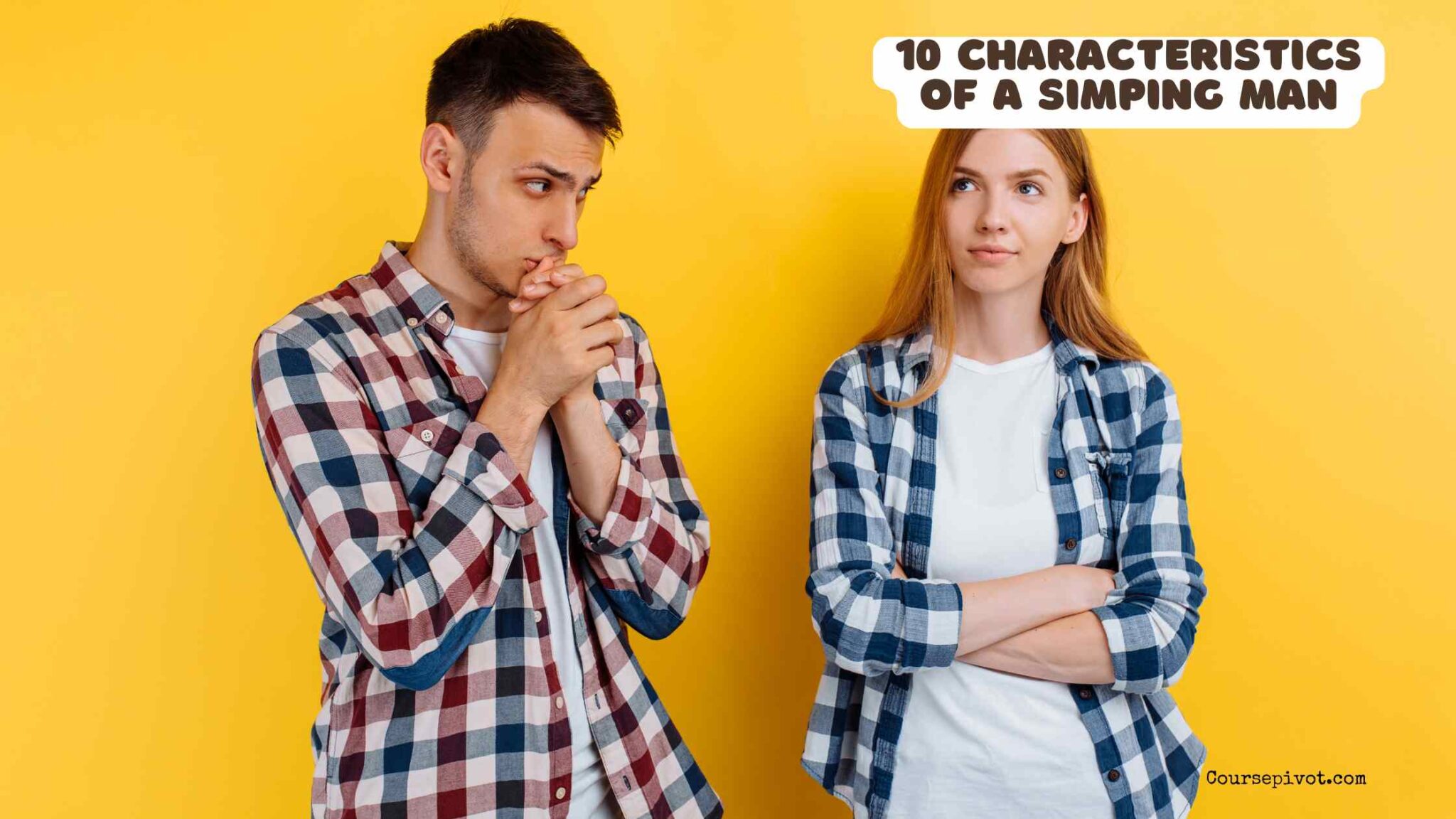
The 10 characteristics of a simping man usually have less to do with being kind and more to do with losing balance. A man can be generous, romantic, attentive, and emotionally available without simping. The unhealthy pattern begins when he over-gives, ignores his own needs, and treats another person’s approval as proof of his worth.
That difference matters. Calling every thoughtful man a “simp” makes basic respect look weak, which is not useful. But pretending self-abandonment is love is not useful either.
The real issue is not affection; it is affection without self-respect.
What Does Simping Mean in Dating?
In dating and relationships, simping usually describes a person who gives excessive attention, favors, money, emotional labor, or loyalty to someone who is not showing equal care or commitment. It often comes from insecurity, fear of rejection, or the hope that enough effort will eventually earn love.
Healthy affection is mutual. Both people are interested, both people make effort, and both people are free to say no. Simping is different because the effort becomes one-sided.
Here is the simple test:
| Healthy interest | Simping pattern |
|---|---|
| You show care while keeping your values | You abandon your values to be liked |
| You respect her boundaries and yours | You ignore boundaries to stay close |
| You give because you want to | You give because you fear losing access |
| You accept disinterest with maturity | You keep trying to prove your worth |
10 Characteristics of a Simping Man
1. He gives too much before there is real commitment
A simping man often invests at a relationship level before a relationship actually exists. He may spend money, rearrange his schedule, offer constant emotional support, or act like a boyfriend while the other person has not made any clear commitment.
The problem is not generosity. The problem is giving in a way that silently expects romantic return. If the connection is still casual, the effort should match the stage of the relationship.
2. He ignores clear signs of disinterest
One of the strongest signs of simping is refusing to accept what is already obvious. She replies slowly, avoids plans, says she is not looking for anything, or only reaches out when she needs something. Instead of stepping back, he tries harder.
This creates a painful loop: the less interest she shows, the more he tries to prove himself. That is not romance. It is chasing.
3. He confuses attention with affection
Some men get attached because someone gives them occasional attention, compliments, or warmth. But attention is not the same as affection, and affection is not the same as commitment.
If a person is warm only when it benefits them, disappears when support is needed, or keeps the relationship vague, the connection may be more about convenience than care.
4. He has weak boundaries
Weak boundaries are central to simping. He says yes when he wants to say no. He tolerates disrespect because he does not want to seem difficult. He accepts crumbs because he fears asking for more will push her away.
Boundaries do not make a man cold. They make his kindness trustworthy. Without boundaries, generosity can turn into resentment because he keeps giving more than he honestly wants to give.
5. He puts her on a pedestal
Pedestal thinking makes one person seem almost perfect and the other person feel lucky just to be noticed. A simping man may exaggerate her beauty, intelligence, kindness, or uniqueness while minimizing his own value.
This is not real admiration. Real admiration sees a person clearly. Pedestal thinking turns her into a prize and turns him into someone waiting to be chosen.
6. He uses gifts or favors to buy closeness
Gifts can be thoughtful, but they become unhealthy when they are used to create obligation. A simping man may pay for things, fix problems, run errands, or give constant favors hoping the other person will eventually feel attached.
That approach often backfires. Even if the other person accepts the benefits, it does not create genuine attraction or respect. It may only create an uneven dynamic.
7. He loses himself to match her preferences
Another common characteristic is shape-shifting. He suddenly changes his opinions, hobbies, style, friend group, goals, or personality to become whatever he thinks she wants.
Compromise is healthy in a relationship. Erasing yourself is not. If a man has to become unrecognizable to keep someone’s interest, the connection is built on performance rather than honesty.
8. He mistakes jealousy for proof of love
Simping can also show up as constant monitoring, comparison, or jealousy. He may feel threatened by anyone she talks to, watch her online activity too closely, or feel crushed when she gives attention elsewhere.
Jealousy may feel intense, but intensity is not the same as love. Often, it points to insecurity and fear. For a deeper look at emotional patterns that can affect dating, the article on why you might still be single explores several related habits.
9. He complains but keeps repeating the pattern
A simping man may know the situation feels unfair. He may tell friends he is tired of being used, ignored, or taken for granted. But when the person texts again, he returns to the same role.
This is where self-awareness has to become action. Noticing the pattern is useful, but it does not change anything unless he chooses different behavior.
10. He thinks being chosen will fix his self-worth
At the deepest level, many simping patterns come from the belief that being loved by a certain person will finally prove something: that he is attractive, valuable, masculine, special, or good enough.
That is too much weight to put on another person. A relationship can add meaning to life, but it cannot become the foundation of someone’s self-worth.
Why These Characteristics Matter
These behaviors matter because they make dating less honest. Instead of two people meeting as equals, one person starts performing, over-giving, and silently hoping the other person will reward the effort with affection.
That can create resentment on both sides. He may feel used. She may feel pressured. Neither person gets a clean, honest connection.
Simping can also damage confidence over time. When a man repeatedly ignores his needs for someone who is not reciprocating, he teaches himself that his time, energy, and boundaries do not matter. That belief can spill into friendships, work, and future relationships.
How to Stop Simping Without Becoming Cold
The answer is not to become rude, detached, or emotionally unavailable. The goal is to become grounded.
Start with these shifts:
- Match effort with evidence. Invest more when the other person also shows consistent interest and respect.
- Accept disinterest early. A no, a vague answer, or repeated low effort is information.
- Keep your own life active. Maintain friendships, goals, hobbies, and routines outside the person you like.
- Give without bargaining. If you cannot give without expecting romantic return, do not give that much.
- Practice direct communication. Say what you want instead of trying to earn it indirectly.
- Respect your own limits. A boundary is not punishment; it is a clear line around what you can offer honestly.
Quick question: can a man be romantic without simping?
Yes. Romance becomes healthy when it is mutual, honest, and freely chosen. It becomes simping when he uses romance to chase validation, avoid rejection, or buy emotional access.
If stress, insecurity, or fear of abandonment is driving the pattern, it may help to look at common signs of stress and how they affect everyday behavior. Relationship habits often become more extreme when someone is emotionally overwhelmed.
The Bottom Line
A simping man is not simply a man who cares. Caring is healthy. Respect is attractive. Thoughtfulness is a strength.
The unhealthy pattern begins when he stops acting from confidence and starts acting from fear. He over-gives, over-explains, over-chases, and over-adjusts because he believes being chosen will make him enough.
The better path is not less kindness. It is stronger self-respect. When affection and boundaries exist together, a man can love deeply without losing himself.