

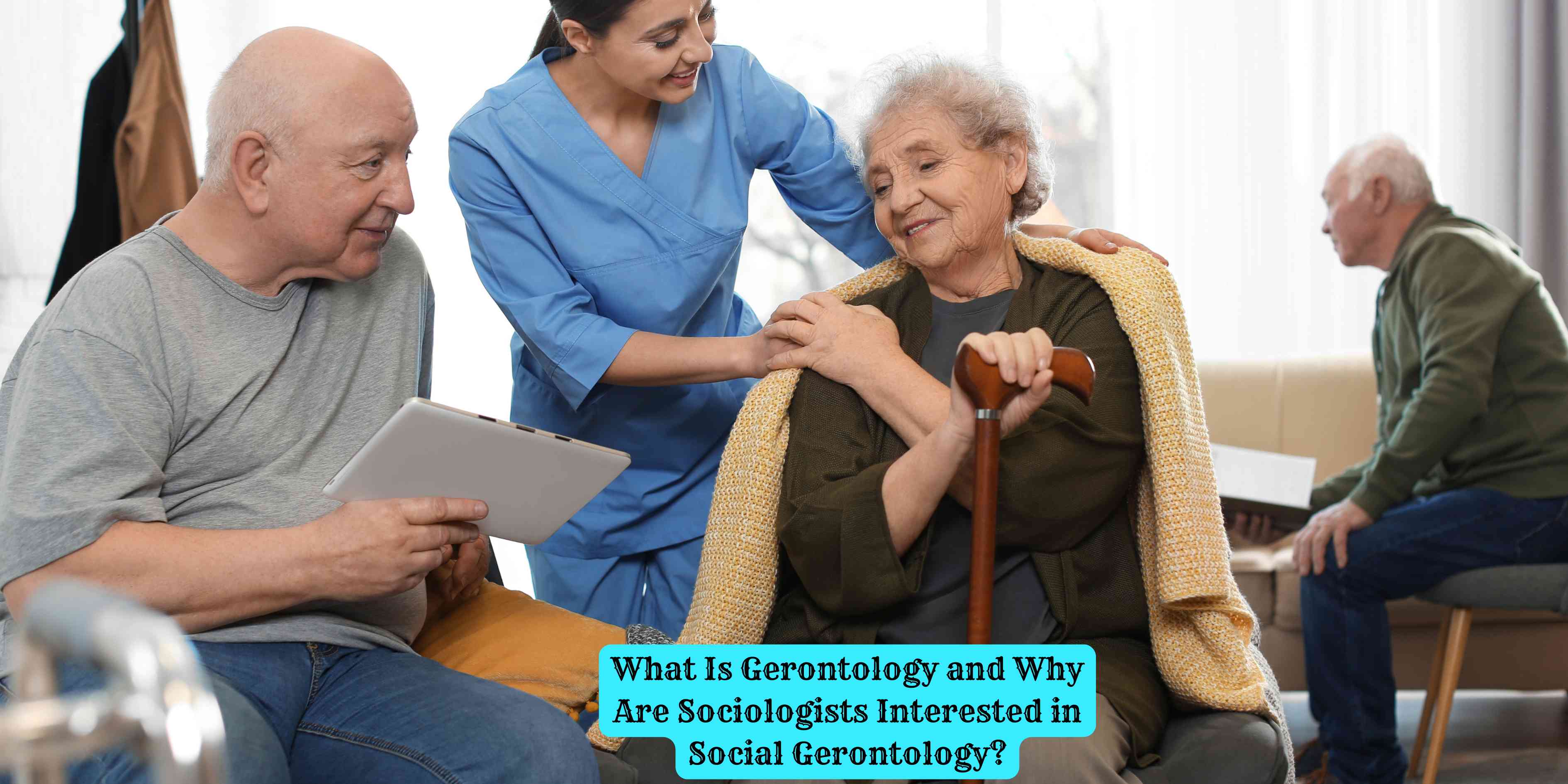
What Is Gerontology and Why Are Sociologists Interested in Social Gerontology?
Gerontology studies aging, while social gerontology focuses on how aging is shaped by relationships, institutions, culture, and inequality.
The Short Answer
Gerontology is the study of aging and older adulthood. It includes biological, psychological, social, economic, and cultural aspects of growing older. Social gerontology is the branch that focuses on how aging is shaped by society.
Sociologists are interested in social gerontology because aging is not only a physical process. How people experience aging depends heavily on family, work, income, health care, housing, culture, government policy, and social attitudes toward older adults.
What Gerontology Means
Gerontology is an interdisciplinary field. That means it draws knowledge from several areas, including biology, medicine, psychology, sociology, public health, economics, and social work. A gerontologist may study memory, retirement, caregiving, age-related disease, elder housing, long-term care, loneliness, or the role of older adults in families.
Gerontology is different from geriatrics. Geriatrics is a medical specialty focused on health care for older adults. Gerontology is broader. It asks how aging affects the whole person and how society responds to aging populations.
This broad approach matters because older adulthood includes more than illness. It includes identity, independence, work, relationships, purpose, safety, and dignity.
What Social Gerontology Studies
Social gerontology studies aging as a social experience. It looks at how older adults interact with families, communities, workplaces, governments, and institutions. It also examines how societies define old age and what expectations they attach to it.
For example, one society may see older adults as respected sources of wisdom, while another may treat them as less productive or less visible. One workplace may value older employees’ experience, while another may push them out through age discrimination. One family may share caregiving responsibilities, while another may leave one person overwhelmed.
Social gerontology asks why these differences exist and how they affect real people.
Aging Is Shaped by Social Roles
Sociologists study social roles, and aging often changes those roles. A person may move from worker to retiree, from parent to grandparent, from independent homeowner to someone needing assistance, or from caregiver to care receiver.
These transitions can be meaningful, stressful, or both. Retirement may bring freedom for one person and financial anxiety for another. Becoming a grandparent may create joy, responsibility, or family tension. Needing care may challenge a person’s sense of independence.
Social gerontology helps explain how role changes affect identity, relationships, and well-being.
Inequality Affects the Experience of Aging
One major reason sociologists care about aging is inequality. People do not enter old age with the same resources. Income, education, race, gender, disability, immigration status, and lifelong access to health care can all shape later life.
A person with stable employment and retirement savings may age with more security. A person who worked low-wage jobs, faced discrimination, or lacked health insurance may face more difficulty. Women may experience different retirement outcomes because of caregiving interruptions or wage gaps. Minority groups may face accumulated disadvantages from earlier life stages.
This is sometimes described as cumulative inequality: advantages and disadvantages build over time.
Families and Caregiving Are Central
Aging affects families, not just individuals. Many older adults rely on relatives for transportation, meals, medical support, emotional care, or help with daily tasks. At the same time, many older adults provide care for spouses, grandchildren, adult children, or friends.
Sociologists study caregiving because it reveals how families organize responsibility. Who is expected to help? Who has time? Who pays? Who becomes overwhelmed? Cultural expectations and gender roles often influence the answers.
Social gerontology also looks at caregiver stress, elder abuse, intergenerational relationships, and the emotional meaning of care.
Institutions Shape Later Life
Institutions such as hospitals, nursing homes, senior centers, religious organizations, banks, employers, and government agencies shape older adulthood. Social Security, Medicare, pensions, housing rules, disability services, and public transportation can strongly affect quality of life.
For example, an older adult’s independence may depend on whether their community has safe sidewalks, affordable housing, nearby clinics, and accessible transportation. Aging well is not only about personal choices; it is also about the social environment.
This is why sociologists study aging populations alongside public policy. As societies age, institutions must adapt.
Ageism Is a Social Problem
Ageism means prejudice or discrimination based on age. Older adults may be stereotyped as weak, confused, resistant to change, or dependent. These stereotypes can affect hiring, medical treatment, media representation, family decisions, and self-esteem.
Ageism can also be subtle. People may speak to older adults as if they are children, exclude them from technology conversations, or assume they cannot make decisions for themselves.
Social gerontology challenges these assumptions by showing the diversity of older adults. Aging does not erase personality, skill, intelligence, creativity, or social contribution.
Why This Field Matters
Gerontology matters because populations are aging in many parts of the world. Longer life expectancy creates new opportunities and new challenges. Societies need better systems for health care, retirement, housing, caregiving, transportation, and social inclusion.
Sociologists are interested in social gerontology because it reveals how aging is connected to almost every part of social life. Studying aging helps us understand families, inequality, work, policy, culture, and human dignity. It also reminds us that aging is not a problem to be solved; it is a universal life process that society can support better.