

Main Causes of Injuries When Using Forklifts
Forklift injuries commonly happen because of tip-overs, struck-by incidents, falling loads, poor visibility, unsafe speed, and inadequate training.
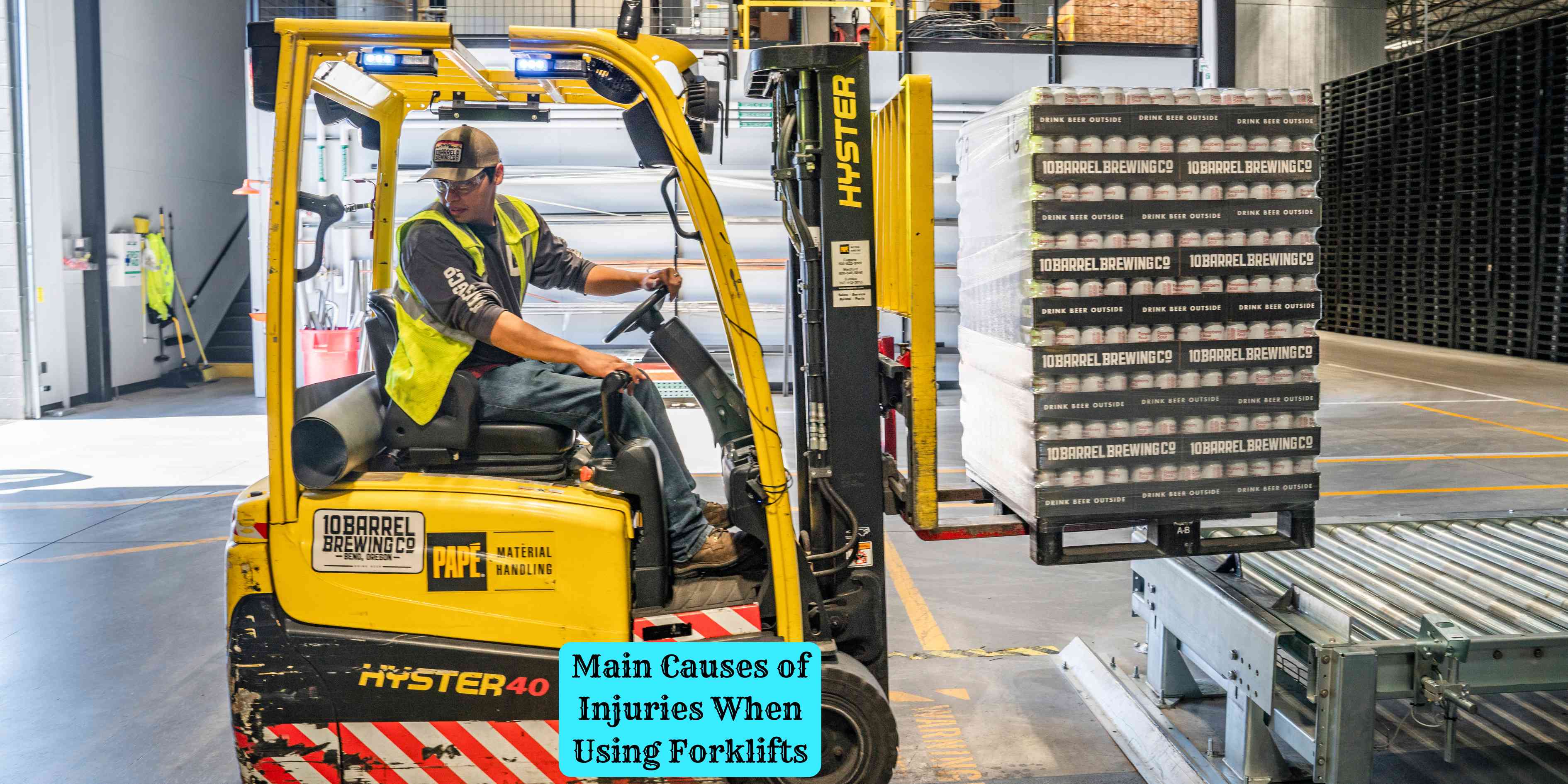
The main causes of injuries when using forklifts include tip-overs, pedestrians being struck, falling loads, unsafe speed, poor visibility, unstable loads, driving off docks or ramps, improper training, and unsafe workplace conditions.
Forklifts are powerful industrial vehicles. They can lift heavy materials, but they can also crush, pin, strike, or overturn when used incorrectly.
Most forklift injuries happen when vehicle movement, load handling, visibility, and pedestrian safety are not controlled.
Tip-Overs
Forklift tip-overs are among the most serious forklift incidents. OSHA notes that forklift overturns are a leading cause of forklift-related fatalities.
Tip-overs can happen when operators turn too fast, drive on slopes incorrectly, carry raised loads, exceed capacity, hit uneven surfaces, or operate with an unstable load.
The forklift’s center of gravity changes as the load moves. A load carried too high or too far forward can make the truck less stable.
Pedestrian Struck-By Incidents
Forklifts often operate near pedestrians in warehouses, loading docks, factories, stores, and construction sites. Injuries happen when workers are struck, pinned, or crushed.
Causes include blind corners, backing without checking, poor separation between people and vehicles, distractions, noise, and lack of warning systems.
Pedestrian safety requires clear walkways, traffic rules, mirrors, horns, lights, spotters when needed, and training for both drivers and workers on foot.
Falling Loads
Loads can fall from forks or pallets when they are unstable, unsecured, too heavy, unevenly stacked, or lifted too high.
A falling load can injure the operator, nearby workers, or anyone standing below raised materials.
Operators should know the forklift’s rated capacity, keep loads low while traveling, tilt loads properly, inspect pallets, and avoid lifting damaged or unstable stacks.
Poor Visibility
Forklift operators may have limited visibility because of large loads, racks, doorways, corners, parked vehicles, or poor lighting.
If a load blocks the forward view, operators may need to travel in reverse while looking in the direction of travel. Driving with an obstructed view increases the risk of hitting people, equipment, walls, and products.
Workplaces should reduce blind spots and design traffic routes that allow safe movement.
Visibility rules should be simple enough for everyone to follow. If an operator cannot see clearly, the safest answer is to stop, reposition, use a spotter, or travel in the direction with the clearest view.
Unsafe Speed and Sharp Turns
Speed makes forklift incidents worse. A forklift is heavy and may not stop quickly, especially with a load.
Sharp turns at speed can cause tip-overs. Fast driving can also give pedestrians less time to react.
Safe speed depends on load weight, floor condition, visibility, traffic, slope, and workplace rules. Operators should slow down at intersections, corners, ramps, and congested areas.
Loading Dock and Ramp Hazards
Forklifts can drive off loading docks, fall from trailers, or lose control on ramps. These incidents can be severe because of height differences and heavy equipment.
Common causes include unsecured trailers, missing wheel chocks, weak dock plates, poor communication, wet surfaces, and driving too fast.
Dock areas should be inspected, secured, and clearly marked before forklift operations begin.
Inadequate Training
Forklift operation requires training. An untrained operator may not understand stability, load capacity, inspection, refueling or charging, pedestrian rules, or workplace-specific hazards.
OSHA requires powered industrial truck operators to be trained and evaluated. Training should match the type of truck and the actual workplace conditions.
Refresher training is important after unsafe operation, incidents, near misses, equipment changes, or workplace changes.
Poor Maintenance
Mechanical problems can cause injuries. Faulty brakes, steering problems, worn tires, damaged forks, leaking hydraulics, broken lights, and weak alarms all increase risk.
Operators should inspect forklifts before use and remove unsafe equipment from service.
Maintenance is not paperwork. It is a direct injury prevention measure.
Unsafe Work Environments
The workplace itself can create hazards. Cluttered aisles, uneven floors, wet surfaces, poor lighting, tight turns, overloaded racks, and unclear traffic patterns all raise risk.
Forklift safety is not only the operator’s responsibility. Employers must design safer systems, train workers, maintain equipment, and manage traffic.
Workers should report hazards before they become incidents.
Bottom line:
The main causes of forklift injuries are tip-overs, struck-by incidents, falling loads, poor visibility, unsafe speed, dock hazards, inadequate training, poor maintenance, and unsafe workplace conditions.
Preventing injuries requires trained operators, stable loads, controlled traffic, maintained equipment, and a workplace designed for safe forklift movement.