

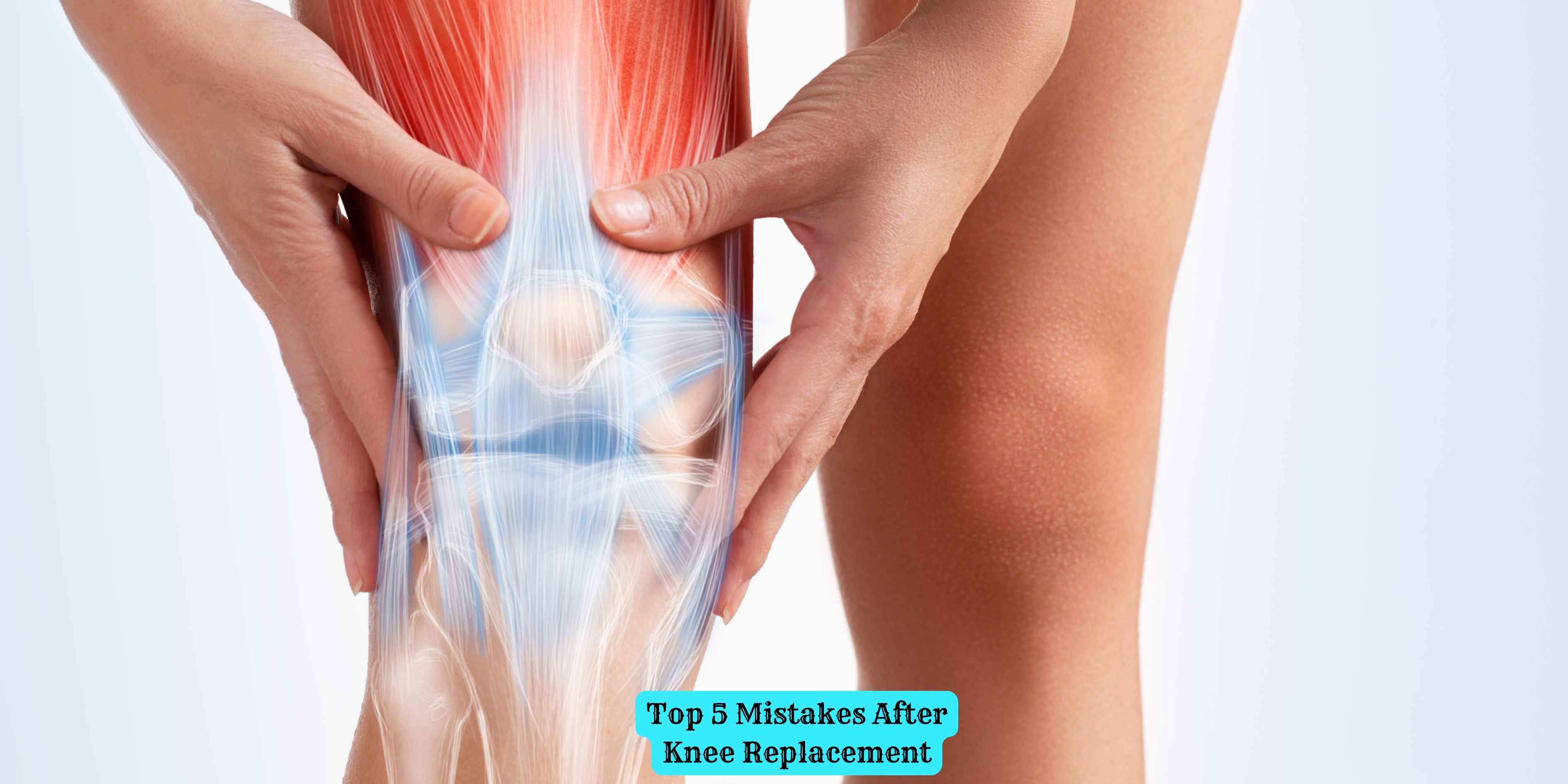
Top 5 Mistakes After Knee Replacement
Recovery after knee replacement goes best when patients follow rehab instructions, watch for warning signs, and balance movement with rest.
1. Skipping Physical Therapy
One of the biggest mistakes after knee replacement is skipping therapy or home exercises. Movement helps restore range of motion, strength, walking ability, and confidence.
Some patients need formal outpatient therapy, while others may follow a home program. Mayo Clinic has noted that many patients can follow a self-directed physical therapy plan at home after joint surgery, depending on the case.
The goal is not to exercise aggressively; it is to move consistently and safely.
2. Doing Too Much Too Soon
The opposite mistake is pushing too hard. More pain, swelling, warmth, or stiffness after activity may mean the knee needs rest, elevation, ice, or a slower pace.
Walking and exercises matter, but the tissues still need time to heal.
Follow your surgeon’s instructions about stairs, driving, lifting, kneeling, work, and sports.
3. Ignoring Infection Warning Signs
Mayo Clinic lists infection as a possible complication after knee replacement, including infection around the incision or deeper tissue. Warning signs can include increasing redness, drainage, fever, chills, worsening pain, unusual warmth, or a wound that is not healing.
Do not wait to see if serious symptoms disappear.
Call your surgical team quickly if infection is possible.
4. Ignoring Blood Clot Prevention
Blood clots are another serious risk after knee replacement. Mayo Clinic explains that clots often form in the leg and can travel to the lungs, where they can be life-threatening.
Surgeons may recommend blood thinners, compression devices, ankle pumps, walking, or other prevention steps.
Follow the plan exactly unless your clinician changes it.
5. Mismanaging Pain Medication
Pain control helps you move, sleep, and participate in rehab. But taking too much medication, stopping suddenly without guidance, mixing medicines unsafely, or relying only on pills can create problems.
Use pain medicine as prescribed and ask about ice, elevation, timing medication before therapy, and safe tapering.
If pain is suddenly worse, different, or uncontrolled, contact your care team.
6. Not Elevating and Icing Correctly
Swelling is common after knee replacement, but unmanaged swelling can make bending and walking harder. Many recovery plans include icing and elevating the leg.
Use the method recommended by your surgeon or therapist.
Avoid placing ice directly on skin, and do not ignore swelling that is severe, one-sided, or linked with calf pain or shortness of breath.
7. Comparing Your Recovery to Someone Else
Recovery speed varies. Age, fitness, pre-surgery mobility, other health conditions, surgical technique, pain tolerance, support at home, and rehab consistency all matter.
One person’s three-week progress may not match another person’s.
Comparison can lead to discouragement or overdoing activity too soon.
8. Missing Follow-Up Appointments
Follow-up visits let your care team check wound healing, range of motion, pain control, implant position, medication safety, and recovery progress.
Skipping appointments can allow problems to go unnoticed.
Bring questions about swelling, sleep, pain, exercise, driving, work, and warning signs.
Practical Takeaway
The top mistakes after knee replacement are skipping rehab, doing too much too soon, ignoring infection symptoms, neglecting blood clot prevention, and mismanaging pain medication.
Your surgeon and physical therapist know your specific case. Follow their plan, report warning signs early, and aim for steady progress rather than dramatic leaps.