

How Selective Incorporation Applies the Bill of Rights to the States
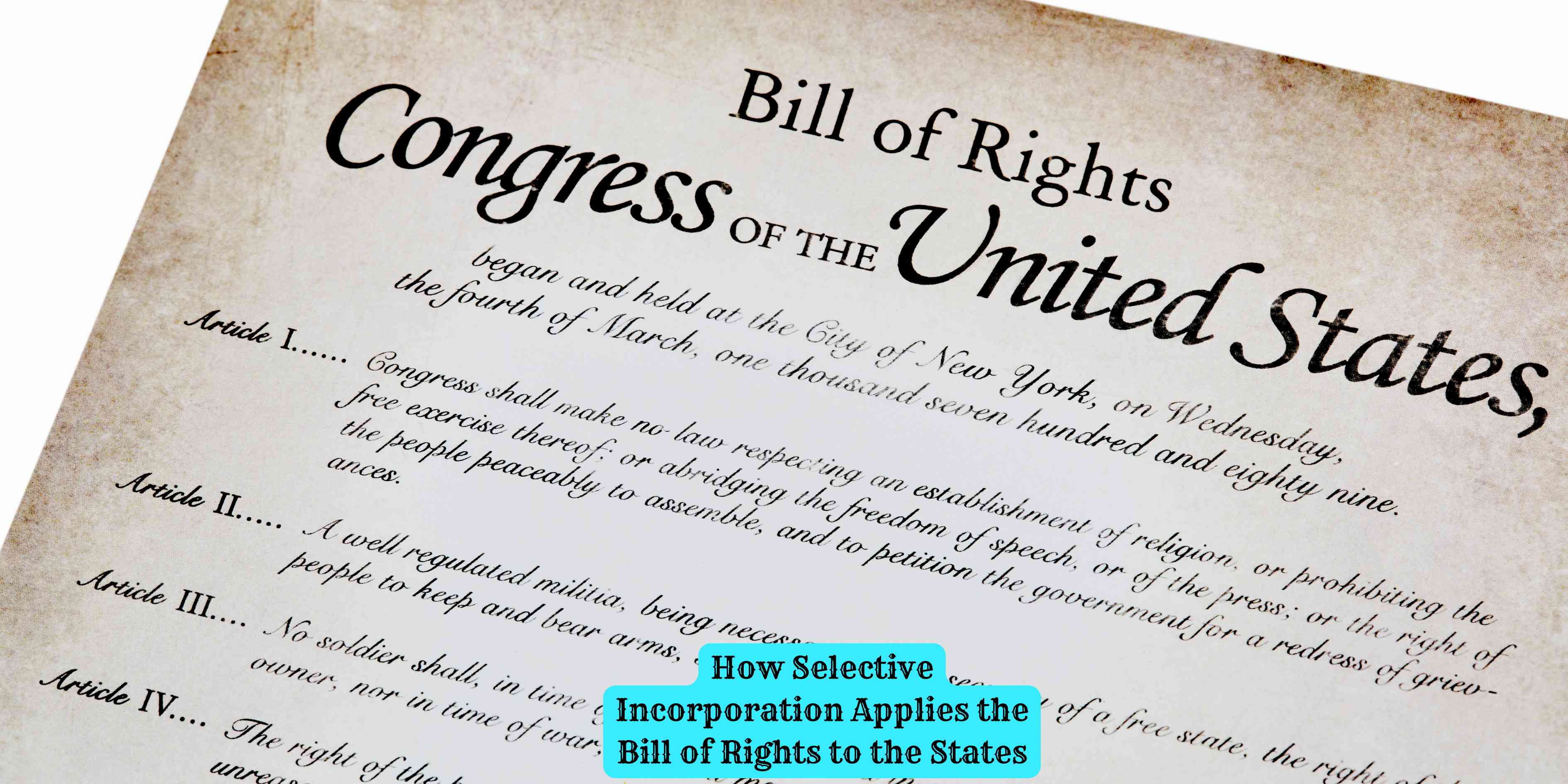
Selective incorporation means the Supreme Court applies specific Bill of Rights protections to state governments through the Fourteenth Amendment.
The Short Answer
The practice of selective incorporation means that the Supreme Court may apply specific protections in the Bill of Rights to the states through the Fourteenth Amendment. It is called selective because the Court applies rights one at a time rather than automatically applying the entire Bill of Rights all at once.
Before incorporation, the Bill of Rights limited the federal government. Through selective incorporation, many of those protections now also limit state and local governments.
Selective incorporation makes many Bill of Rights protections enforceable against state governments.
Why Incorporation Was Needed
The Bill of Rights was originally understood as a limit on the federal government. In Barron v. Baltimore, the Supreme Court held that the Bill of Rights did not apply to the states.
That meant a state could violate a right that the federal government could not violate, unless the state constitution or state law protected it.
After the Civil War, the Fourteenth Amendment changed the constitutional landscape by limiting what states could do to people within their jurisdiction.
The Role of the Fourteenth Amendment
The Fourteenth Amendment says that states may not deprive any person of life, liberty, or property without due process of law. The Supreme Court has used the Due Process Clause to apply many fundamental rights to the states.
This does not mean every constitutional rule applies to the states in exactly the same way. But many key liberties now do.
Selective incorporation is one of the main ways the Fourteenth Amendment expanded civil liberties protections.
What Selective Means
Selective means the Court chooses which rights are fundamental enough to apply to the states. The Court has not simply declared the entire Bill of Rights incorporated in one step.
Instead, it has considered specific rights in specific cases. For example, free speech, religious liberty, protection from unreasonable searches, and the right to counsel have been applied to the states through Supreme Court decisions.
This case-by-case method is the heart of selective incorporation.
Examples of Incorporated Rights
Many familiar rights have been incorporated. These include most First Amendment freedoms, many Fourth Amendment protections, key Fifth Amendment protections, the Sixth Amendment right to counsel, and the Eighth Amendment protection against cruel and unusual punishment.
When a right is incorporated, a person can challenge state or local government action that violates that right.
For example, a city ordinance restricting speech can be challenged under the First Amendment because free speech protections apply to state and local governments.
Why Not Total Incorporation
Total incorporation would mean the entire Bill of Rights automatically applies to the states. The Supreme Court did not adopt that approach.
Instead, the Court developed selective incorporation. Under this method, the Court asks whether a right is fundamental to ordered liberty or deeply rooted in American constitutional tradition.
Supporters say this allows careful constitutional analysis. Critics argue it gives courts too much discretion.
How It Affects State Governments
Selective incorporation limits state power. States still have their own laws, courts, police, schools, and constitutions, but they cannot violate incorporated federal constitutional rights.
This means the same basic civil liberties protections follow people across state lines. A state cannot ignore free speech, due process, or the right to counsel simply because it is not the federal government.
The doctrine helps create a national baseline for individual rights.
Why It Matters for Students
Selective incorporation is a major concept in U.S. government and civics because it explains how the Bill of Rights became part of everyday constitutional law at the state level.
Without it, many civil liberties cases involving schools, police departments, city governments, and state courts would be decided very differently.
The doctrine also shows how constitutional meaning can develop through Supreme Court interpretation.
Common Misunderstandings
One misunderstanding is that the Bill of Rights always applied to the states. Historically, it did not.
Another misunderstanding is that selective incorporation means states can choose whether to follow rights. The states do not choose. The Supreme Court decides whether a particular right applies to them through the Fourteenth Amendment.
A third misunderstanding is that all rights have been incorporated. Most have, but not every provision has been applied in the same way.
A Simple Classroom Answer
A strong classroom answer might say: selective incorporation is the process by which the Supreme Court applies parts of the Bill of Rights to the states using the Fourteenth Amendment’s Due Process Clause.
If the prompt says the Bill of Rights will sometimes be applied to the states by the Court, that is describing selective incorporation.
The key words are “sometimes,” “states,” “Bill of Rights,” and “court.”
Bottom line:
Selective incorporation means the Supreme Court applies specific Bill of Rights protections to the states through the Fourteenth Amendment. It is selective because rights are incorporated one by one through court decisions.
This doctrine is why many freedoms now protect people against state and local governments, not just the federal government.