

100 Reasons why Students Should not Wear Uniforms
Uniforms can create problems when they limit comfort, expression, family budgets, cultural needs, and student voice.
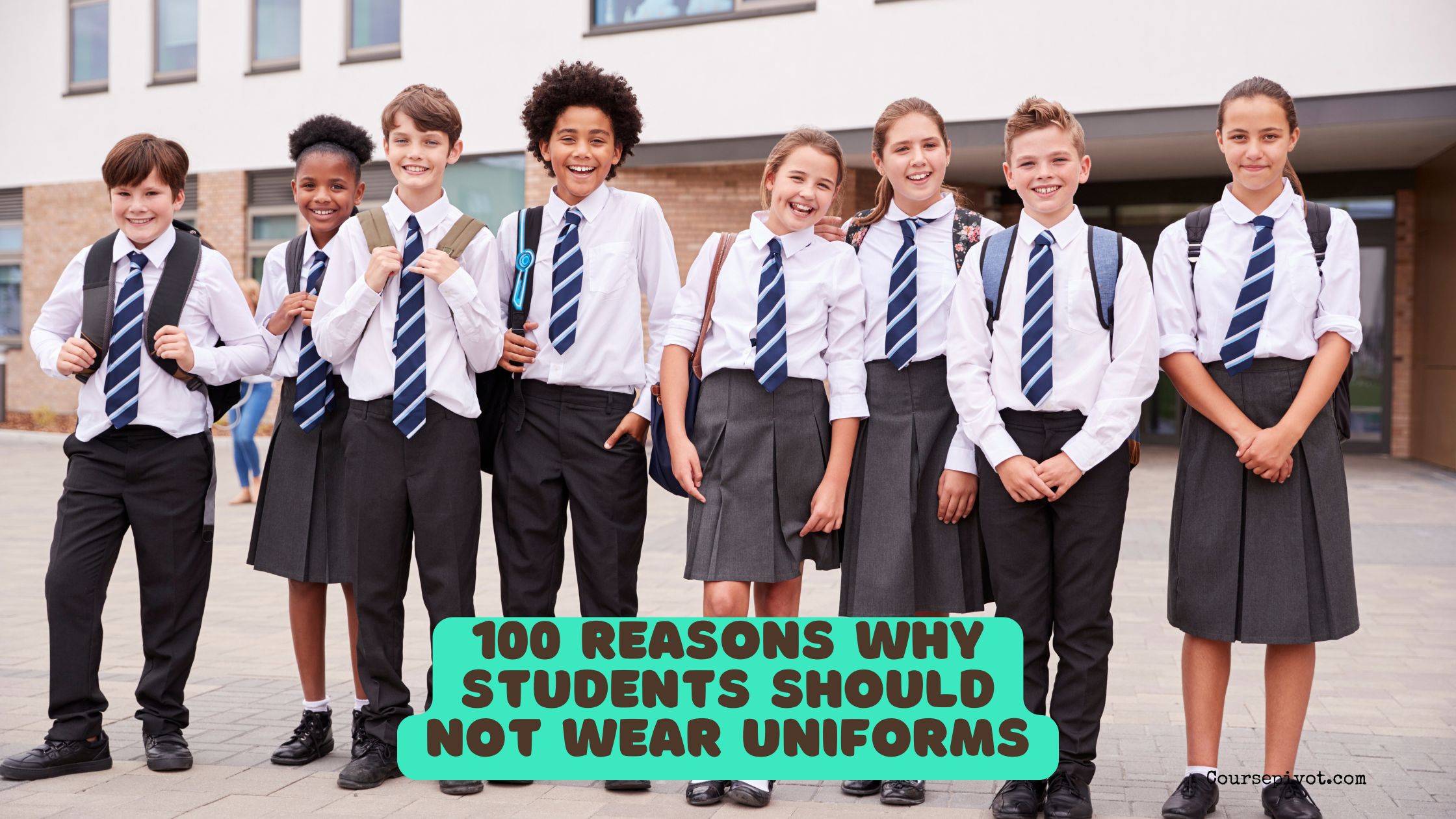
When people search for 100 reasons why students should not wear uniforms, they usually want arguments about comfort, freedom, cost, fairness, identity, and whether school dress codes actually help learning. The honest answer is that uniforms can be useful in some schools, but they can also create real problems when policies are too strict, too expensive, or too disconnected from student needs.
Students should not wear uniforms when the rule becomes more important than learning, dignity, comfort, and common sense. A uniform policy can look simple from the outside, but for students and families it can affect money, confidence, culture, body image, weather comfort, and self-expression every school day.
The strongest argument against school uniforms is not “students should wear anything.” It is that clothing rules should not silence identity, create extra costs, or distract schools from deeper learning problems.
This guide gives 100 reasons students should not wear uniforms, while staying fair about the debate.
Why Some Students Oppose School Uniforms
Many students oppose uniforms because they feel the policy controls appearance without solving the real issues in school. A uniform may make students look similar, but it does not automatically create respect, motivation, safety, better teaching, or stronger relationships.
Uniforms can also make school feel more rigid. When students are already questioning whether rules are useful, strict clothing policies can become another reason they feel disconnected from school. That connects with a broader concern many students have about whether school is a waste of time when it focuses on compliance more than purpose.
Quick question: are all uniform policies bad?
No. Some schools use uniforms fairly and affordably. The issue is whether uniforms solve a real problem or simply add another rule students have to manage.
It is also important to recognize that this article is the other side of the debate. There are valid arguments for uniforms too, which are covered in the related guide on why students should wear uniforms. A strong school should be able to examine both sides.
100 Reasons Students Should Not Wear Uniforms
Here are 100 reasons why students should not wear uniforms, especially when the policy is strict, costly, uncomfortable, or created without student input.
- Uniforms can limit personal expression.
- Students may feel their individuality is being ignored.
- Uniforms can make school feel overly controlled.
- Strict clothing rules can create resentment.
- Uniforms do not guarantee better learning.
- Uniforms do not automatically improve behavior.
- A uniform cannot replace good teaching.
- A uniform cannot fix bullying by itself.
- Uniforms can be expensive for families.
- Some families must buy multiple sets.
- Replacement uniforms can create extra costs.
- Required shoes, ties, blazers, or sweaters can add financial pressure.
- Uniform shops may have limited affordable options.
- Students can outgrow uniforms quickly.
- Younger siblings may not always fit hand-me-down uniforms.
- Uniform rules can punish poverty when students cannot afford every item.
- Some uniforms are uncomfortable in hot weather.
- Some uniforms are not warm enough in cold weather.
- Heavy fabrics can make students distracted.
- Tight collars, stiff shirts, or formal shoes can affect comfort.
- Uniforms may not suit all body types.
- Students may feel self-conscious in standard fits.
- Limited sizing can exclude some students.
- Gendered uniform rules can feel unfair.
- Skirt or trouser requirements can create unnecessary conflict.
- Uniform policies may not respect gender identity.
- Some rules may ignore cultural clothing needs.
- Some rules may ignore religious clothing needs.
- Hair, jewelry, or accessory rules can become too controlling.
- Students may be disciplined for minor appearance issues.
- Teachers may spend too much time enforcing uniform rules.
- Uniform checks can interrupt learning time.
- Students may be sent out of class for clothing issues.
- Punishments for uniform mistakes can feel humiliating.
- Uniform discipline can affect students who are already struggling.
- Rules may be enforced unevenly across students.
- Some students may be judged more harshly than others.
- Uniforms can create conflict between families and schools.
- Parents may feel forced to buy from specific suppliers.
- Uniform rules can be stressful during laundry problems.
- A student may be punished for something outside their control.
- Uniforms can make students feel less trusted.
- Strict rules can reduce student voice.
- Students may feel adults care more about appearance than wellbeing.
- Uniforms can make school feel less welcoming.
- Students may not learn how to make appropriate clothing choices.
- Choosing clothes can teach judgment and responsibility.
- Students need practice dressing for different contexts.
- A uniform removes daily decision-making instead of teaching it.
- Uniforms can hide, not solve, social inequality.
- Students may still compare shoes, bags, phones, hair, or accessories.
- Expensive “official” uniforms can become another status symbol.
- Students can still experience bullying while wearing uniforms.
- Uniforms may not reduce academic pressure.
- Uniforms may not improve attendance.
- Uniforms may not improve student motivation.
- Students may feel less comfortable participating.
- Students may feel their personality is flattened.
- Creative students may feel restricted.
- Clothing can be part of healthy self-discovery.
- Teenagers often use style to explore identity.
- Uniforms can make students feel invisible.
- Uniforms can make school feel institutional.
- Some students associate uniforms with punishment or control.
- Uniforms may not prepare students for all workplaces.
- Many modern workplaces do not require uniforms.
- Professionalism can be taught without identical clothing.
- Respect can be taught through behavior, not just appearance.
- Students can learn neatness through flexible dress codes.
- Uniforms can distract from bigger school problems.
- Schools may focus on clothing while ignoring weak lessons.
- Schools may focus on appearance while ignoring mental health.
- Schools may focus on rules while ignoring student engagement.
- Uniform policies may be created without student feedback.
- Lack of student input can make rules feel imposed.
- Students are more likely to respect rules they understand.
- Uniform debates can damage trust when handled poorly.
- Some students need adaptive clothing for disability or sensory needs.
- Standard uniforms may not work for sensory-sensitive students.
- Shoes required by uniform policy may not support health needs.
- Uniforms can be impractical for active learning.
- Science, art, sports, and practical classes may need flexible clothing.
- Students may need weather-appropriate choices during outdoor activities.
- Uniforms can become uncomfortable during long commutes.
- Strict rules can ignore local climate.
- Uniform policies can be hard for homeless or housing-insecure students.
- Students in shared custody may struggle to keep uniform items in both homes.
- Uniform requirements can create morning conflict at home.
- Students may feel embarrassed by worn or damaged uniform items.
- Uniforms can make personal hygiene issues more visible.
- A single style may not suit different bodies or comfort needs.
- Students may feel less confident in clothing they dislike.
- Confidence can affect participation.
- Uniforms can reduce a student’s sense of ownership over school life.
- Students may see uniforms as a symbol of not being listened to.
- Flexible dress codes can teach balance without removing choice.
- Schools can set standards without requiring identical outfits.
- Respectful clothing does not have to mean uniform clothing.
- Learning should matter more than matching clothes.
- Students should not wear uniforms when the policy creates more problems than it solves.
These reasons do not prove every uniform policy is harmful. They show why schools should be careful before assuming uniforms are automatically good.
Better Alternatives to Strict Uniform Rules
Schools that want order and fairness do not have to choose between strict uniforms and no standards at all. A middle path can protect learning while giving students more dignity and flexibility.
| School goal | Alternative to strict uniforms |
|---|---|
| Reduce distraction | Clear, simple dress code |
| Improve affordability | Low-cost clothing guidelines |
| Support safety | Visible ID cards or school lanyards |
| Build belonging | Optional spirit wear or house colors |
| Teach responsibility | Student-informed dress expectations |
Better policies usually focus on principles instead of tiny details. For example, a school can require clothing to be safe, respectful, practical, and suitable for learning without forcing every student into the same outfit.
Schools can also involve students in policy design. That does not mean students decide everything alone. It means their experiences matter. The same logic applies to choosing classes: students usually respond better when structure includes voice.
When Uniforms Might Still Make Sense
There are situations where uniforms may still make sense. Some schools use them to simplify mornings, support identification on campus, create a shared identity, or reduce visible fashion competition. The problem is not the existence of uniforms. The problem is a uniform policy that ignores students and families.
Quick question: what makes a uniform policy fair?
A fair policy is affordable, comfortable, flexible, culturally respectful, consistently enforced, and open to reasonable exceptions.
If a school keeps uniforms, it should offer financial support, second-hand options, seasonal flexibility, gender-neutral choices, cultural accommodations, and a respectful enforcement process. Students should not lose learning time or dignity over small clothing issues.
The best school clothing policy is one that helps students learn without making appearance the center of the school day. Uniforms can create unity in some places, but they can also create cost, discomfort, resentment, and unnecessary discipline. Schools should ask whether the policy truly supports students or simply makes control easier.
Students should not wear uniforms when the policy limits identity, burdens families, ignores comfort, or distracts from real educational goals. A better approach is to build a school culture where students are trusted, standards are clear, and learning matters more than matching outfits.