

20 Reasons why Students Should have Phones in School
Phones can support safety, learning, accessibility, and responsibility when schools set clear rules instead of ignoring modern student life.
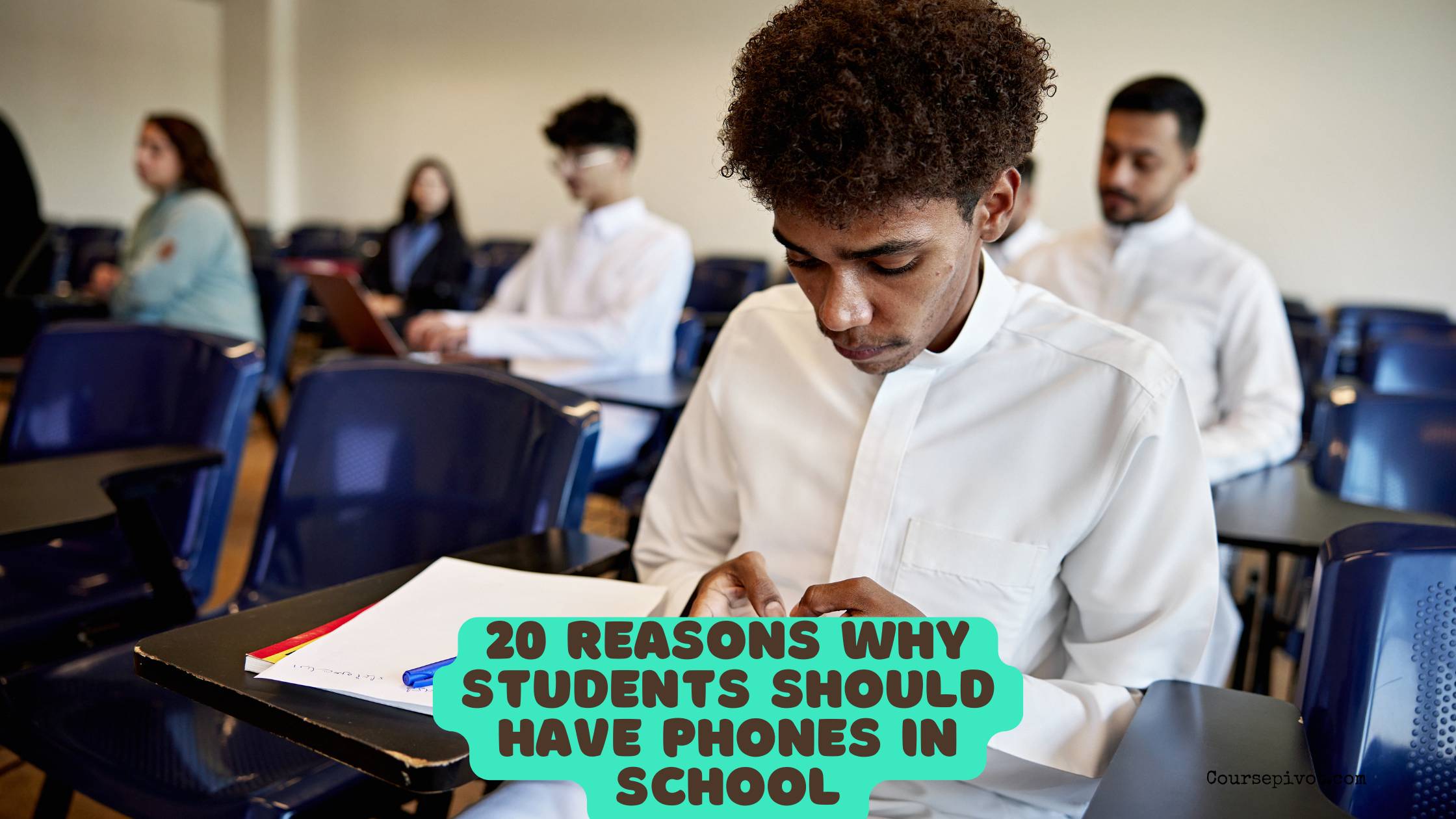
When people search for 20 reasons why students should have phones in school, they usually want a fair answer to a real debate. Phones can distract students, but they can also support safety, learning, organization, accessibility, communication, and digital responsibility when schools set clear rules.
The strongest argument is not that students should use phones all day. The stronger argument is that schools should teach responsible phone use instead of pretending phones do not exist. Students already live in a digital world. School should help them use that world wisely.
Phones belong in school when they are treated as learning tools with boundaries, not as toys with unlimited access.
This guide explains 20 practical reasons students should have phones in school, while also showing how schools can prevent misuse.
Why Phones in School Are Worth Discussing
The debate about phones in school is often too simple. One side says phones are always distracting. The other says students should have total freedom. Real schools need a smarter middle ground.
Phones can interrupt lessons, reduce attention, and create social pressure. Those risks are real. But banning phones completely can also remove tools students use for safety, family communication, translation, accessibility, reminders, research, and emergency updates.
This connects with a bigger education problem: students often feel school ignores the real world. When useful tools are banned without explanation, school can feel disconnected from modern life. That is one reason some students argue that school is a waste of time.
Quick question: should students be allowed to scroll social media during class?
No. Supporting phones in school does not mean supporting careless phone use. It means creating clear rules for when phones help learning and when they should be away.
20 Reasons Students Should Have Phones in School
Here are 20 reasons why students should have phones in school when there are clear expectations, teacher guidance, and consequences for misuse.
-
Emergency contact is faster. Students can reach parents, guardians, or emergency services quickly when something serious happens.
-
Parents can receive urgent updates. A phone helps families coordinate pickups, medical needs, transport delays, or sudden schedule changes.
-
Students can use safety tools. Location sharing, emergency alerts, school apps, and weather notifications can help students stay informed.
-
Phones support quick research. With teacher permission, students can look up definitions, examples, current events, and background information.
-
Students can access learning apps. Flashcards, calculators, language tools, calendars, dictionaries, and note apps can support study.
-
Phones help with organization. Students can set reminders for homework, deadlines, tests, club meetings, and assignment checkpoints.
-
Digital calendars build responsibility. Planning on a phone can teach students to manage time in a way they will use beyond school.
-
Phones support accessibility. Students may use text-to-speech, speech-to-text, magnification, translation, captions, or medical apps.
-
Language learners can translate carefully. Translation tools can help students understand instructions, vocabulary, and school communication.
-
Students can photograph assignments. A quick photo of a board, rubric, diagram, or homework instruction can prevent confusion later.
-
Phones can reduce paper dependence. Students can store notes, forms, schedules, and reading materials digitally when allowed.
-
Students can record homework reminders. Voice notes can help learners who struggle with written planners or memory.
-
Phones help students contact teachers. School-approved platforms can make questions, feedback, and announcements easier to manage.
-
Phones teach digital citizenship. Students need practice with boundaries, privacy, respectful communication, and responsible online behavior.
-
Phones reflect modern workplaces. Many jobs require responsible device use, quick communication, research, scheduling, and collaboration.
-
Students can learn media literacy. Teachers can show students how to check sources, spot misinformation, and compare online evidence.
-
Phones can support creative work. Students can film projects, record interviews, take photos, edit audio, or document experiments.
-
Phones help with health needs. Some students use phones for medication reminders, glucose monitoring, anxiety tools, or parent updates.
-
Phones can make school feel more relevant. Guided tech use connects classroom learning to tools students already use daily.
-
Responsible phone use builds trust. When students follow phone rules, they practice self-control instead of simply obeying bans.
The point is not that phones solve every school problem. The point is that phones can be useful when schools teach students when, why, and how to use them.
How Schools Can Allow Phones Without Losing Focus
Phones work best in school when the rules are simple, visible, and consistently enforced. A good policy should separate learning use from distraction.
| School situation | Better phone rule |
|---|---|
| Direct teaching | Phones away unless the teacher asks for them |
| Research activity | Phones allowed for a specific task and time limit |
| Exams or quizzes | Phones stored away completely |
| Emergency or health need | Phone access allowed through a clear plan |
| Lunch or transition time | School decides based on age, safety, and culture |
Clear rules matter because students need structure. If phone expectations change every day or every classroom has a totally different policy, students get confused and teachers spend more time policing behavior.
Schools can make phone use healthier by doing five things:
- Explain why the rule exists.
- Teach digital citizenship directly.
- Use phone pockets or desk zones when phones are not needed.
- Allow documented accessibility and medical uses.
- Give students guided tech tasks instead of open-ended phone time.
This is similar to the argument for choosing classes: students benefit from freedom when it comes with guidance. Choice without structure becomes chaos. Structure without choice becomes resentment.
When Phones Should Be Put Away
Students should have phones in school, but not during every moment of school. A fair phone policy should protect attention, privacy, and classroom trust.
Phones should usually be away during tests, private conversations, active explanations, sensitive discussions, and any moment when recording or photographing others would be inappropriate. Students should also understand that phone access is a responsibility, not a right to ignore the lesson.
Quick question: what is the best phone policy?
The best policy is not “phones all the time” or “phones never.” The best policy is “phones when they help, away when they distract.”
This is where schools can turn a problem into a skill. Instead of only punishing distraction, teachers can help students notice when a phone is useful and when it is pulling attention away from real learning.
Phones in school make sense when they support safety, accessibility, communication, learning, and responsibility. They become a problem when schools allow unlimited use or ban them without teaching better habits. The practical answer is guided access: clear rules, purposeful use, and real consequences when students misuse the privilege.
Students are going to live, work, study, and communicate in a phone-connected world. School should help them become thoughtful users of that world, not just better rule-followers while they are inside it.