

How Global Warming Changes Earth’s Surface
Global warming changes Earth’s surface by altering ice, oceans, coastlines, soils, vegetation, and the water cycle.
The Short Answer
Global warming changes Earth’s surface by melting glaciers and ice sheets, raising sea levels, thawing permafrost, drying some soils, intensifying erosion, shifting vegetation zones, increasing wildfire risk, and changing coastlines. NASA and NOAA both describe warming as already affecting ice, oceans, weather patterns, and land systems.
Earth’s surface is not fixed. It responds to temperature, water, wind, ice, vegetation, and human activity. When the climate warms, the physical surface of Earth changes because the forces shaping land and water also change.
Melting Ice Reshapes Polar and Mountain Regions
Global warming causes glaciers, ice sheets, and seasonal snowpack to shrink in many places. When land-based ice melts, it changes mountain valleys, polar landscapes, river flow, and coastal water levels.
Glaciers act like slow-moving sculptors. As they retreat, they expose bare rock, unstable slopes, new lakes, and freshly uncovered land. These changes can affect ecosystems, tourism, water supplies, and hazards such as landslides or glacial lake outburst floods.
Less snow cover also changes how much sunlight the surface reflects.
Sea Level Rise Changes Coastlines
Sea level rises mainly because seawater expands as it warms and because melting land ice adds water to the ocean. NASA identifies these as major causes of global sea level rise.
Higher sea levels can flood low-lying land, increase coastal erosion, push saltwater into freshwater systems, and make storm surge more damaging. Beaches, wetlands, deltas, barrier islands, and coastal cities can all be affected.
Coastlines may move inland when erosion and flooding outpace natural rebuilding.
Permafrost Thaw Alters the Ground
Permafrost is ground that stays frozen for at least two years. In Arctic and subarctic regions, warming can thaw permafrost, causing the ground to sink, slump, crack, or collapse.
This can damage roads, buildings, pipelines, and natural habitats. Thawing permafrost can also release stored carbon as carbon dioxide or methane, which can add to warming.
The surface may develop ponds, uneven terrain, and unstable soil.
Drought Can Change Soil and Vegetation
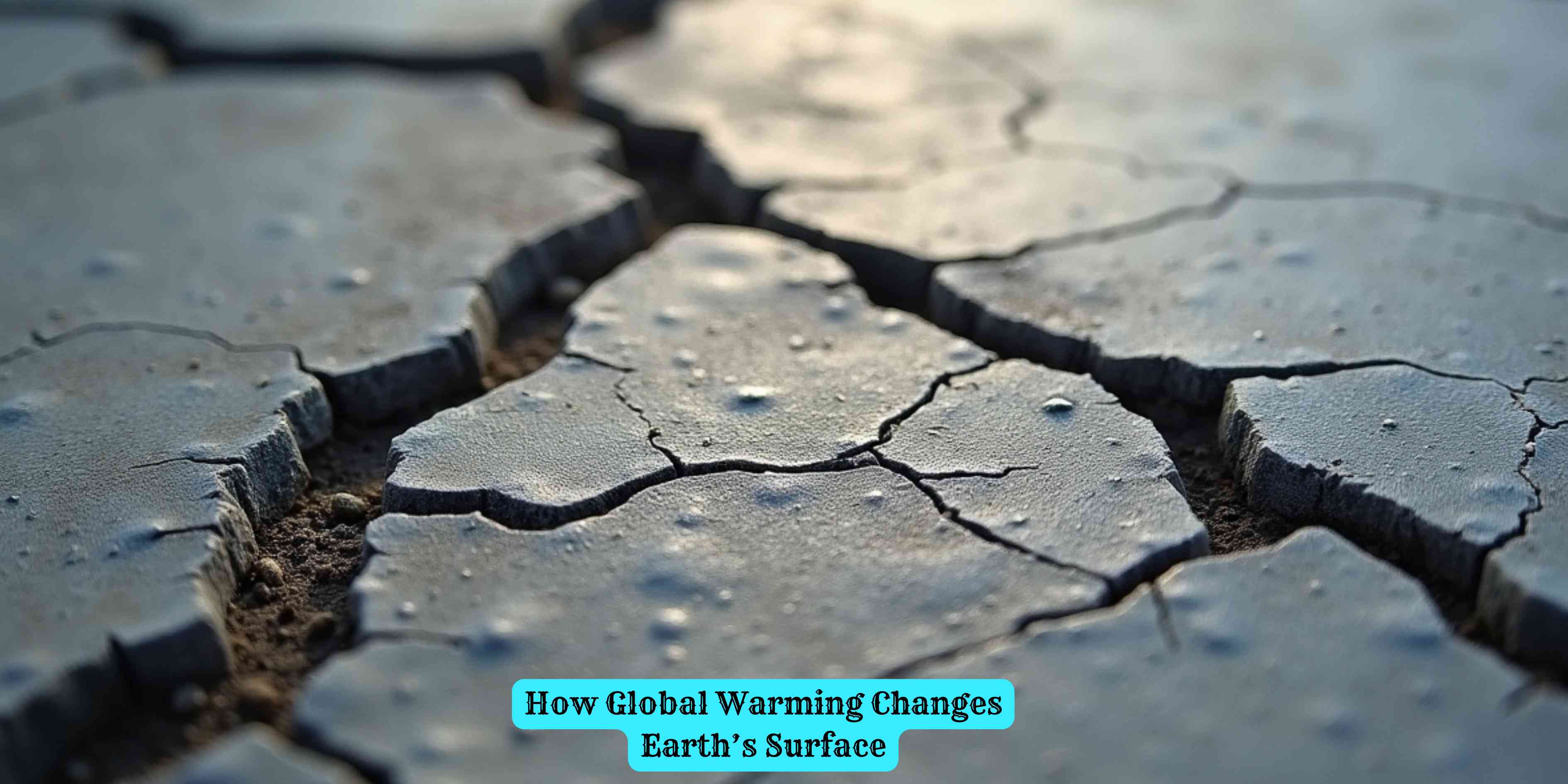
Warming can increase evaporation and worsen drought in some regions. Dry soil can crack, lose organic matter, and become more vulnerable to wind erosion.
Plants may die back if water stress becomes severe. Grasslands, forests, and shrublands may shift as some species struggle and others move in.
Soil changes matter because soil supports agriculture, stores carbon, filters water, and anchors plant roots.
Wildfires Can Transform Landscapes
Warmer and drier conditions can increase fire risk in some areas. Fire is natural in many ecosystems, but more frequent or intense fires can change landscapes dramatically.
Wildfires can remove vegetation, expose soil, increase erosion, alter water quality, and change which plants return afterward. Burned slopes may be more vulnerable to landslides or flooding during heavy rain.
Repeated severe fire can push a forest toward shrubland or grassland if trees cannot regrow successfully.
Rainfall Patterns Affect Erosion
Global warming can intensify parts of the water cycle. Warmer air can hold more moisture, and some regions experience heavier downpours.
Heavy rainfall can increase erosion, wash soil into rivers, trigger landslides, and reshape stream channels. In other regions, reduced rainfall may dry wetlands or shrink lakes.
Surface change often comes from these shifts in water movement.
Ecosystems Move and Surface Cover Changes
As temperatures and rainfall patterns change, ecosystems may shift. Some plant and animal species move toward cooler areas, higher elevations, or different moisture zones.
When vegetation changes, the land surface changes too. Forests, grasslands, deserts, tundra, and wetlands all affect soil, water, reflectivity, and habitat.
For example, shrubs expanding into tundra can change snow trapping and surface reflectivity.
Human Communities Are Affected
Changes to Earth’s surface affect people directly. Coastal flooding threatens homes and infrastructure. Drought affects farming. Permafrost thaw damages buildings. Wildfires alter communities and water supplies.
These impacts are uneven. Some places face rising seas, others face heat and drought, and others face stronger storms or unstable slopes.
This is why adaptation planning often focuses on local geography.
The Main Lesson
Global warming changes Earth’s surface because warming affects ice, oceans, water, soil, plants, and extreme events. Those changes reshape coastlines, mountains, forests, wetlands, farms, and cities.
The surface of Earth records climate change in visible ways: retreating ice, rising seas, drying land, burned forests, shifting ecosystems, and changing coastlines.