

Five Reasons Why Israel Attacked Iran in June 2025
Israel's June 2025 attack on Iran was driven by nuclear fears, missile threats, regional deterrence, timing calculations, and the wider shadow war.
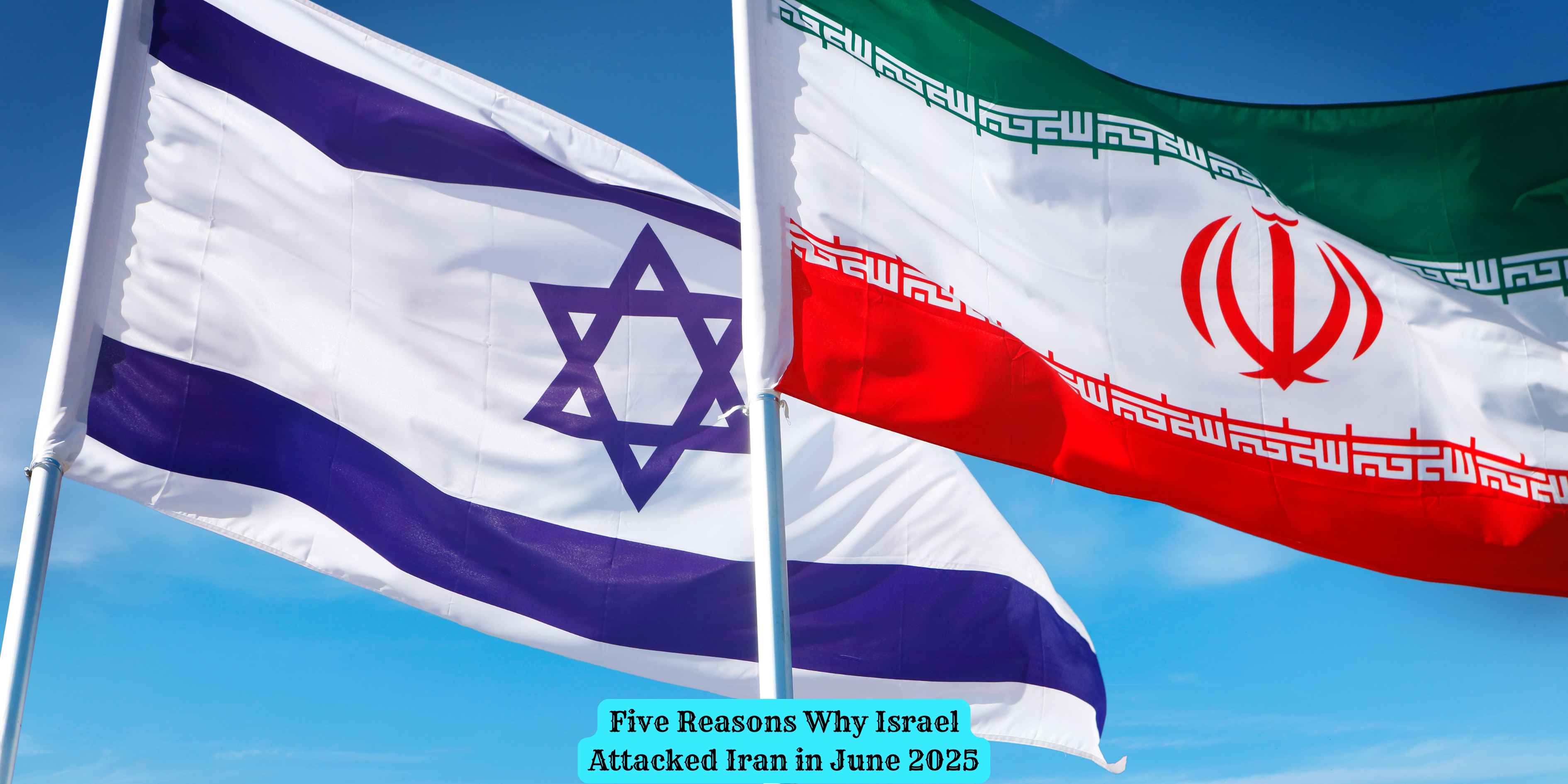
Israel attacked Iran in June 2025 because Israeli leaders believed Iran’s nuclear program, missile capabilities, military leadership, and regional networks had become an urgent strategic threat. The attack targeted nuclear facilities, senior commanders, scientists, air defenses, missile infrastructure, and other military sites.
The conflict is often described as the 12-Day War. Israel presented the operation as preemptive, while Iran called it an act of war.
The central reason was Israel’s belief that Iran was getting too close to nuclear capability and that waiting would make future action harder.
1. Fear of Iran’s Nuclear Program
The most important reason was Iran’s nuclear program. Israel has long argued that a nuclear-armed Iran would be an existential threat. In June 2025, Israeli officials said Iran was closer than ever to obtaining a nuclear weapon.
IAEA reporting during the conflict confirmed attacks on Iranian nuclear-related sites, including Natanz. Other reporting and later analysis discussed damage and uncertainty around Natanz, Isfahan, and Fordow after Israeli and U.S. strikes.
Iran has repeatedly said its nuclear program is peaceful. Israel did not accept that assurance.
2. Ballistic Missile Threats
Iran’s ballistic missile capability was another major concern. Missiles give Iran the ability to strike Israel directly, as seen during direct Iran-Israel exchanges in 2024 and again during the June 2025 conflict.
Israel’s logic was not only about nuclear material. It was also about delivery systems. A nuclear program becomes more threatening if paired with long-range missiles.
This is why Israeli strikes reportedly included missile infrastructure and military sites, not only nuclear facilities.
3. Deterrence After Years of Shadow Conflict
Israel and Iran had been locked in a long shadow conflict involving cyber operations, covert attacks, regional proxies, assassinations, and strikes in Syria, Lebanon, Iraq, and elsewhere. After the October 2023 regional escalation and the 2024 direct exchanges, Israel may have concluded that deterrence needed to be reasserted more forcefully.
In simple terms, Israel wanted Iran to believe that continued escalation would bring direct costs inside Iran itself.
That is a classic deterrence goal: punish the adversary enough to change its future calculations.
4. Targeting Iran’s Military Leadership
Reports from June 2025 described Israeli attacks on senior Iranian commanders and nuclear scientists. Removing leadership can disrupt command, delay programs, create confusion, and weaken response capacity.
This kind of targeting suggests Israel was not only trying to destroy facilities. It was also trying to damage the people and systems behind Iran’s military and nuclear work.
The risk was that leadership strikes could harden Iranian resolve and make diplomacy more difficult.
5. Timing and Strategic Opportunity
Timing matters in military strategy. Israeli leaders may have believed June 2025 offered a window to act before Iran further hardened facilities, dispersed materials, improved air defenses, or advanced its enrichment capabilities.
There may also have been a political calculation: if Israel believed international negotiations were failing or that Iran was using talks to buy time, it may have chosen force over waiting.
Strategic windows can close quickly, especially when nuclear infrastructure is buried, defended, or dispersed.
Why the Attack Was Controversial
The attack carried major risks. It could have triggered a wider regional war, attacks on U.S. forces, oil market shocks, civilian casualties, nuclear safety problems, and long-term retaliation.
Critics argued that military strikes might delay Iran’s program but could also encourage Iran to rebuild secretly, reduce cooperation with inspectors, or pursue deterrence more aggressively.
Supporters argued that doing nothing would have been more dangerous.
What Happened Afterward
Iran retaliated with missiles and drones. The United States later struck Iranian nuclear facilities at Fordow, Natanz, and Isfahan. A ceasefire was announced on June 24, 2025, but the deeper conflict remained unresolved.
For the broader outcome, this related guide explains the endgame of the Iran-Israel conflict in June 2025.
Practical Takeaway
Israel attacked Iran in June 2025 because it saw a convergence of nuclear risk, missile threats, regional escalation, leadership targets, and timing pressure.
The attack may have changed the military balance temporarily, but it did not erase the underlying dispute over Iran’s nuclear program, Israel’s security doctrine, and the future of regional deterrence.