

What the Core Muscles Do and Why It's Important to Have a Strong Set of Core Muscles
The core is more than abs. Here's what the full set of core muscles actually does — and why weakness in this system affects everything from back pain to athletic performance.
The Short Answer
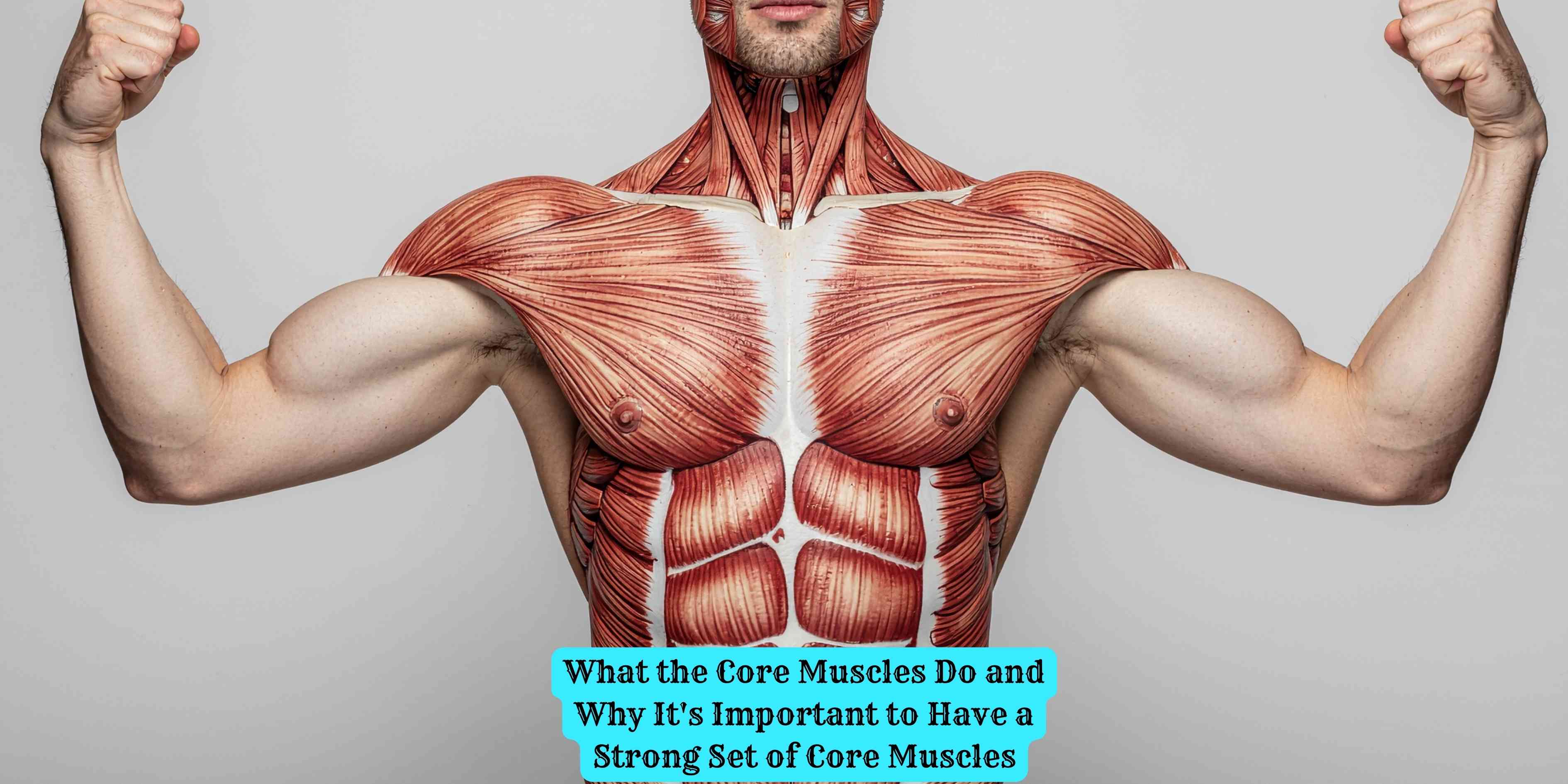
The core is not a single muscle or even primarily the abdominal muscles — it is a system of muscles that surround and stabilize the spine, pelvis, and torso. These muscles work together to maintain spinal alignment, generate and transfer force between the upper and lower body, protect the spine during loading, and enable virtually all movement that involves the trunk. A strong core is not about having visible abdominal definition — it is about the functional stability and force transfer capacity that makes efficient, safe movement possible.
What Are the Core Muscles?
The core includes several layers of musculature:
Deep stabilizers — closest to the spine, primarily responsible for segmental stability: the transversus abdominis (the deepest abdominal layer, which wraps around the trunk like a corset and provides intrinsic lumbar stability), the multifidus (deep spinal extensors that maintain segmental alignment), the pelvic floor muscles (which close the bottom of the trunk cylinder and contribute to intra-abdominal pressure regulation), and the diaphragm (the breathing muscle that closes the top of the trunk cylinder).
Superficial movers — the larger muscles that generate movement and transfer force: the rectus abdominis (the “six-pack” muscle, responsible for trunk flexion), the internal and external obliques (responsible for rotation and lateral flexion), the erector spinae group (large spinal extensors along the back), the gluteal muscles (hip extensors and stabilizers that are functionally core despite their lower-body location), and the hip flexors (which attach to the spine and pelvis).
This broader definition of the core — encompassing everything from the shoulders to the hips that contributes to trunk stability — is more functionally accurate than the common conflation of “core” with simply “abs.”
What the Core Muscles Do
Stabilize the spine. The most important function of the core is providing a stable base from which the limbs can move. When you reach overhead, throw a ball, or swing a golf club, the force generated by your arm travels through a trunk that must be stable enough to transfer rather than absorb that force. An unstable core “leaks” force and compromises both the power of the movement and the safety of the spine.
Generate intra-abdominal pressure. When the deep core muscles contract — the transversus abdominis, the pelvic floor, and the diaphragm — they create pressurization within the abdominal cavity that dramatically increases the load-bearing capacity of the lumbar spine. This is the mechanism behind “bracing” during heavy lifting: creating a rigid trunk cylinder that protects the spine under significant load.
Transfer force between upper and lower body. Virtually all powerful movements — running, jumping, throwing, swinging, kicking — require force generated in the legs to be transferred through the trunk to the upper body or point of impact. The core is the transmission system for this transfer. A weak core is a poor transmitter: force is lost rather than delivered.
Control posture and alignment. The core muscles are responsible for maintaining appropriate spinal alignment throughout movement and at rest. They constantly make micro-adjustments to keep the spine in a position that distributes load appropriately across its structures.
Why Core Strength Matters
Low back pain prevention and rehabilitation. The most clinically documented benefit of core strength is its relationship to lumbar spine health. Weakness in the deep stabilizers — particularly the multifidus and transversus abdominis — is consistently associated with chronic low back pain. Core strengthening is a first-line intervention in evidence-based low back pain rehabilitation.
Athletic performance. Power output in sport is significantly determined by core function. A sprinter, a swimmer, a basketball player, and a baseball pitcher all depend on the core’s ability to stabilize the trunk and transfer force efficiently. Core training is standard in elite athletic development programs.
Functional movement quality. Everyday movements — getting out of a chair, lifting a heavy box, reaching across a table — are performed more safely and efficiently with a strong core. The deterioration of core function with age contributes to the falls, injuries, and loss of functional independence that affect older adults.
Signs of a Weak Core and Building Core Strength
Common signs of poor core function include: persistent lower back pain, difficulty maintaining upright posture for extended periods, feeling unstable or “wobbly” during exercises, hip or knee pain that is partly driven by poor lumbopelvic alignment, and noticeably reduced power output in athletic movements compared to effort level. Building a strong core does not primarily require doing hundreds of crunches — it requires training the full system of muscles, including the often-neglected deep stabilizers and glutes. Exercises like dead bugs, bird dogs, planks, Pallof presses, and loaded carries train the core in its actual functional capacity as a stabilizer and force transmitter, rather than simply training the rectus abdominis in isolation. A functional core training program develops both the deep stabilizers and the larger movers in coordination, which is how the core actually works during movement and sport.