

What Distinguishes Agility from Balance and Coordination
Agility, balance, and coordination are often grouped together but are distinct physical qualities. Here's how they differ, how they relate, and why each matters for performance and daily function.
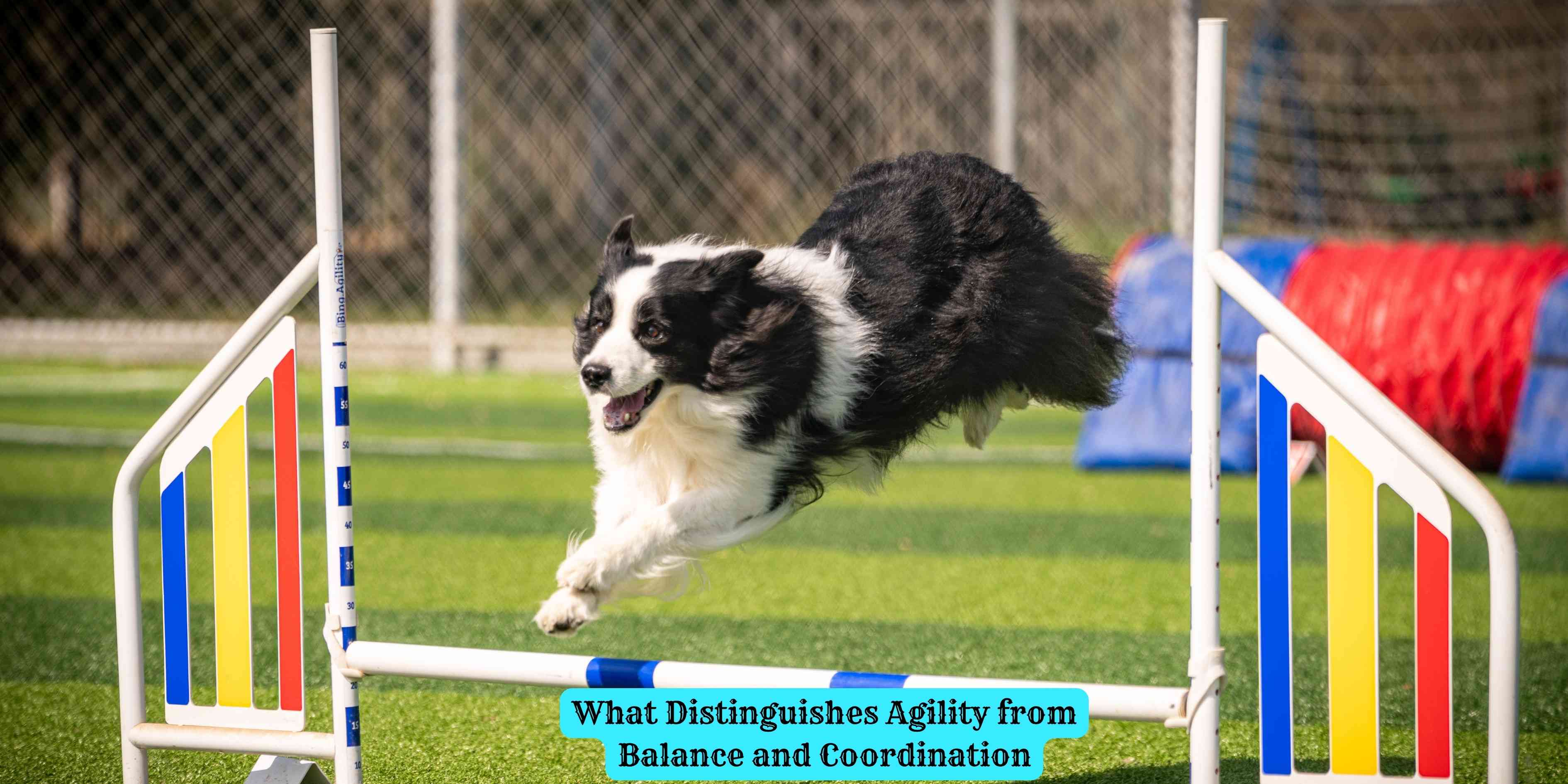
The Short Answer
Agility, balance, and coordination are related but distinct components of physical performance. Agility is the ability to change direction quickly and efficiently while maintaining control — it is a dynamic, whole-body quality that combines speed, power, and control. Balance is the ability to maintain a stable position, whether stationary or during movement — it is fundamentally about the body’s relationship to gravity and a base of support. Coordination is the ability to use different parts of the body together smoothly and efficiently to perform a movement — it is primarily a neuromuscular quality about pattern and timing. All three are components of what physical education frameworks call “skill-related fitness,” and all three are trainable.
Defining Agility
Agility is the ability to rapidly change direction, speed, or body position in response to a stimulus while maintaining control and efficiency. It has several components:
Reactive agility — changing direction in response to an external stimulus (a ball, an opponent’s movement, a traffic signal). This is the form most relevant to sport.
Planned agility — executing a known change-of-direction pattern (as in a pre-designed agility drill).
Physical requirements — agility depends on a foundation of speed, power (particularly eccentric strength to decelerate and change direction), balance, and reaction time. Athletes with strong agility tend to have efficient technique for decelerating and re-accelerating, not just for running in a straight line.
Examples of agility-dominant activities: soccer, basketball, tennis, martial arts, football. Agility training methods: cone drills, ladder drills, reactive change-of-direction exercises.
Defining Balance
Balance is the ability to maintain the body’s center of mass over its base of support — the equilibrium between the body and gravity. Balance has two fundamental forms:
Static balance — maintaining a stable position without movement (standing on one foot, holding a yoga pose, sitting without back support). Static balance requires the postural control systems — the vestibular system (inner ear), proprioception (sensory feedback from joints and muscles), and vision — to work together to make constant micro-adjustments that maintain stability.
Dynamic balance — maintaining stability during movement (walking on a narrow beam, running, catching an object while moving). Dynamic balance is more demanding because the base of support changes constantly and the system must predict and adapt rather than simply maintain a fixed state.
Balance declines significantly with age, largely due to deterioration in proprioception and vestibular function — which is why fall prevention in older adults focuses heavily on balance training.
Defining Coordination
Coordination is the ability to integrate multiple body parts and muscle groups to execute a movement smoothly, accurately, and efficiently. It is primarily a neuromuscular quality — the brain’s ability to sequence, time, and modulate the activation of muscles in patterns that produce the desired movement.
Coordination is different from agility and balance in that it does not primarily require speed or stability — it requires accuracy and integration. A pianist playing a complex piece is demonstrating extraordinary hand coordination; a dribbling basketball player is demonstrating both coordination (the rhythmic timing of ball and hand) and agility (the capacity to change direction while maintaining the dribble).
Coordination is sport-specific and skill-specific: you develop coordination for the particular patterns your sport or activity requires. It is developed through repetition of the correct movement pattern until the pattern becomes automatic (neurologically consolidated). Poor coordination manifests as movement that is jerky, mistimed, inefficient, or inconsistent.
How They Overlap and Differ
The three qualities overlap significantly in application: most dynamic athletic movements require some degree of all three simultaneously. A basketball player making a crossover dribble is demonstrating coordination (dribble timing), balance (maintaining position while shifting weight), and agility (changing direction rapidly). Despite this overlap, they are distinct because:
- You can have excellent balance without high agility (a gymnast performing a static hold)
- You can have excellent coordination without high balance (a musician)
- You can have good agility without exceptional coordination for specific fine motor tasks
Why All Three Matter
From an athletic and functional health perspective, all three qualities matter and all three decline with inactivity and age. Training specifically for each produces benefits: agility training improves sport-specific performance and injury prevention (better deceleration mechanics reduce ACL injury risk); balance training reduces fall risk and improves postural control and stability under load; coordination training improves movement efficiency and reduces the energy cost of skilled movement. The most comprehensive fitness programs address all three, recognizing that they are distinct qualities that must be trained specifically to improve rather than being byproducts of general fitness. An athlete who is very strong and aerobically fit but has poor agility, balance, and coordination is limited in ways that those qualities cannot compensate for, which is why skill-related fitness components are trained deliberately alongside traditional health-related fitness.