

Do Schools Teach Cursive Writing Anymore?
Cursive largely disappeared from US school curricula after Common Core shifted priorities in 2010. But more than 20 states have since passed laws requiring it back. Whether your child learns cursive depends almost entirely on their state.
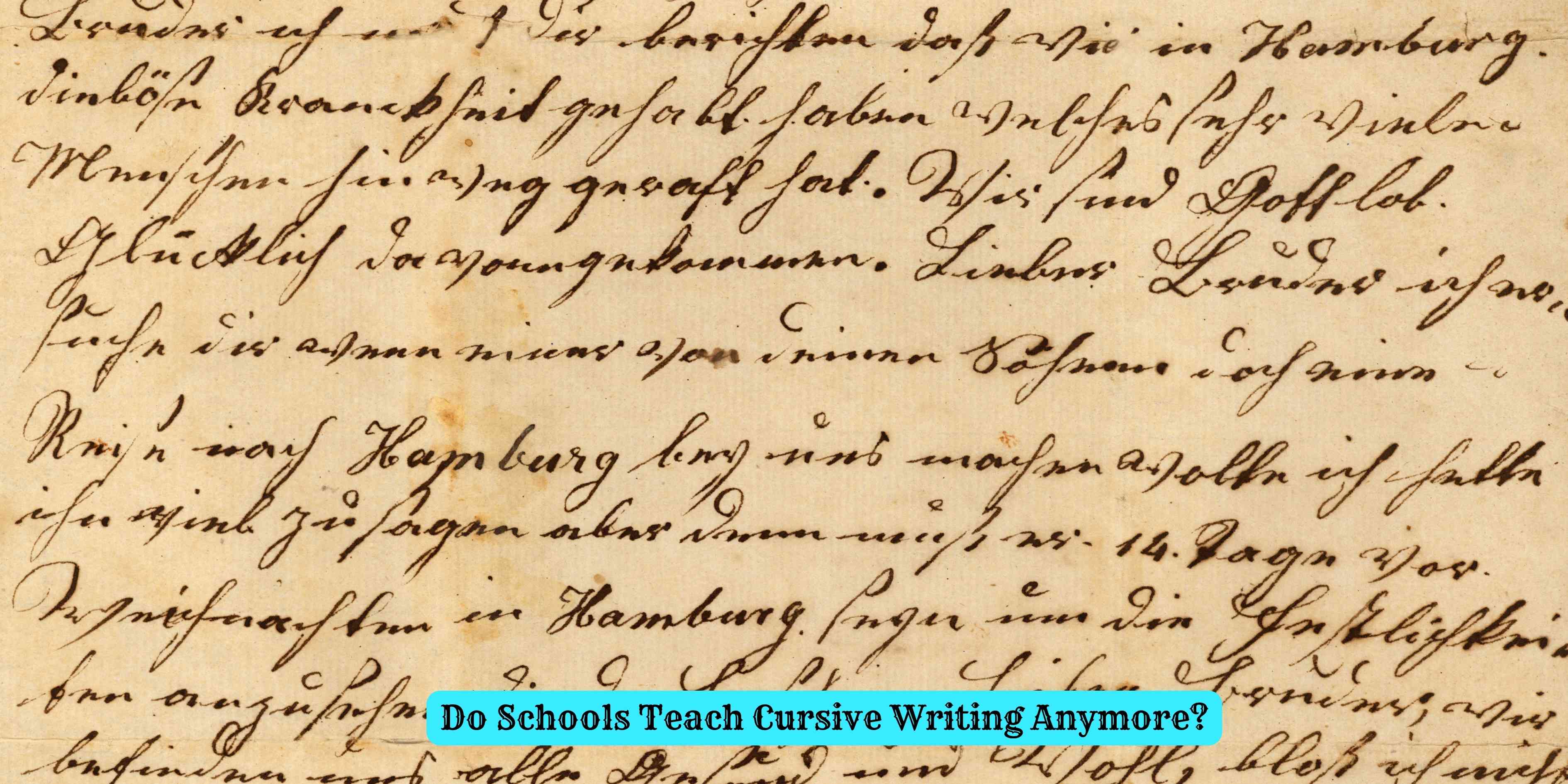
The Short Answer
Most US schools significantly reduced or dropped cursive writing instruction after 2010, when Common Core State Standards shifted curriculum priorities toward digital literacy and typing. However, as of 2025, more than 20 states have passed legislation requiring cursive to be restored — including Alabama, Arkansas, California, Florida, Georgia, Indiana, Louisiana, North Carolina, Texas, Virginia, and others. Whether a student learns cursive today depends almost entirely on their state and school district.
Why Cursive Disappeared from School Curricula
The decline of cursive was not a deliberate decision so much as an accidental byproduct of shifting priorities. When Common Core State Standards were adopted by most states around 2010, cursive was not listed as a required skill. The standards emphasized keyboarding, digital communication, and reading fluency — reflecting assumptions about what skills students would actually use as adults in a digital economy.
With limited instructional time and mounting pressure to meet benchmarks in reading and mathematics, cursive became easy to deprioritize. It was not tested, not in the standards, and not required for any form of digital communication. Elementary teachers who had spent years teaching the loops and connected strokes of cursive gradually stopped doing so, and the time was redirected toward technology instruction.
By the mid-2010s, many school districts had dropped cursive entirely. A full generation of students completed elementary school without learning to write — or read — cursive script.
States That Have Brought Cursive Back
The backlash against cursive’s removal came from multiple directions: parents frustrated that children couldn’t sign their own names, historians concerned about access to primary source documents, occupational therapists noting developmental benefits, and educators who had seen students struggle with handwriting.
Beginning around 2013, states started passing legislation to restore cursive as a required subject. As of 2025, states with active cursive mandates include Alabama, Arkansas, California, Florida, Georgia, Indiana, Kansas, Louisiana, Massachusetts, North Carolina, North Dakota, Ohio, Oklahoma, South Carolina, Tennessee, Texas, Utah, Virginia, and West Virginia, among others.
Requirements vary by state. Some mandate that students demonstrate legible cursive writing by the end of third grade. Others require instruction through fifth grade. Florida was an early mover, reinstating cursive in 2012. California maintained some cursive requirement throughout the Common Core period and never fully removed it.
The Debate Over Whether Cursive Should Be Taught
The question of whether cursive deserves a place in the modern school curriculum is genuinely contested, and the arguments on both sides are substantive.
Arguments for cursive instruction include research suggesting that handwriting engages different and more complex neural pathways than typing, supporting memory consolidation and reading development in young learners. Multiple studies — including well-cited work from Princeton University and the University of California, Los Angeles — found that students who take notes by hand retain and integrate information more effectively than those who type. There is also the straightforward argument that cursive is the only way to read the vast majority of historical documents, personal letters, and records written before the widespread adoption of the typewriter.
Arguments against center on limited instructional time and the diminishing practical role of cursive in daily adult life. Critics argue that the hours invested in teaching and drilling cursive would be better spent on skills students will genuinely use — keyboarding, reading comprehension, coding, or critical thinking — and that the cognitive benefits attributed to cursive specifically, rather than handwriting generally, remain contested in the research literature.
What the Research Actually Shows
The research on handwriting and cognition is more nuanced than either side of the debate tends to acknowledge. The cognitive benefits most reliably documented — deeper processing, better retention, more synthesis — are associated with handwriting in general, not cursive specifically. Print handwriting produces similar effects to cursive when used for note-taking and learning tasks. The comparison that matters is handwriting versus typing, not cursive versus print.
Where cursive does appear to hold an advantage is in speed. Proficient cursive writers write faster than print writers, which matters for students taking timed written exams, particularly standardized tests with essay components administered on paper. For those students, cursive fluency provides a real practical benefit.
Occupational therapists have separately advocated for cursive instruction on developmental grounds: the continuous, flowing motion required for cursive is generally easier for young children with fine motor control challenges than the repeated lifting and repositioning that print requires. For students with certain learning differences, cursive can actually be more accessible than print.
Should Cursive Still Be Taught?
The case for some cursive instruction is stronger than the debate often suggests. At minimum, teaching students to read cursive — even without requiring them to produce it fluently — preserves their access to the written historical record: personal correspondence, historical documents, genealogical records, and primary sources that exist only in cursive script. That is a legitimate literacy skill that serves students well beyond school.
Whether schools should require full cursive production or limit instruction to cursive literacy — the ability to read it and produce a legible signature — is a reasonable policy question that different states are answering differently. Some educators advocate for the middle path: enough instruction for students to read and sign, without the extended hours of drill practice that cursive fluency once required.
The legislative trend points toward cursive returning to classrooms, at least in states that have passed mandates. Whether that translates into meaningful instruction depends on teacher training, available time, and whether any standardized assessment ever rewards the skill — which, as of now, very few do.