

Briefly Describe the Factors and Characteristics That Influence Conflict Resolution
Conflict resolution doesn't happen by accident. The factors that determine whether it succeeds or fails are knowable — here's a clear overview of what shapes the outcome.
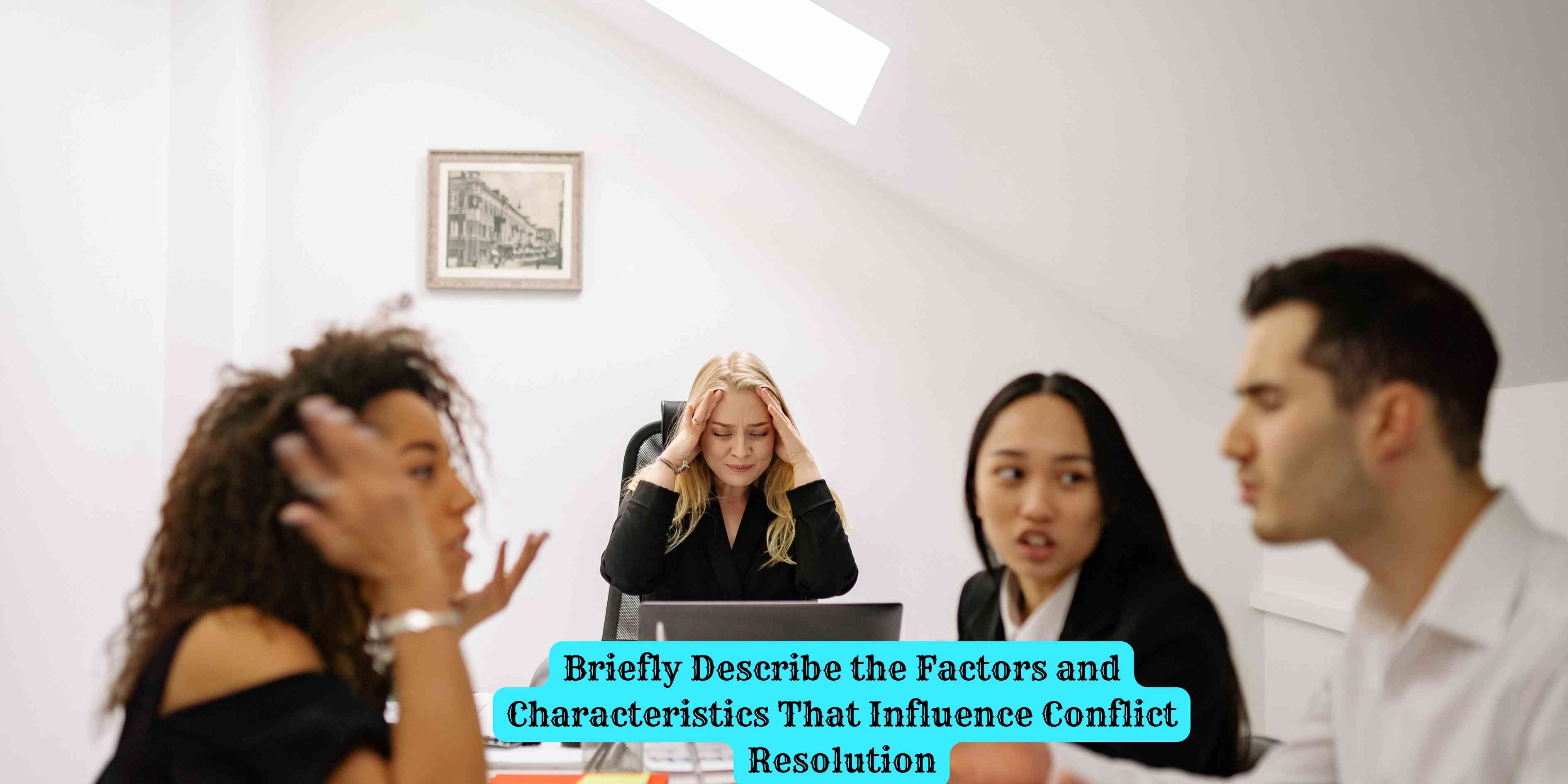
Conflict resolution is influenced by a combination of factors: the quality of communication between the parties, the emotional state each party brings to the process, the power relationship between them, the cultural context that shapes expectations and norms, the degree of trust that exists or can be built, and whether the parties have any genuine shared interest in resolving the conflict. No single factor determines success or failure — these elements interact, and the absence of one can undermine all the others.
Understanding which factors are present and which are missing is the first step toward improving the odds of resolution.
Communication Quality
The single most directly influential factor in conflict resolution is the quality of communication between parties. Conflict typically involves parties who have stopped hearing each other accurately — who are listening to respond rather than to understand, and who are interpreting each other’s statements through the lens of hostility or defensiveness.
Effective conflict resolution requires active listening (genuinely receiving what the other party is saying without immediately rebutting), clear expression of one’s own interests and needs (rather than positions and demands), and the ability to separate factual claims from interpretive judgments about the other party’s character or intent.
Skilled communicators can often resolve conflicts that seem intractable simply because they’re able to move the conversation from positional bargaining (“I want X, they want Y”) to interest-based dialogue (“I need this because of A; they need that because of B — are A and B compatible?”).
Emotional State and Regulation
The emotional state of each party profoundly affects the quality of communication. In states of high arousal — anger, fear, shame, humiliation — the prefrontal cortex’s capacity for rational problem-solving is impaired. Parties in high-arousal states talk past each other, interpret neutral statements as hostile, and find compromise psychologically threatening rather than practically desirable.
Conflict resolution is significantly more successful when parties can approach the conversation in a calmer emotional state. This is one reason that giving both parties time before addressing a conflict, establishing ground rules for respectful engagement, and taking breaks during escalating exchanges all improve outcomes. A party who feels genuinely heard rather than dismissed also deescalates emotionally — being understood is one of the most powerful emotion-regulation experiences in conflict.
Power Dynamics
Power imbalances between conflicting parties create asymmetries that complicate resolution. The more powerful party has less incentive to compromise — they can often prevail through force, authority, or the costs they can impose on the less powerful party. The less powerful party may be unable to advocate effectively for their interests or may accept unfavorable resolutions they cannot realistically resist.
In workplace conflicts, power dynamics between supervisor and employee are always present. In interpersonal conflicts, social status, economic resources, emotional leverage, and access to social support networks all create power asymmetries. Effective conflict resolution processes — mediation, structured dialogue, HR processes — partially compensate for power imbalances by creating shared procedural rules and neutral facilitation that constrain the more powerful party’s ability to dominate through force.
Cultural Context
Cultural background shapes how people define conflict, what resolution looks like, how emotion should be expressed, what is considered appropriate assertion versus aggression, and whether direct confrontation or indirect face-saving communication is preferred. What constitutes a “normal” direct expression of disagreement in one cultural context may be experienced as unacceptably aggressive in another, and what constitutes appropriate indirect communication in one context may be read as dishonest or evasive in another.
Conflicts between parties from different cultural backgrounds require explicit attention to these differences — not assuming that one cultural norm is correct, and not misinterpreting culturally different communication styles as character flaws or bad faith.
Trust and Shared Interests
Perhaps the most foundational factor in whether conflict can be resolved is whether any trust exists between the parties, and whether they have any genuine shared interest in resolution beyond the specific matter in dispute. Parties who have a relationship they value — a friendship, a business partnership, a shared community — are motivated to resolve conflict rather than simply win it, because their relationship is part of what they have to lose. Parties who have no prior relationship and no ongoing shared interest have less motivation to compromise.
Trust — confidence that the other party is acting in good faith, will keep agreements reached, and is not simply maneuvering for advantage — is the substrate on which all conflict resolution tools operate.
When trust is absent, resolution requires either external enforcement mechanisms (contracts, mediation decisions, legal adjudication) or the building of enough provisional trust through the resolution process itself to reach agreement and sustain it. Both paths are more difficult than resolving a conflict between parties who already trust each other, which is why maintaining trust by addressing conflicts early — before they escalate and erode the relationship — is consistently better than waiting until trust has been damaged by prolonged conflict.